I have a friend who set an interesting rule during their diet: when dining with friends or family, they simply don’t diet. No counting, no “this is allowed, that isn’t,” just eating, chatting, and being present. When they first told me, I was a bit surprised, but it stuck with me. Because if you think about it, shared meals really are different from eating alone. Maybe that’s exactly why we tend to eat more in those moments.
It’s not just about the food
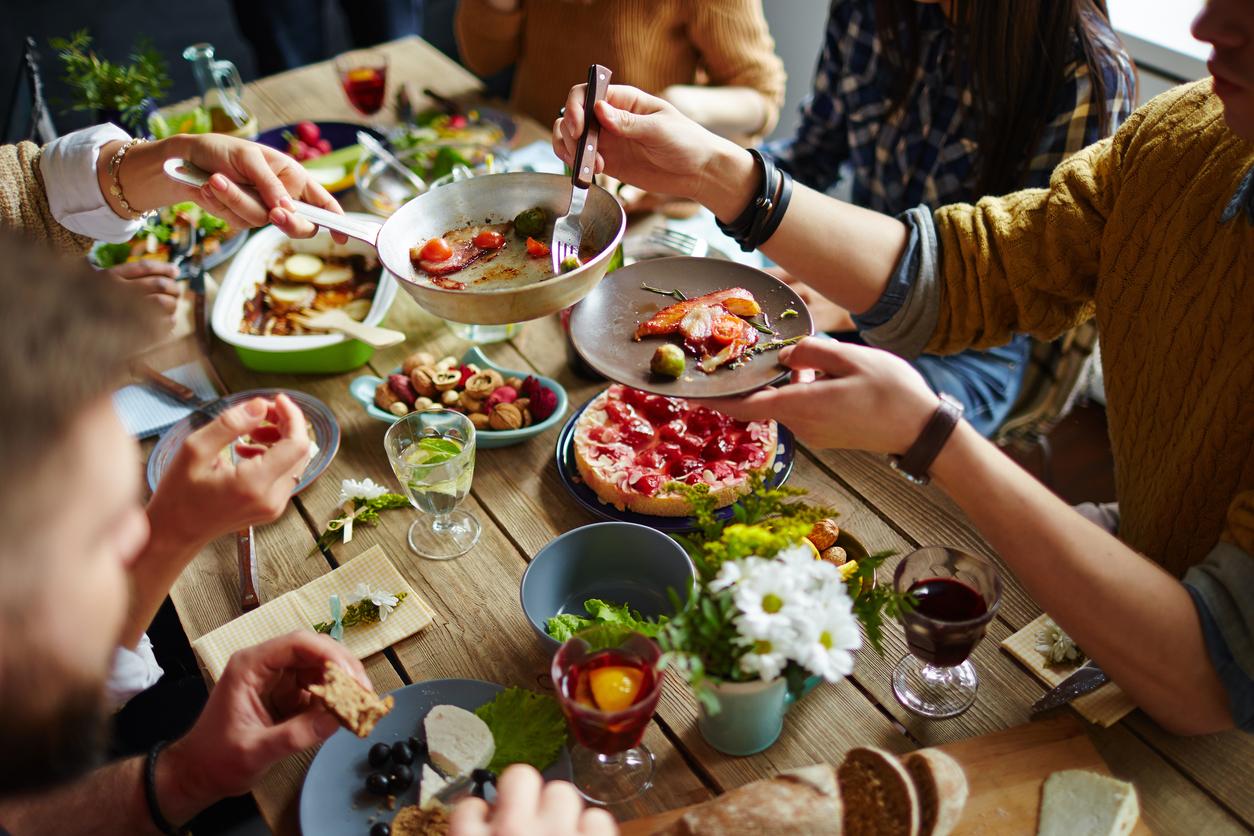
When we eat with others, the role of the meal changes. It’s not a quick, functional task to “get through,” but a shared experience. We talk, listen, react to stories, laugh, and eating happens almost unnoticed in the background. Because of this, we pay much less attention to when we’re full or how much we’ve eaten. Not because we’re unaware, but because our focus simply shifts elsewhere.
Food isn’t the center of attention—it’s more like a companion to being together, and that’s why we easily go beyond our usual portions.
More time at the table means more food, almost without noticing
Shared meals almost always last longer. There’s no rush or feeling of “eat quickly and move on”; instead, we linger at the table. And that extra time makes a big difference. The longer we sit, the more natural it feels to reach for food again and again. Not necessarily because we’re hungry, but because our hands move automatically or someone offers something. One bite turns into another… and before we know it, we’ve eaten much more than we would have alone. It’s not a conscious choice, just part of the situation.
One of the most interesting things is how much we influence each other in these moments.
If others are taking more, we’re more likely to do the same. If everyone orders dessert, suddenly another serving doesn’t feel “unnecessary” anymore.
This is a subtle, often unnoticed process. It’s not about consciously copying others, but simply adapting to the situation. It’s a basic human behavior. We observe our surroundings, adjust, and since everyone tends to eat a bit more, the effect adds up.

It’s not just food they offer, but attention too
There’s something really sweet about someone asking, “Want a little more?” It’s not just about the food. Often, it’s care, thoughtfulness, hospitality behind it. And that’s why it’s so hard to say no—even when we’re not really hungry anymore. In those moments, we accept not just the food but the feeling that we matter to someone. And that feeling can easily override our inner “I’ve had enough” signal.
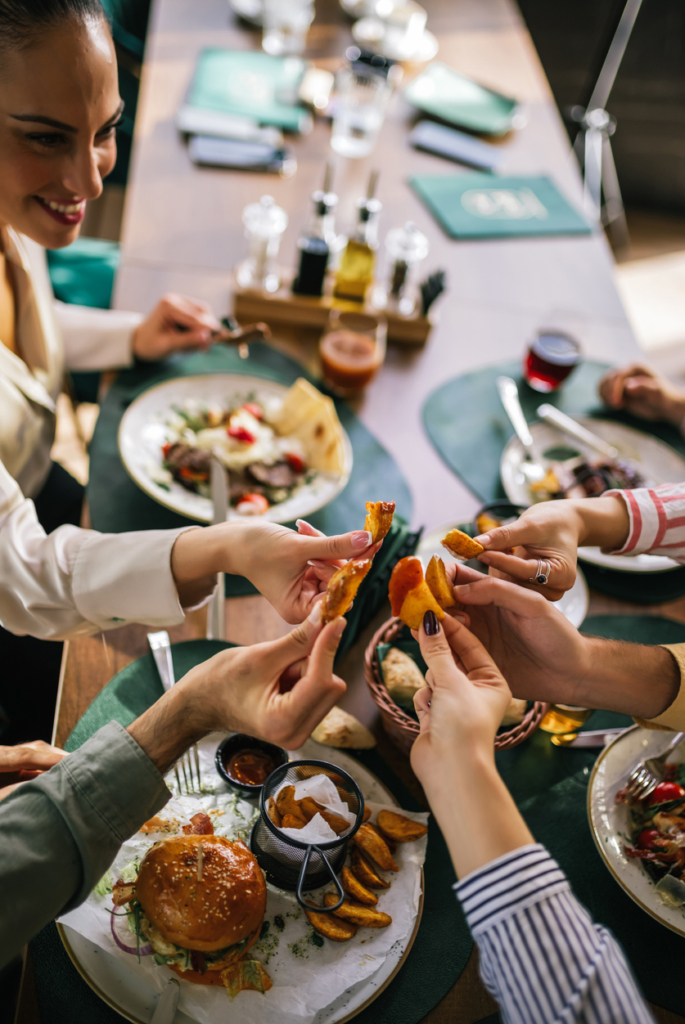
The more I thought about what my friend said, the more I realized it’s not really about eating more. It’s about why. Shared meals are about connection, not just nutrition. About being together, paying attention to each other, and stepping out of daily routines. Sometimes, that’s even more important than exactly how much we eat. Maybe that’s why their rule works—not because it “doesn’t matter” what they eat, but because they recognized that some moments call for a different focus. Sometimes, the question isn’t why we eat more in company, but what we gain from it—and whether it’s worth it.