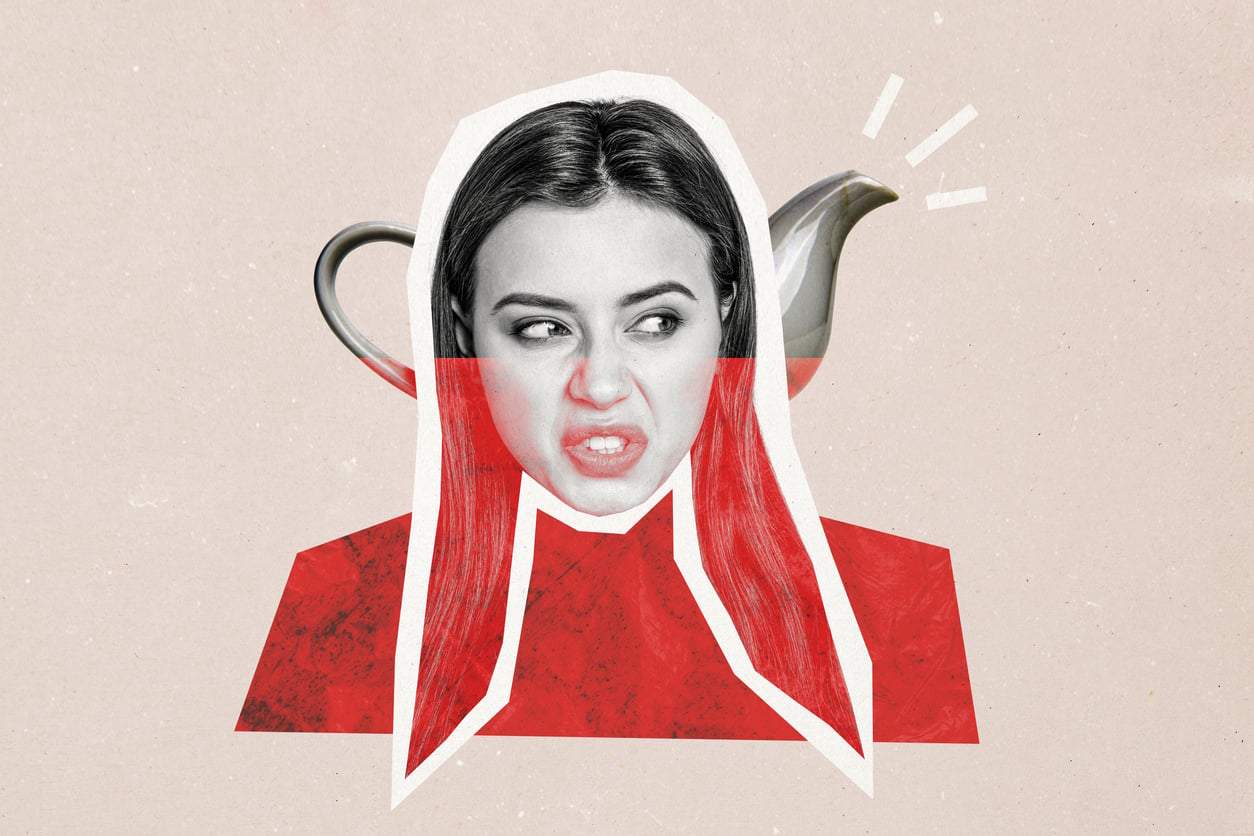
You've probably thought about it more than once. Maybe you even had a therapist's name saved somewhere, then talked yourself out of it with a quiet "Let me wait a little longer — maybe it'll sort itself out."
But the question keeps coming back, doesn't it? Do I actually need this? And if I do, is now really the right time?
The truth is, it's rarely obvious. Everyone has bad days, rough patches and stressful seasons. So where's the line between a normal dip and the moment it's genuinely worth reaching out for help?
The signs below can help you figure that out. They're not the only reasons someone starts therapy — but they're a solid place to begin.
You're struggling to handle everyday stress
Stress is a natural part of life, and it can't be switched off completely. In small doses, it's even useful. But if you notice the tension is constantly there — leaving you irritable, drained, and starting to bleed into your work and relationships — that's worth paying attention to.
A therapist doesn't just teach you stress-management techniques. They can help you spot the situations that are quietly piling weight onto your shoulders in the first place.
Your emotions feel too big to manage
We all feel uncomfortable things: anxiety, anger, disappointment, fear. On their own, those emotions are completely normal. The problem starts when they keep flooding in and you feel like you have no control over them.
Therapy can help you understand what actually triggers these feelings — and give you tools to handle them without being swept away.
You're leaning on unhealthy coping habits
Maybe stress sends you toward too much food, a glass (or three) of wine to unwind, or hours lost scrolling, streaming or gaming. These habits can bring relief in the moment — but over time, they tend to mask the real problem rather than solve it.
A therapist can help you build healthier coping strategies that actually support your well-being instead of numbing it.
You keep falling short of your goals
Whether it's losing weight, sorting out your finances or moving your career forward, the missing piece often isn't ability — it's an internal obstacle standing in the way. Sometimes it's procrastination, perfectionism or quiet self-sabotage.
Therapy can help you recognise those patterns — and learn how to move past them for good.
You want to improve your relationships
Partners, friends and family can bring enormous joy, but they can also test us. If you struggle to set boundaries, avoid every conflict, or keep running into the same problems over and over, a therapist can help you get to the root of it.
Along the way, you can pick up skills that lead to healthier, more balanced connections.
You want to understand yourself better
Have you ever replayed a moment afterwards and wondered why you said or did something?
Why do you push away someone who's actually good for you? Why do certain situations set you off? Why do the same problems keep repeating in your life?
One of therapy's biggest gifts is helping you see the recurring patterns — and understand the beliefs and past experiences quietly shaping how you behave today.
You're going through a big life change
A new job, a move, a breakup, marriage, a baby — life's major turning points can be overwhelming even when they're positive on paper.
A therapist can help you process the emotions that come with change and support you as you adjust to your new normal.
You feel unsure as a parent
Parenting is one of the most beautiful — and most demanding — jobs there is.
Plenty of parents quietly ask themselves the same questions: Am I doing this right? Am I too strict? Am I too soft?
A professional can help you see the bigger picture, offer support with the hard calls, and remind you that you're actually getting a lot more right than you think.
You've been through something traumatic
Not every difficult experience leads to long-term emotional damage, but processing a serious event often takes time and support.
Therapy can help you make sense of what happened and work through it — while reducing the chance that the trauma keeps shaping your life for years to come.
Your mood is affecting your work
We all have off days. But if sadness, anxiety or a lack of motivation is regularly getting in the way of your work or studies, that's a signal worth listening to.
A therapist can help you uncover the cause and hand you tools to steady yourself and find your balance again.
Your sleep or appetite has changed
Emotional struggles often show up as physical symptoms.
Maybe you're eating less — or a lot more. Maybe you can't fall asleep, keep waking up at night, or feel tired no matter what you do.
If a medical check-up rules out a physical cause, it's worth asking whether something emotional is driving it.
The things you used to love don't spark joy anymore
Your favourite hobby, catching up with friends, even weekend plans — do they leave you flat when they used to light you up? A loss of interest is often a sign that something isn't right on an emotional level.
Therapy can help you get to the bottom of it and find your way back to the things that once brought you joy.
Your social life has shrunk
Human connection is fundamental to our mental health.
If you see people less and less, feel lonely, or find it hard to build new relationships, it may be worth talking to someone.
Sometimes the real cause is low self-esteem, anxiety, or old wounds from past experiences.
You want to quiet the negative self-talk
It's surprisingly easy to become your own harshest critic. Maybe you always brace for the worst-case scenario, doubt yourself constantly, or treat yourself more harshly than you'd ever treat anyone else.
A therapist can help you notice these thought patterns and build a kinder, healthier inner voice.
You feel like you could be happier than you are
You don't have to be in crisis to benefit from therapy.
Plenty of people simply feel that something's missing. There's no obvious problem, yet they don't quite feel comfortable in their own skin.
Therapy can help you uncover what's behind that feeling — and which small changes could bring real, lasting contentment into your life.
You suspect you're dealing with a mental health condition
The symptoms of mental illness are incredibly varied — from persistent anxiety and panic attacks to the signs of depression. Any of them can be a reason to reach out. The sooner someone asks for help, the sooner they can get the right support and treatment.
You don't have to be "bad enough" to ask for help
People used to believe therapy was only for those already facing a serious mental health crisis. More and more of us now understand that emotional health matters just as much as physical health — and that professional support isn't only about fixing problems, but preventing them too.
Therapy isn't a sign of weakness. If anything, it's the opposite: it takes real courage to admit you could use some support. And sometimes a single conversation is enough to help you see yourself, your feelings and your options more clearly.
How do I know if I really need therapy?
There's no single rule. If stress, difficult emotions or unhelpful patterns are regularly interfering with your work, relationships or sense of well-being, that's a strong sign it's worth talking to a professional.
Do I have to be in crisis to start therapy?
No. Many people go simply because they feel something is missing, or they want to understand themselves better. You don't have to hit rock bottom to deserve support.
Can therapy help with everyday stress, not just serious problems?
Yes. A therapist can teach you stress-management techniques and help you spot the situations quietly adding to your load — useful both for handling problems and preventing them.
Is going to therapy a sign of weakness?
Quite the opposite. It takes courage to recognise when you need support, and sometimes even one conversation can bring real clarity about your feelings and your options.