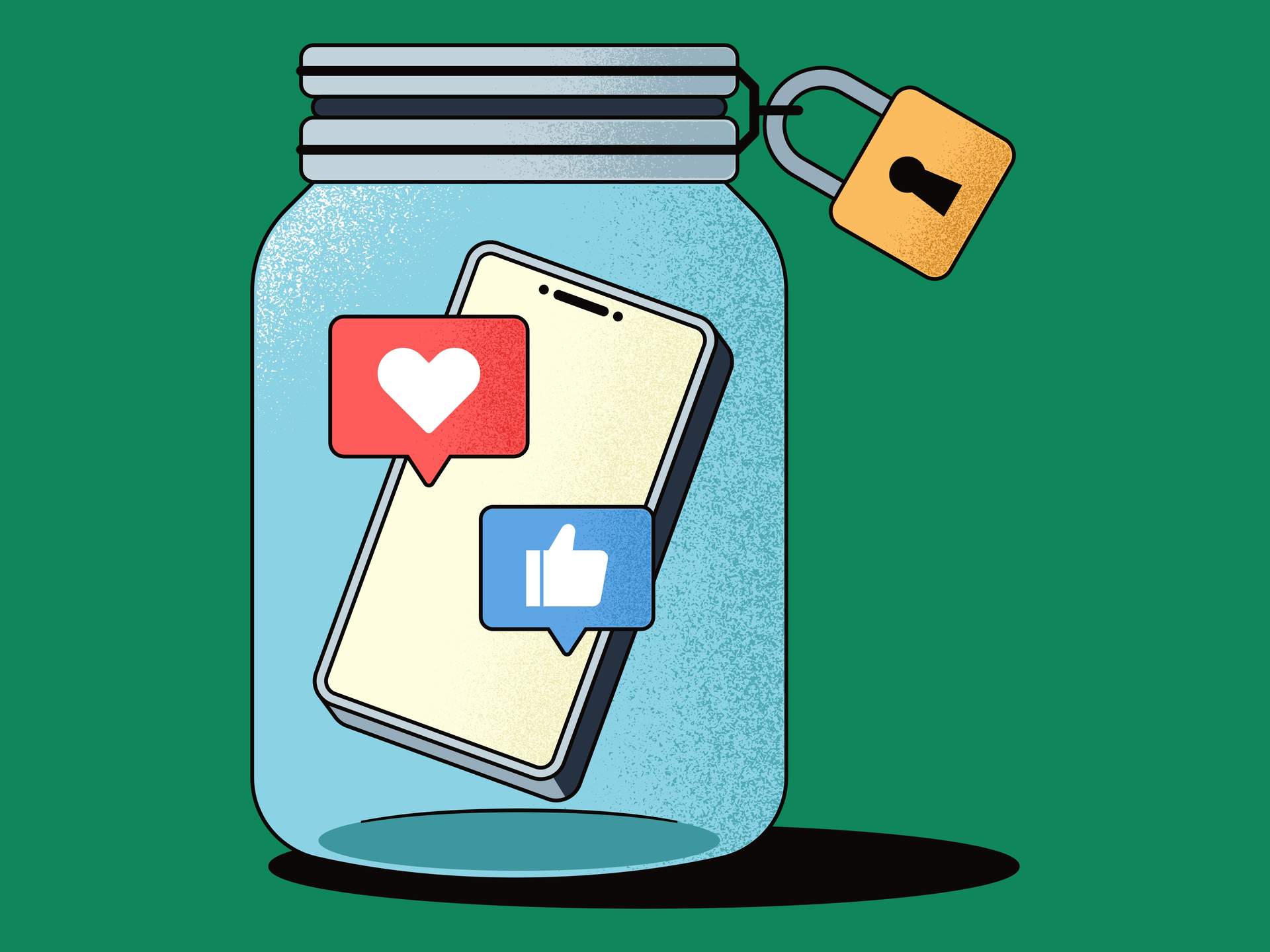
One notification. One scroll. One quick peek at the cart you haven't checked out yet. And somewhere along the way, sitting still on a quiet afternoon — with nothing to do, nothing to check — started to feel almost unbearable.
That restlessness is exactly what the dopamine fast responds to. It's a simple yet surprisingly effective habit that more and more constantly-busy women are trying — not to escape their lives, but to get their own minds back.
What a dopamine fast actually is
The idea was popularized by Cameron Sepah, a clinical psychologist in California, who worked mainly with the overstimulated, always-on executives of Silicon Valley.
The point of a dopamine fast isn't to lower dopamine itself — biologically, that wouldn't even work. Instead, it's about temporarily stepping away from the artificial triggers that hand us tiny hits of reward far too easily, far too often, and far too instantly.
Scrolling, push notifications lighting up your screen, online shopping, three episodes running at once across three tabs — they all target the same reward system, and they all overload it.
Why we need a pause in the first place
The modern nervous system was never designed to receive a fresh trigger every single minute. When there's always something to click, react to, or check, the brain gets used to a kind of constant background hum — and finds it harder and harder to return to a state of calm.
That's exactly what so many people describe: not one specific source of stress, but a steady, low-level restlessness that never quite lets their thoughts settle.
A dopamine fast isn't a cure. It's more like a conscious pause — a chance for your nervous system to find its way back to a quieter baseline.
What it looks like in real life
You don't need an ascetic weekend of candlelight and total silence — though that's one option. Most versions of a dopamine fast are far more down-to-earth: you pick one or two specific triggers and set them aside for a set amount of time, whether that's a few hours or a full day.
- One evening, the phone stays off during dinner, and instead you actually talk — or actually just eat.
- One weekend with no online shopping, no browsing for fun, no scrolling just to see what's new.
- One afternoon with no series, no podcast, no background noise — just your own thoughts, however uncomfortable that feels at first.
What's worth giving up first
Most experts point to notifications and aimless scrolling as the first things to cut, because they deliver the most frequent, smallest, most relentless doses of stimulation. It's not a big conscious decision every time — it's a reflex. The phone chimes, and your hand is already reaching for it.
Break that reflex for even a few days, and many people find that suddenly there's more attention for the real, present things: a conversation, a walk, a cup of tea you actually finish before it goes cold.
What changes when you really commit to it
The first few days often aren't peaceful — they're a little anxious. The brain goes looking for its usual trigger, and when it can't find one, a kind of emptiness sets in. But that phase passes.
What often follows is what people call the return of inner focus: concentrating on a task feels easier, thoughts stop darting from one thing to the next, and by the end of the day you arrive not drained by stimulation, but with a mind that has genuinely rested.
A dopamine fast isn't about giving up the digital world forever — for most women, that's neither realistic nor desirable. It's about deliberately building in small pauses, moments where your nervous system can find its way back to a quieter, less trigger-dependent rhythm — before the next notification goes off again.
Is a dopamine fast the same as lowering my dopamine levels?
No. It doesn't reduce dopamine itself — that wouldn't work biologically. It simply means stepping away from the artificial triggers that hand you constant, instant hits of reward.
How long does a dopamine fast have to last?
There's no fixed rule. It can be as short as a few hours or as long as a full day. The idea is to choose one or two triggers and set them aside for a defined period.
What should I give up first?
Most experts suggest starting with notifications and aimless scrolling, since these deliver the most frequent and relentless doses of stimulation throughout the day.
Why do the first days feel so uncomfortable?
Because your brain goes searching for its usual trigger and can't find it, which can create a sense of emptiness. This phase passes, and many people then experience a return of inner focus and calm.
Do I have to quit the digital world completely?
No. A dopamine fast isn't about giving up technology forever. It's about building in small, conscious pauses so your nervous system can reset before the next notification arrives.