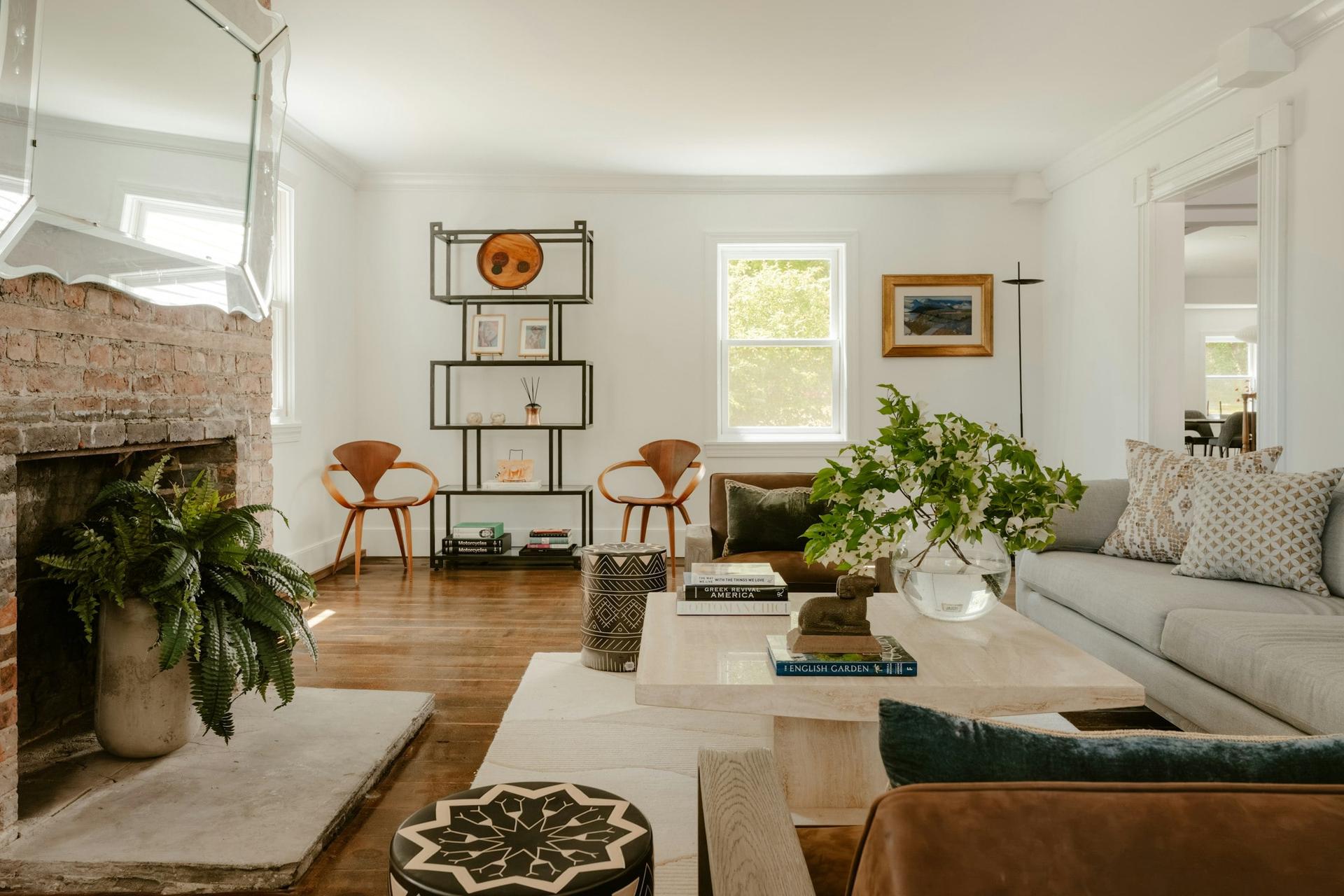
You don't need bad taste to ruin a living room. A rug that's slightly too small, a sofa pushed hard against the wall, or a single overhead light — any one of these can make a space feel off without you ever quite knowing why. Interior designers see the same mistakes come up again and again, and in 2026 they're still at the top of the list. Here are the five most common living room pitfalls — and three simple rules to follow instead.
1. Choosing a rug that's too small
This is one of the most common decorating mistakes in any living room — and probably one of the easiest to fix. When a rug only fits under the coffee table while the sofa and armchairs sit completely off it, the whole seating area starts to feel disconnected and awkward.
Interior designers consistently recommend that a rug should extend at least under the front legs of your larger pieces of furniture. That simple change is what makes a sofa, armchairs, and a coffee table read as a cohesive group rather than a random collection of objects.
What to do instead: Before you buy, measure your room and map out where your furniture sits. When in doubt, go bigger — a rug that's slightly too large always looks more intentional than one that floats in the middle of the floor.
2. Pushing every piece of furniture against the wall
It feels logical — pull everything back and you free up space in the middle, making the room seem larger. In practice, it rarely works out that way.
Designers often get better results by letting the sofa and a few key pieces float slightly away from the wall. The moment you do that, the room stops feeling like a waiting area and starts feeling like a place designed for conversation and comfort.
What to do instead: Instead of lining everything up against the walls, start by figuring out how your pieces work together. Group the sofa, chairs, and coffee table into a comfortable conversation zone. Even pulling the sofa just a few inches forward can make a surprising difference.
3. Relying on a single ceiling light for the whole room
An overhead light has its place, but asking it to carry the entire atmosphere of your living room — especially in the evening — is asking too much. Designers have long championed layered lighting: a ceiling fixture plus lower light sources placed at different heights around the room.
A floor lamp beside the sofa, a small table lamp on a side table, or a warmer accent light can completely transform how a room feels after dark. Relying on one ceiling light at night tends to make even a beautiful room feel as flattering as a fluorescent-lit supermarket aisle.
What to do instead: Use multiple light sources at varying heights. It not only makes the room brighter overall — it gives you the flexibility to dial up bright light when you need it, or switch to a warm, relaxed atmosphere in the evening.
4. Buying every piece from the same furniture collection
Sofa, armchair, coffee table, and TV unit — all from the same range, the same wood finish, the same surface texture. It feels practical because everything is guaranteed to match. The result, though, can easily tip into feeling sterile and impersonal.
What interior designers actually love is when different materials, shapes, and even pieces from different eras are placed together. That mix is what gives a room personality.
What to do instead: Mix your furniture and materials freely. A modern sofa can sit beautifully next to a wooden coffee table, a vintage armchair, or a statement lamp. Nothing needs to come from the same collection for the overall look to feel harmonious — it just needs to feel considered.
5. Cramming too many statement pieces into one room
A bold wallpaper, a striking rug, a brightly colored sofa, a large art print on the wall, and a few eye-catching decorative objects. Each one on its own could look fantastic. All together, it becomes overwhelming.
The problem isn't loving color or decoration — it's when every single object is competing for attention at the same time. The eye doesn't know where to land, and the room starts to feel chaotic rather than curated.
What to do instead: Choose one or two focal points and let everything else support them. If your sofa is already a statement piece, it doesn't need to be paired with an equally loud rug and an oversized gallery wall. Let the hero breathe.
3 rules to follow instead
1. Start by deciding how you actually use your living room
Before you choose a single piece of furniture, think about how you spend your time in this room. Do you watch a lot of TV? Read? Entertain guests regularly? Work from the sofa? The answer should shape every decision you make.
A great living room isn't one that looks perfect in a design magazine. It's one that fits the way you actually live.
If you read a lot, prioritize a comfortable armchair and good task lighting. If you frequently have people over, think about seating arrangement before anything else.
2. Layer your lighting and your materials
A living room becomes genuinely interesting when not everything is made of the same material or sits at the same height. Wood, fabric, metal, glass, stone, and a soft rug each add their own texture — and the contrast between them is what makes a space feel rich and inviting.
The same principle applies to lighting. Different light sources let you shift the mood of the room effortlessly — from bright and energetic during the day to warm and cozy in the evening.
3. Don't copy a trend — design your own living room
Just because something is everywhere in 2026 doesn't mean it belongs in your home. Design trends come and go, but a sofa you genuinely love or a lamp with real character can stay with you for years.
Choose pieces that actually appeal to you — not just things that kept appearing on every interiors account you follow. An old painting, a one-of-a-kind vintage chair, or an inherited object often adds far more to a living room than an entire matching set chosen straight from a catalog.
What's the most common living room mistake people make?
Choosing a rug that's too small is consistently flagged by interior designers as the most widespread — and most easily fixed — living room mistake. A rug that doesn't extend under the front legs of the main furniture makes a seating area feel disjointed.
Should your sofa be against the wall?
Not necessarily. Designers often recommend pulling the sofa slightly away from the wall to create a more inviting, conversation-friendly arrangement. Even a small gap can make the room feel more intentional and less like a waiting room.
How many light sources should a living room have?
More than one. Layered lighting — a ceiling fixture combined with floor lamps, table lamps, or accent lights at different heights — gives you flexibility and creates a much warmer atmosphere than a single overhead light ever can.
Is it a mistake to buy a matching furniture set?
It's not a mistake in itself, but buying every piece from the same collection can make a room feel sterile and impersonal. Mixing different materials, styles, and even pieces from different eras tends to produce a more interesting and personal result.
How do you avoid a living room feeling cluttered?
Pick one or two focal points and let everything else support them. When every object is competing for attention at the same time, the room feels chaotic rather than curated. Restraint — even with things you love — is one of the most effective design tools you have.