Fast food is convenient, fast, and genuinely hard to resist — which is exactly why so many of us end up eating it several times a week. But here's the thing: it's not always the burger itself that's the problem. More often, it's the small, easy-to-miss choices that quietly turn a reasonable meal into a calorie overload.
Kelsey Holgate, head personal trainer and nutrition coach at Life Time Savage, told Eat This, Not That that certain words, combinations, and menu formats are specifically designed to feel harmless — while adding significant amounts of calories, sugar, and fat to your plate without you noticing.
Here are the 7 most common fast food traps worth knowing about before your next order.
1. Crispy, breaded, and battered — the hidden oil traps
Words like "crispy," "breaded," "fried," or "battered" almost always mean the same thing: deep-fried in oil. And it's not just the calorie count that spikes — the type of oil matters too.
According to Holgate, these items are typically cooked in refined vegetable oils, which in excess can promote inflammation over time and put extra strain on your cardiovascular system. That golden crunch comes at a cost most menus don't advertise.
2. "Supreme" and "deluxe" — when the name is the warning
A "supreme" or "deluxe" label sounds like a premium upgrade. In reality, it usually just means more of everything — extra cheese, more sauce, a larger patty, additional toppings.
Holgate points out that these versions can contain double or even triple the calories of the standard option. On top of that, the higher sodium content can lead to water retention and leave you feeling sluggish long after the meal is over.
3. Sauces and dressings — the extra calories you're probably not counting
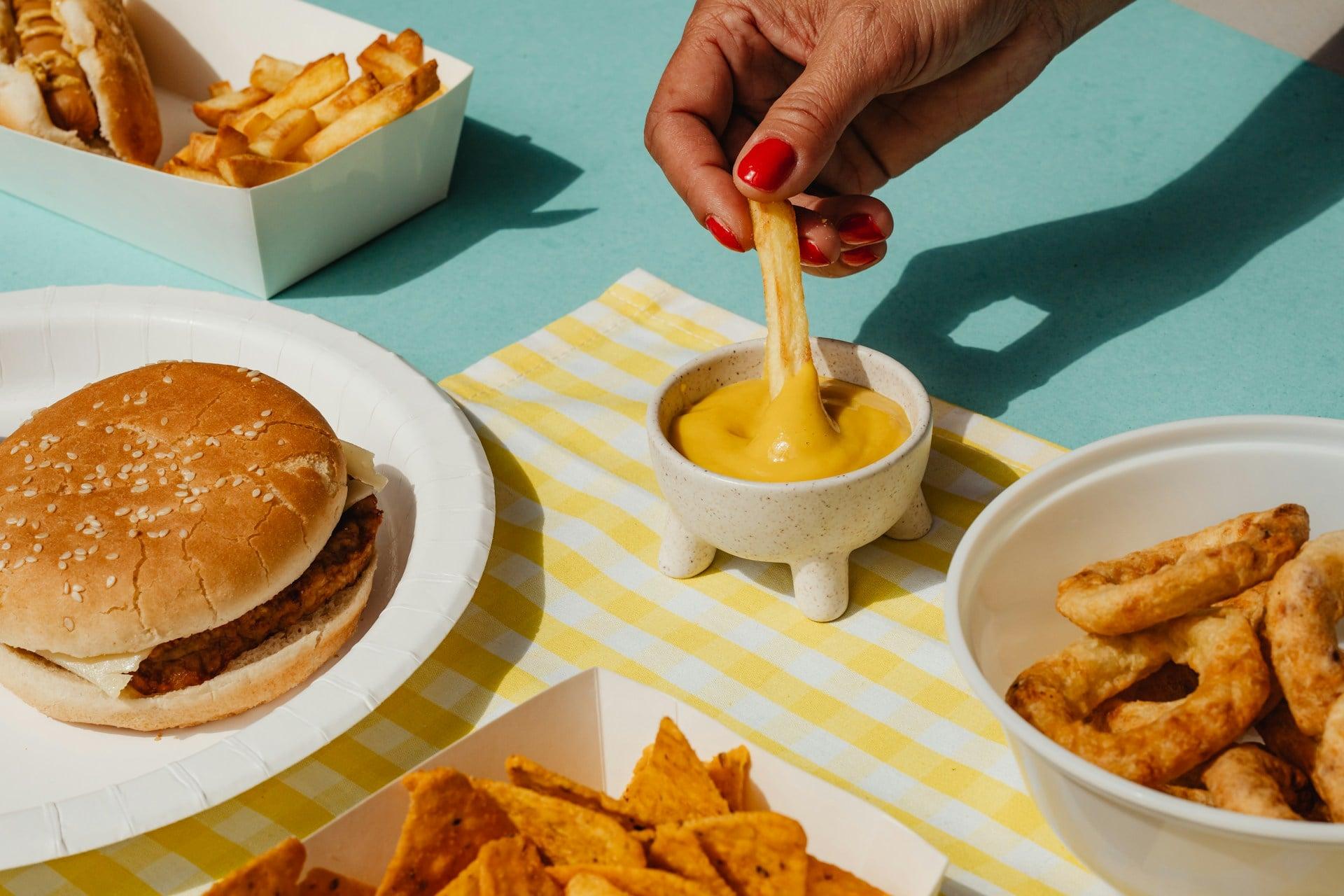
Sauces feel like a small addition, but they're one of the most overlooked calorie sources at fast food restaurants. They're typically made from oils, corn syrup, and flavor enhancers — a combination that quietly inflates the energy content of your meal.
A single "extra sauce" can carry as many calories as a small snack on its own.
The problem is that most people don't factor sauces into their mental calorie count — which is exactly what makes them so effective as a hidden trap. If you're trying to eat more mindfully, understanding the psychology behind your eating habits can make a real difference.
4. Sugary drinks and "refreshers" — one of the biggest pitfalls
Iced coffees, flavored sodas, and branded "refresher" drinks are among the most calorie-dense items on any fast food menu — and they rarely feel that way.
Holgate highlights that these drinks are often loaded with sugar, which causes a sharp spike in blood sugar followed by an energy crash. You get a short burst of energy, then fatigue sets in — and the cycle often leads to ordering more food than you actually need.
5. Value meals and combo deals — when more is just more
A good deal feels smart. But combo meals are designed to make you eat more than you planned — larger portions, extra sides, and a drink you might not have ordered otherwise.
According to Holgate, the perceived value of these packages tricks us into overeating. Because it feels like a better deal, we feel justified in finishing everything on the tray — even when our body stopped needing it halfway through.
6. All-you-can-eat and unlimited options — losing track of fullness
Unlimited refills, bottomless sides, or all-you-can-eat formats create a subtle psychological trap: your attention shifts away from how full you actually are.
Holgate explains that the "one more bite won't hurt" mentality kicks in quickly in these settings, and before long you've consumed significantly more than you intended — not out of hunger, but simply because the option was there.
7. Bowls — when "healthy-looking" is misleading
Burrito bowls, grain bowls, and salad bowls have a health halo around them. They look fresh, balanced, and nutritious. But looks can be deceiving.
When you layer in rice, beans, cheese, sour cream, crispy toppings, and a generous pour of dressing, you can easily end up with a high-carb, high-calorie meal that rivals anything else on the menu. The "light" feeling is often just an illusion. If you're curious about how fast food affects more than just your waistline, the mental health connection is worth exploring too.
Balance is the real goal
Fast food doesn't have to be the enemy. But being aware of what's actually in your order — not just what it looks like — makes a genuine difference. As Kelsey Holgate puts it, mindful eating isn't about restriction. It's about recognizing the hidden calories, understanding the tricks, and making smarter choices without feeling deprived.
Even one or two small swaps — skipping the extra sauce, choosing water over a flavored drink, going for the standard size instead of the "value" upgrade — can add up to a meaningful change over time.