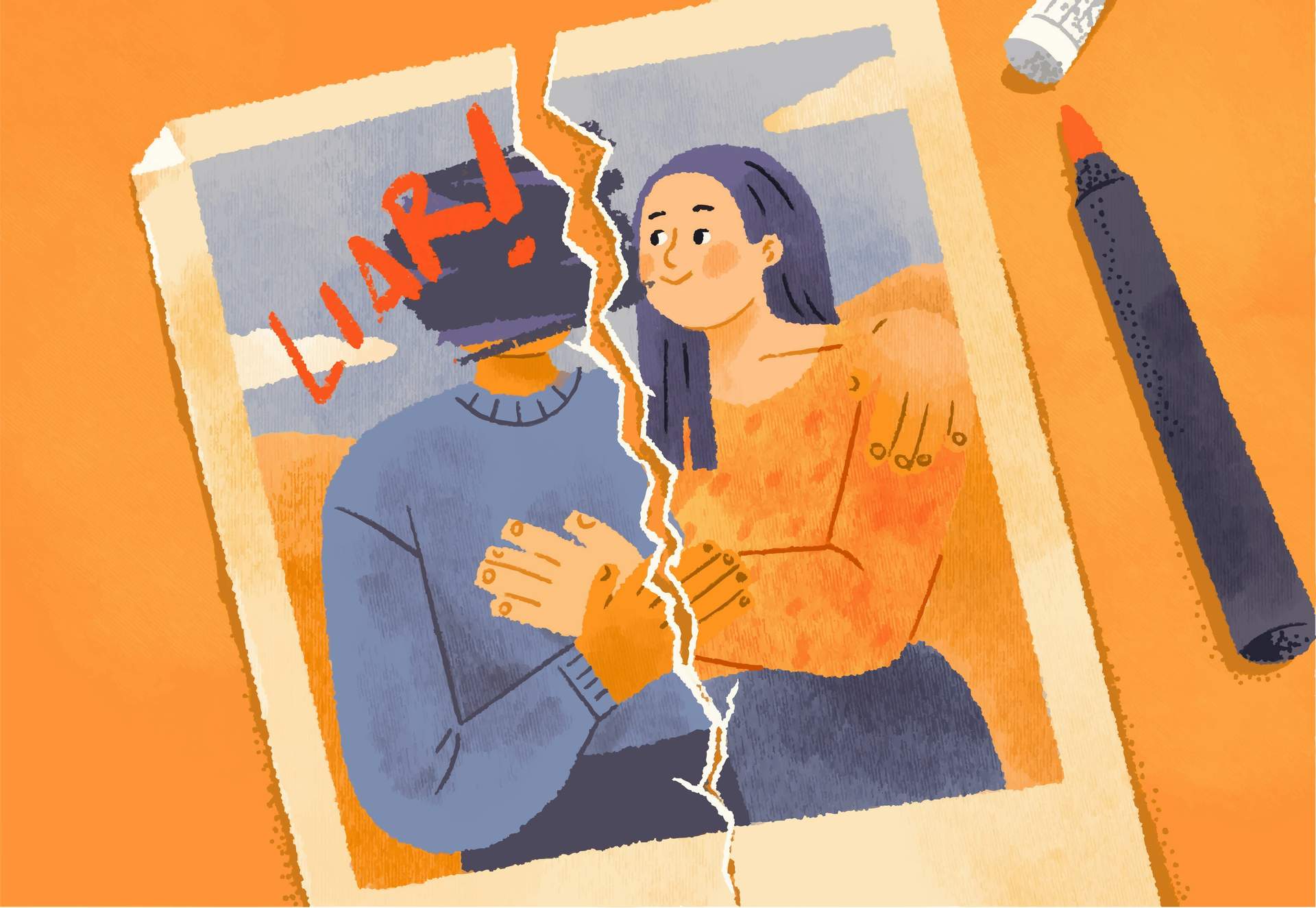
We talk a lot about women in toxic relationships. Far less often do we hear from the men living through the same thing — the ones who quietly absorb the coldness, the guilt trips, the scenes, until one small moment of ordinary kindness makes everything painfully clear.
Sometimes it takes a stranger's gentle question, a coworker's hand on your shoulder, or the shock on your friends' faces to see what you've been living with. These men shared the exact moment they finally understood: they weren't in a happy relationship at all.
The question no one at home ever asked
One of my childhood friends died, and I went to the funeral with my fiancée. Two weeks later I broke down crying when one of her friends put her hand on mine, looked me in the eye, and asked how I was doing. Because I wasn't doing well — and I could see she genuinely cared.
My fiancée never once asked how I was. She just carried on with her life as if nothing had happened. It didn't bother her that I hadn't slept in days, or that I was spending hours locked in the bathroom.
The airport ride that said everything
A friend's wife offered to pick me up from the airport in her husband's place, since he was away on business. My flight landed at two in the morning.
I have a girlfriend who can drive. I didn't even ask her — because she'd already made it clear that I shouldn't even think about asking her to come get me. Yet for my friend's wife, it was simply the obvious thing to do.
Gentle hands and an honest voice
I wasn't feeling right even by the time I got to work — I could feel the chills coming on. That weighed on me, because my girlfriend had invited my brother-in-law and his wife over that evening (they came by several times a week), and I knew she'd be furious if I wasn't on top form.
I was sitting there dreading the lecture I'd get at home when one of my coworkers came over. She said I didn't look well and gently touched my forehead. She realized I had a fever, quickly made me a hot tea, handed me two tablets, sat down beside me, put a hand on my shoulder and asked if she should drive me home.
Her voice was kind, full of concern. And this woman wanted nothing from me — she'd recently introduced her fiancé at a company party, and they were adorable together. She was simply, genuinely kind to me, without any hidden agenda.
Meanwhile, I was afraid to go home, because I knew only scolding and drama were waiting for me there. That was the moment I realized my girlfriend was toxic. If you've ever wondered whether the problem might be closer to home than you think, it's worth learning to recognize the signs of a toxic relationship.
The wake-up call at the hospital
I had a heart attack and was rushed in by ambulance. The next day my wife flew off to Greece with her friends, telling me I had to understand — it was already paid for and the money would be wasted if she didn't go. I told her to go ahead — and she did.
It stung a little, but I understood. It only hit me how surreal the whole thing was when my family and friends reacted with shock and made no secret of how they felt about it.
"You almost died yesterday, and she's already sipping cocktails on the beach?"
Who actually asks how your father is
During the pandemic, my dad caught COVID, and by the third day it hit me that the only person asking how he was doing was my elderly neighbor. My girlfriend — who lived with me — never once asked.
The knot in my stomach before every party
I was afraid when she announced she was coming to the company party, because I knew she'd make a scene. I'd had a knot in my stomach for days beforehand and invented every excuse not to go, but she was immovable.
"Is there some little office fling you don't want me to meet? Why else wouldn't you want me there?!"
That's what I had to listen to, so in the end I gave in. The first hour was fine, but after the third cocktail she started laughing far too loudly — and every time, heads turned in our direction.
I was exchanging a couple of words with a female manager at the buffet — literally about whether the pork or the cheese sandwich was better — when she came staggering over and started shouting, demanding to know why I always humiliated her by "flirting right under her nose."
Embarrassed, I tried to calm her down, but she only made a bigger scene, and I had to hold her back to stop her going for my manager. In the end, a male colleague and I had to drag her to the car — by then she was sobbing and spitting out profanities, her makeup running down her face.
On Monday I walked into work ashamed, not looking anyone in the eye, because I couldn't bear my colleagues' pitying glances. I went in to talk to my manager, who told me to forget the whole thing, then quietly added:
"Look, I don't want to pry into your private life, but you deserve better…"
Can men be victims in a toxic relationship?
Absolutely. As these stories show, men can also live for years with a partner who dismisses their feelings, provokes scenes and shows no care in a crisis. The difference is that they often stay silent about it far longer.
What was the turning point for these men?
For each of them, it was a small moment of contrast — a stranger's gentle question, a coworker's genuine concern, or the shocked reaction of family and friends. Seeing real kindness made the coldness at home impossible to ignore.
Why is it so hard to notice a toxic relationship from the inside?
When guilt trips, drama and indifference become part of everyday life, they start to feel normal. As these men describe, it often takes an outside perspective — someone treating you with warmth — to realize just how much you've been putting up with.
What are some warning signs to look out for?
The stories point to a partner who never asks how you are, shows no concern during a health crisis, makes public scenes, and accuses you of things without cause. When the people around you are more worried about you than your own partner is, that's a signal worth taking seriously.