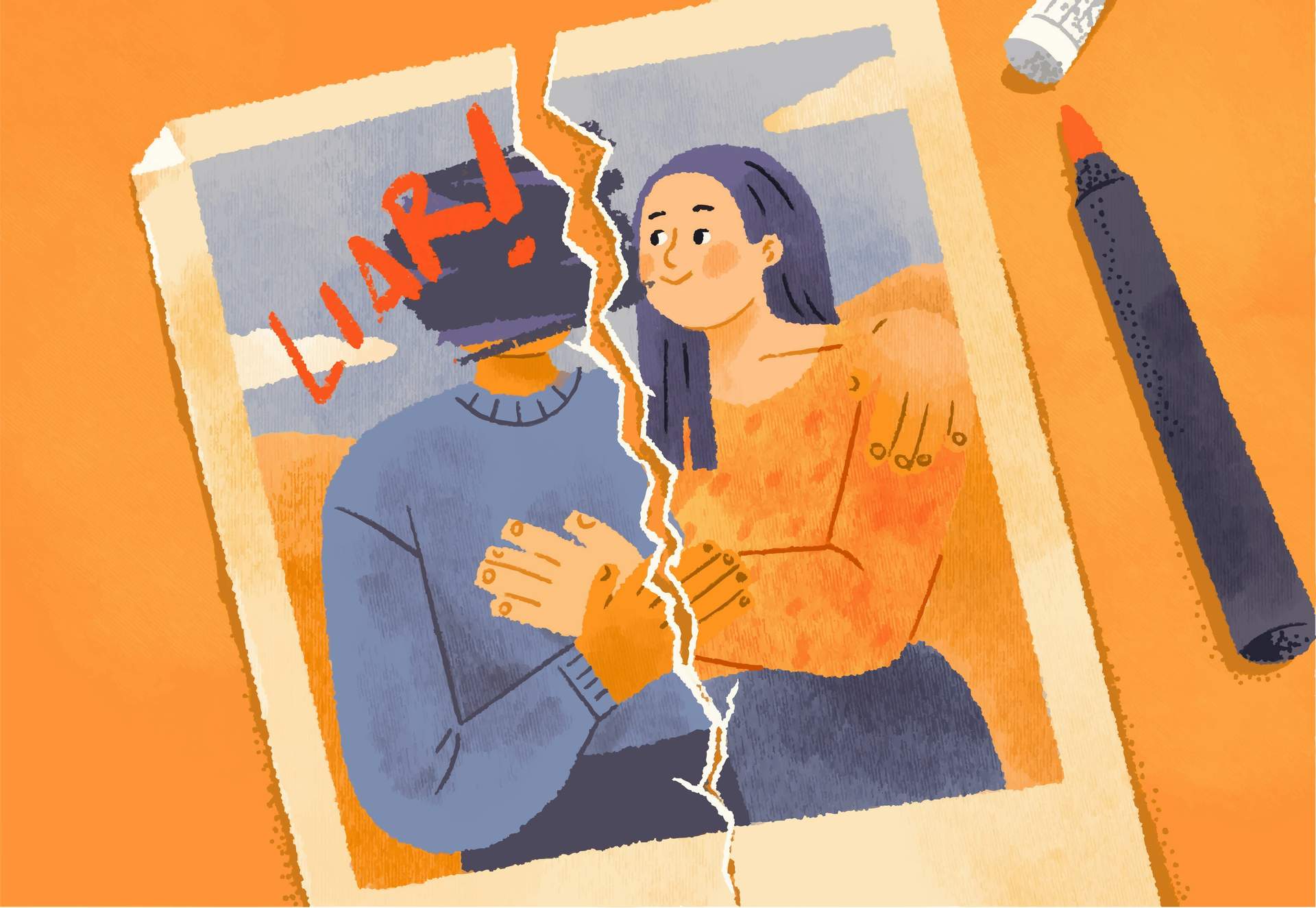
Emotional manipulation is hard to spot precisely because it doesn't announce itself. It creeps in gradually, one small moment at a time. The real red flag isn't a single incident — it's a pattern. And once you see it, you can't unsee it.
Your reaction becomes the problem
Something hurt you, so you speak up. But somehow the conversation always ends up in the same place: how you said it, why you're so sensitive, why you always overreact. The actual issue — the thing that hurt you — quietly disappears from the room.
Your feelings are put on trial instead of being heard. You walk away wishing you'd never said anything at all.
Affection on a timer
Warmth and tenderness do exist in the relationship — but they're carefully rationed. The closeness shows up right when you're on the verge of pulling away, and while it always feels genuine in the moment, the timing is never an accident. It's just enough to keep you from leaving.
Your vulnerabilities used against you
You opened up. You shared a painful memory, a fear, something deeply private. And that thing has a way of resurfacing — you're never quite sure when, but it always does.
It won't be thrown in your face directly. Instead, it gets dropped into conversation just carefully enough to seem accidental — but aimed precisely where it hurts most.
The rules keep changing
What was perfectly fine yesterday is suddenly a problem today. Just as you think you've figured out what's acceptable, everything shifts. There's never a warning — only a reprimand. The one constant is that you're always the one who got it wrong.
Apologies that aren't really apologies
On the rare occasions an apology comes, it sounds something like this:
"I'm sorry, but if you hadn't done that..."
It always circles back to being entirely your fault. You end up feeling worse than if the conversation had never happened.
Reality gets rewritten
You said something. You remember exactly what you said. But when it comes back to you, it's been twisted into something else entirely. Or they said something you clearly heard — and when you bring it up, they tell a completely different version of events.
The goal is always the same: shift the blame onto you. Arguments stop being about the actual issue and turn into exhausting battles over what really happened. And it happens again and again.
Decisions made under pressure
There's always a deadline. You're pushed into making a choice before you've had time to think it through — before you can see clearly. And that's entirely intentional.
If you later regret the decision, they simply shrug. It was your choice, after all.
Mysterious "sources"
Another classic tactic: information delivered through unnamed third parties.
"People are saying..." "Someone mentioned to me that..."
The information is always damning, and you have no way to defend yourself — because how do you argue against faceless, nameless people?
Your independence is punished
Making a decision on your own is always a problem. If you do something without consulting them, there's a consequence — not necessarily a blowup, but a quiet withdrawal. Just enough coldness to make you feel like you've crossed a line.
On the surface, they say you're free to do as you like. But you've learned that freedom comes with a price.
Projection
They accuse you of exactly what they're doing. You find yourself defending yourself against something they're actually guilty of. A clear example: being accused of cheating by the person who is cheating.
Isolation, one small step at a time
The cutoff doesn't happen all at once. It's a slight sulk when you want to see friends, or a conveniently planned family obligation that clashes with your plans. Slowly, quietly, your world gets smaller.
Pain used as a weapon
Their suffering is so loud and ever-present that you can't make room for your own. Every time you raise something that's bothering you, they raise the stakes — and somehow you end up comforting them. Eventually, you stop bringing things up at all, because only one of you is ever allowed to be hurting.
Making up always falls on you
After every big fight, you're the one who has to do something to restore the peace. You're the one who has to make the gesture, offer the olive branch, do the work. Change is never mutual — it's always something you alone have to do.
You rehearse conversations in your head
You catch yourself mentally scripting exchanges before they happen. You run through what will set them off, what they'll push back on, and what you'll say in response.
And before long, this happens on an ordinary Wednesday afternoon — not just before serious conversations. Because somewhere along the way, you learned that you always need to be ready to fight.
You don't do this with anyone else. With them, it's become automatic.
Is this emotional manipulation?
A single incident isn't manipulation — a pattern is. If several of these signs feel familiar and they repeat consistently, that's worth taking seriously. Emotional manipulation can quietly erode your sense of reality, your confidence, and your sense of self over time.
Talking to a therapist or counselor — even on your own — can help you make sense of what you're experiencing and figure out what to do next.
What is emotional manipulation in a relationship?
Emotional manipulation is a recurring pattern of behavior where one partner uses psychological tactics — such as guilt, blame-shifting, gaslighting, or withdrawal of affection — to control the other. It's different from a bad day or a heated argument because it happens consistently and follows a recognizable pattern.
How is emotional manipulation different from gaslighting?
Gaslighting is one specific form of emotional manipulation where your partner denies or distorts reality — making you question your own memory or perception of events. Emotional manipulation is a broader term that includes gaslighting along with many other tactics like isolation, projection, and weaponized apologies.
Why is emotional manipulation so hard to recognize?
Because it builds gradually, in small steps, and is often mixed with genuine affection. Manipulative partners frequently show warmth and closeness — which makes it harder to see the pattern clearly, especially from the inside.
Can the relationship change if a partner is emotionally manipulative?
Change is possible, but it requires the manipulative partner to genuinely acknowledge the behavior and actively work on it — usually with professional help. As the article notes, change in these dynamics is rarely mutual on its own; it almost always has to be prompted and sustained through outside support.