1. Corpse Pose (Shavasana)
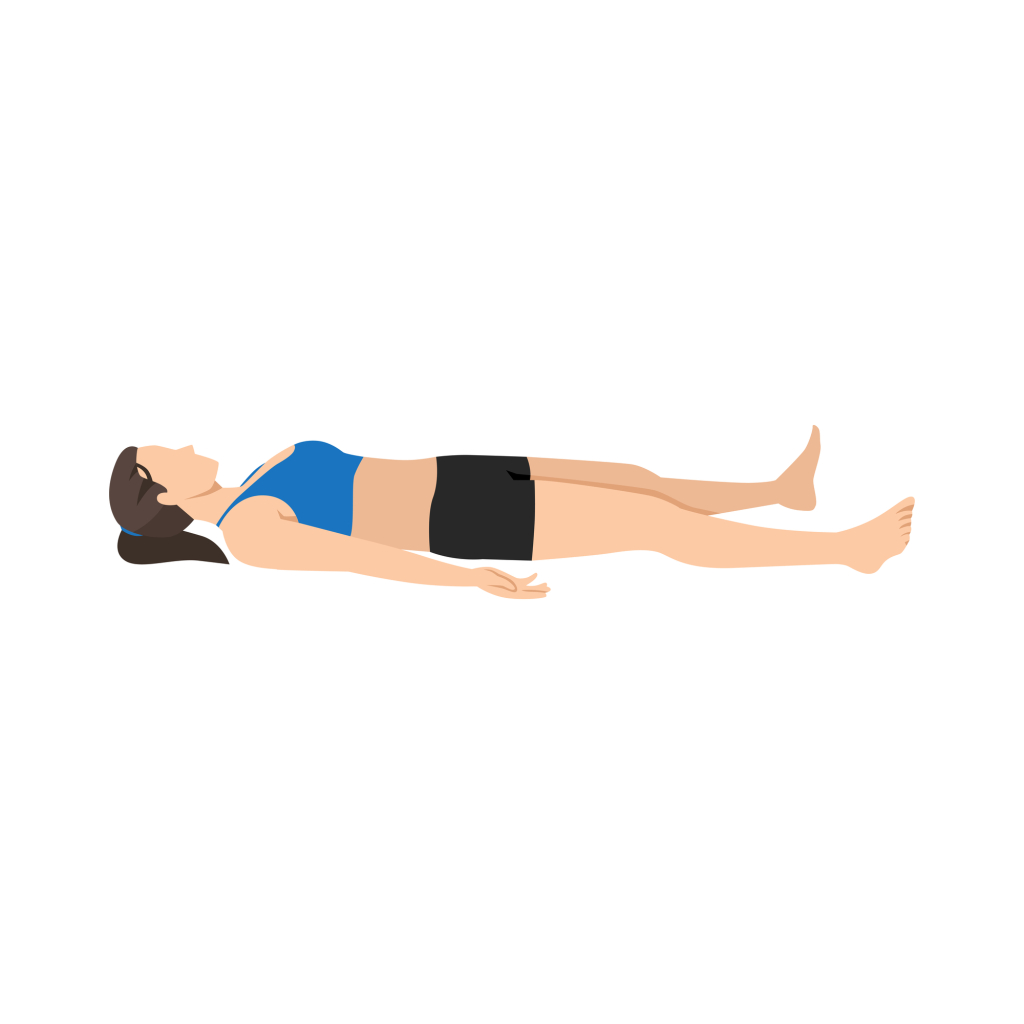
Lie on your back with your legs spread as wide as your yoga mat and your arms resting loosely by your sides. Close your eyes. Let your whole body relax and notice your chest and belly rising and falling with each breath.
How does it ease stress? It’s no coincidence that yoga classes often end with this pose. Some believe that practicing 20 minutes of corpse pose can recharge your body with the energy equivalent to eight hours of sleep when done right.
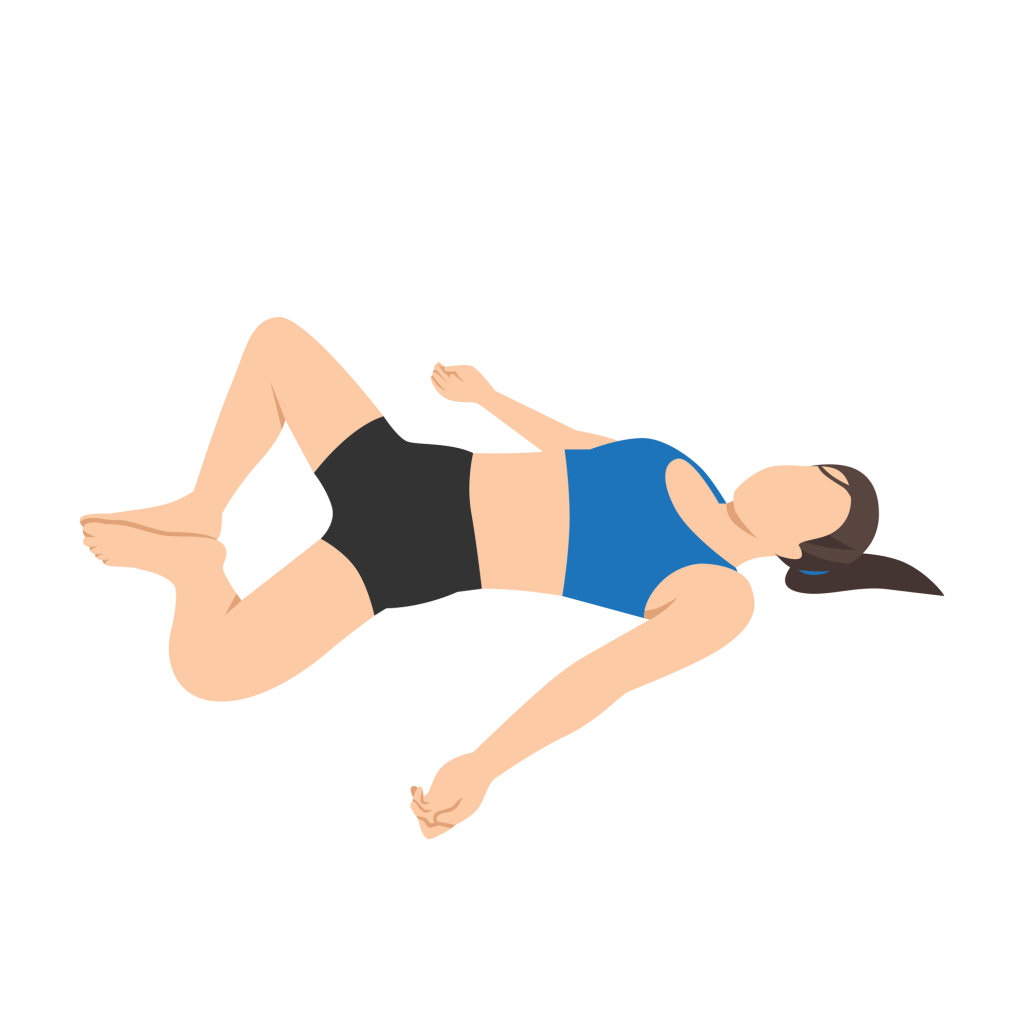
2. Reclining Bound Angle Pose (Supta Baddha Konasana)
Place a pillow lengthwise on your mat (you can also use folded blankets or a rolled towel) and lie back so it supports your spine, neck, and head. Keep your tailbone and hips grounded on the floor. Bring your feet up and let your knees fall open wide.
(If needed, tuck blocks, pillows, or rolled towels under your thighs or knees for better support.) Stretch your arms out to the sides, just below shoulder height, palms facing up. Close your eyes and stay here for up to five minutes.
How does it ease stress? For women experiencing menstrual discomfort, this pose gently stretches and relaxes the muscles in the pelvic area. Opening the chest improves breathing, which helps reduce stress. Plus, it tones your inner thighs and hips.
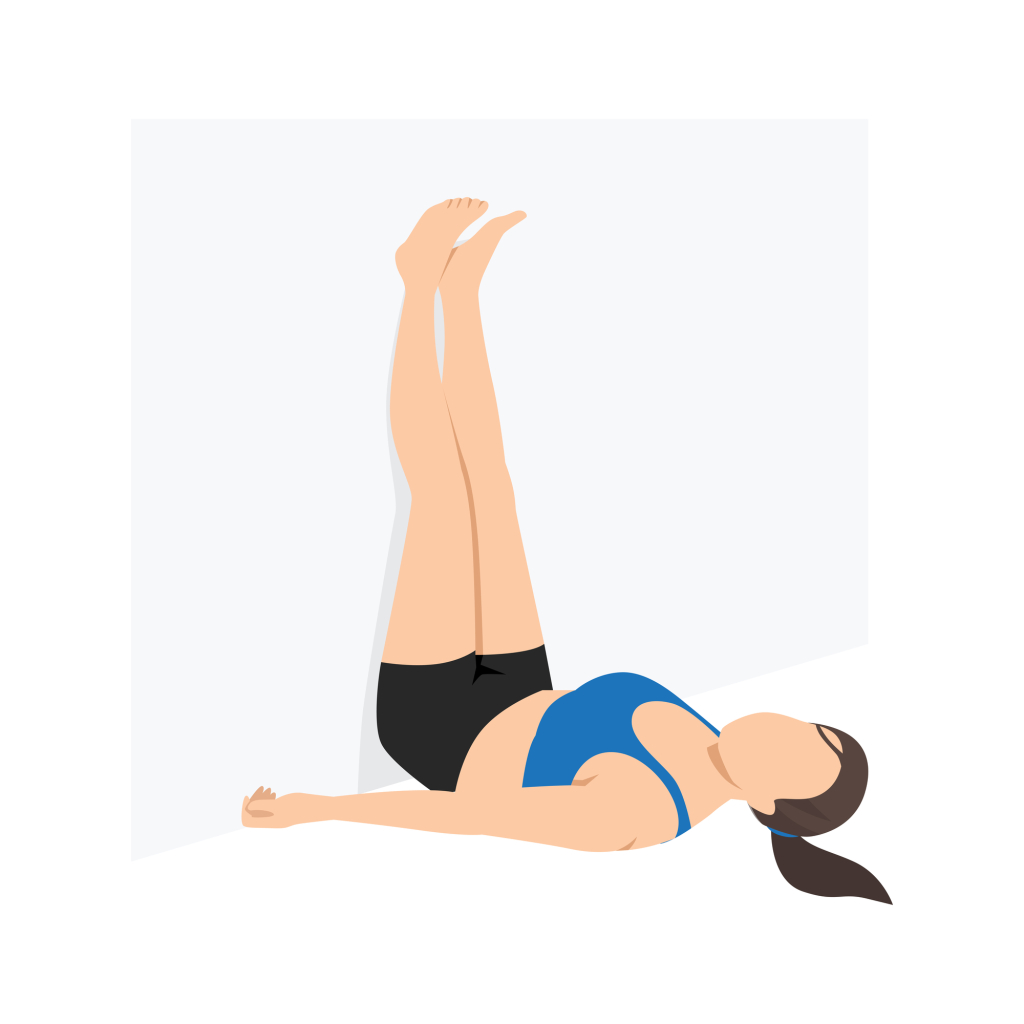
3. Legs-Up-The-Wall Pose (Viparita Karani)
Sit with one side of your body against a wall. From here, lie back and swing your legs up so they rest against the wall, either together or hip-width apart, with your ankles relaxed. If your lower body feels stiff, move your hips a few inches away from the wall. Relax your arms by your sides, palms facing up, and stay like this for one to five minutes.
How does it ease stress? This pose reverses your body’s usual circulation and movement, helping you enter a relaxed state. It gives your brain a chance to switch off and let go of heavy thoughts.
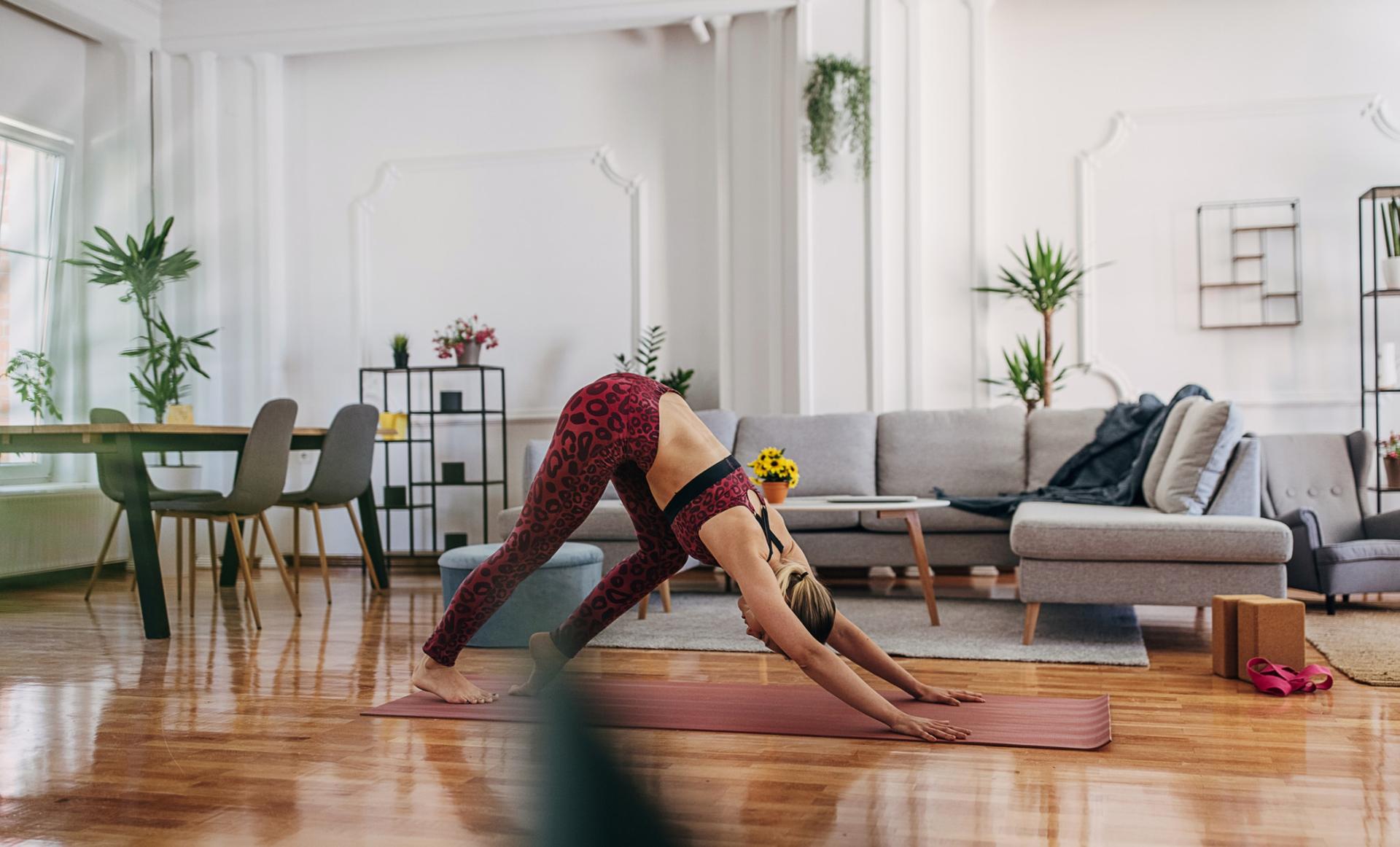
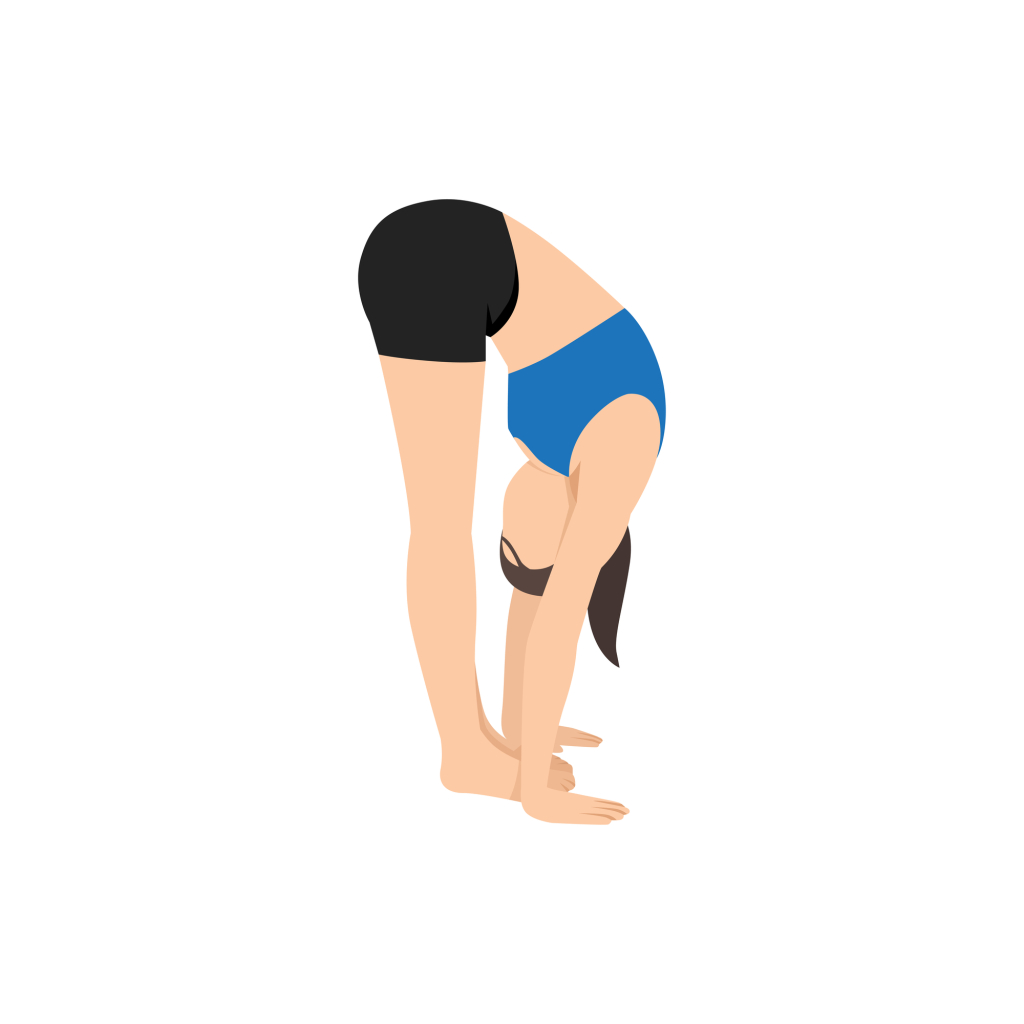
4. Standing Forward Bend (Uttanasana)
Stand with your feet hip-width apart. Bend your knees slightly and fold forward from your hips. Let the crown of your head hang heavy toward the floor. Bend your elbows and hold each elbow with the opposite hand. Stay here from 10 seconds up to a minute, sinking deeper into the pose with every exhale.
How does it ease stress? Stress and anxiety often build up in the lower back, neck, or shoulders. This pose helps release that tension from your upper body. However, if you have a herniated disc or high blood pressure, it’s best to avoid this pose.
5. Head-to-Knee Pose (Janu Shirshasana)
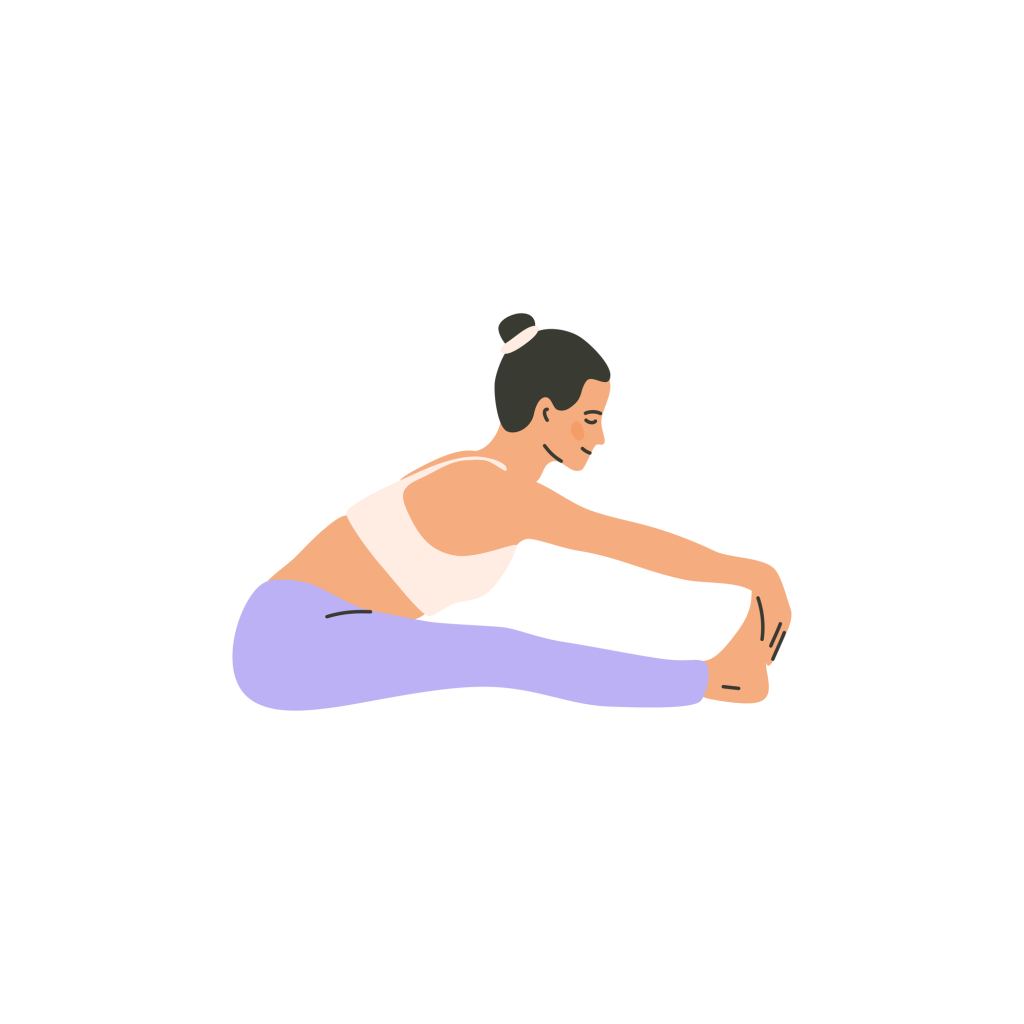
Sit on the floor with your legs stretched out in front of you. Bend your right knee and place your right foot against your left inner thigh. Sitting tall, stretch both arms overhead. Exhale and fold forward from your hips over your left leg, lengthening your neck and keeping your shoulders relaxed.
Rest your hands wherever they reach on your left shin, and relax—there’s no need to prove anything! Inhale to lengthen your spine, exhale to fold deeper. Hold for 10 to 60 seconds, then switch sides.
How does it ease stress? When you’re stressed or anxious, you tend to cling to your thoughts, events, and emotions. This pose works against that. Like other forward bends, it helps cultivate a letting-go attitude, freeing you from limiting thoughts and feelings and calming your mind.
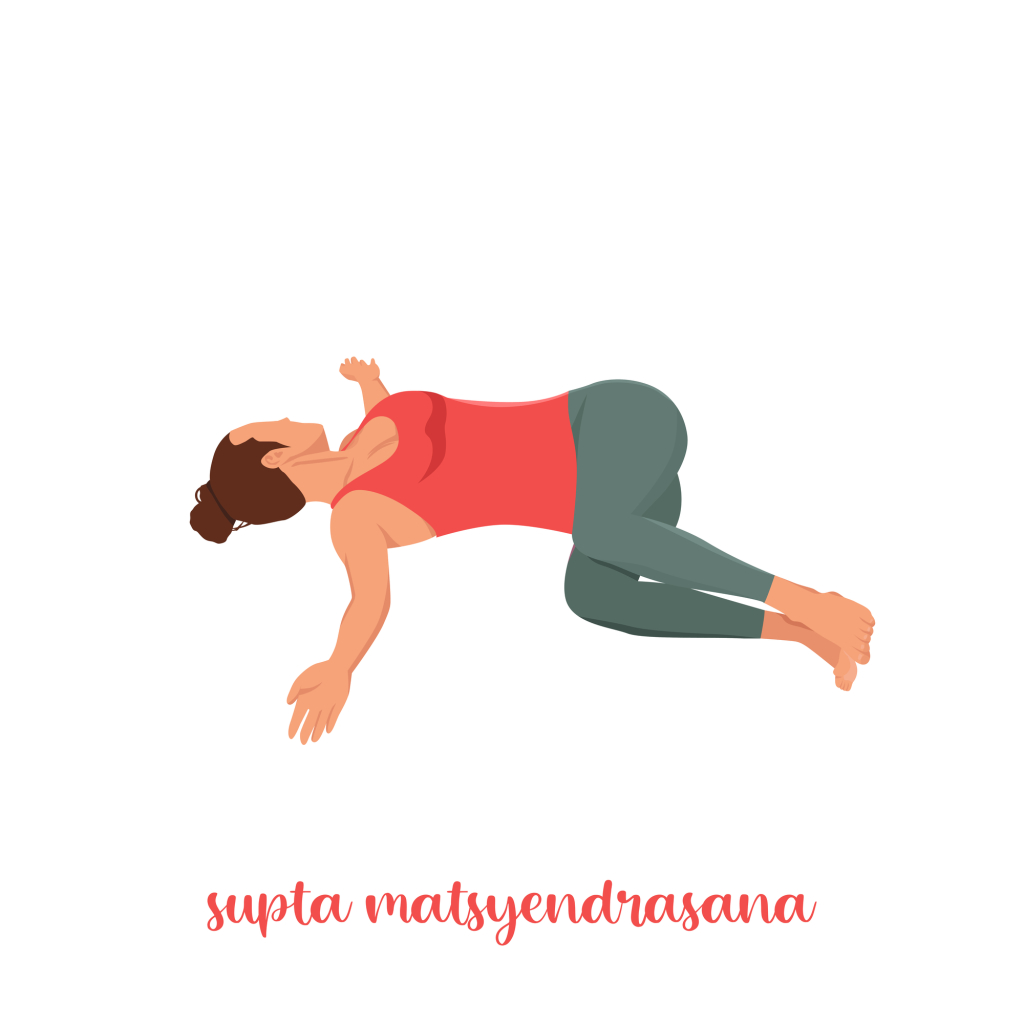
6. Supine Spinal Twist (Jathara Parivartanasana)
Lie on your back with your arms stretched out to the sides at shoulder height, palms facing up. Draw your knees to your chest and slowly lower them to the right. Keep your left shoulder on the floor, turn your head to the left, and hold for 10 to 30 seconds. Bring your knees back to center and repeat on the other side.
How does it ease stress? This gentle spinal stretch massages your abdomen to ease digestive discomfort. It also helps release tension in the spine.