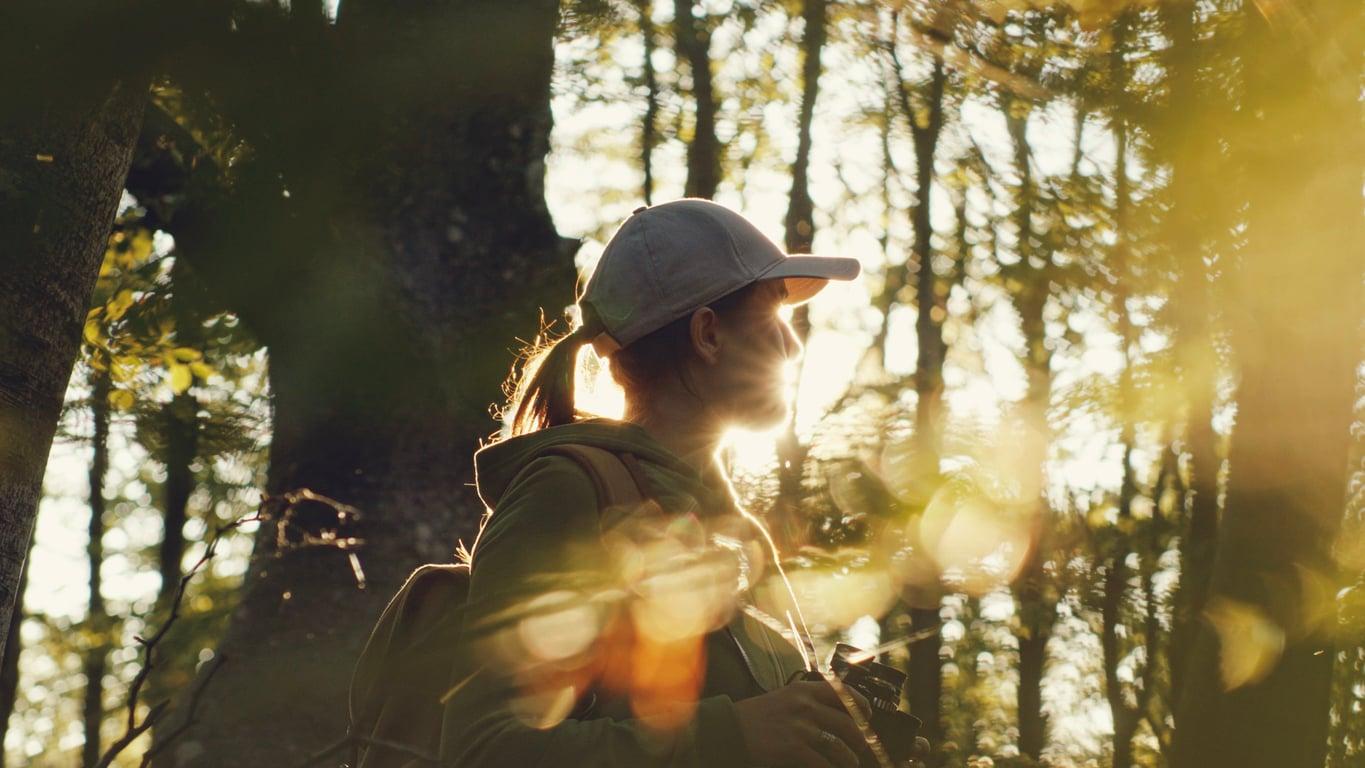
You've probably felt it yourself: after a long walk through the woods, the air feels lighter — and not just literally. Your thoughts go quiet, your body loosens, and the mental noise that buzzed in your head all day suddenly fades.
That's no accident, and it's not simply the relief of escaping your four walls. Researchers know exactly what happens in those moments, and the results are more convincing than you might expect.
What forest therapy actually is
Forest therapy isn't some specialized technique you can only practice with an expert. According to an analysis published in the journal Health & Environment Research, summarizing studies from 1990 to 2020, forest therapy is really an umbrella term.
It covers walking, meditation, social activities in nature — almost anything that takes place in a woodland setting and supports your wellbeing. What matters isn't the type of activity, but whether you're truly present while you do it.
Research has consistently found a link between forest therapy and a reduction in symptoms of anxiety and depression — in healthy people and those already struggling alike.
The difference from an ordinary walk comes down to one thing: with forest therapy, presence is everything. It's not enough to be outside while scrolling your phone or mentally running through tomorrow's to-do list.
A walk in the woods has to be paired with conscious awareness — you actually have to be there, inside the sensory experience, says clinical psychologist Stephanie Freitag.
If you're curious about the deeper emotional side of this, you might enjoy reading why some people trust forest walks more than long conversations.
Why it works on your nervous system
One reason is beautifully simple: nature asks nothing of you.
"So many people spend their entire day under constant stimulation — notifications, traffic, deadlines, screens," says clinical psychologist Jessica Meers. "Time in nature gives the nervous system a chance to finally rest."
Natural light also helps regulate your circadian rhythm, which affects both your sleep and your anxiety levels. And there's something less obvious at play, too: gratitude.
The beauty of nature almost imperceptibly stirs a sense of wonder, and research suggests that gratitude on its own has a measurable effect on symptoms of depression and anxiety.
"Mindfulness and gratitude together are one of the surest paths to wellbeing," Freitag adds.
This isn't abstract theory. When you stop in front of a tree and really look at it, something shifts inside your brain.
How to actually do it
The most important thing the experts emphasize: it's not about how much you do, but how consistently you do it. Five to ten mindful minutes outdoors each day does more over time than the occasional big hike.
The nervous system doesn't respond to one-off experiences. Real change happens when time in nature becomes a habit — not a reward you only allow yourself once everything else is done.
If it's hard to fit into your day, tie it to something you already do: a short walk before your morning coffee, a lunch break in a park, or simply walking a route you used to drive. And it's worth switching off your phone or leaving it at home.
Not because it sounds virtuous, but because the whole effect depends on you using your senses instead of your screen. When your phone is in your hand, part of your brain stays on standby — waiting for a message, tempted to check the time. That's precisely the state you're trying to step out of.
Freitag also suggests bringing a small notebook: jot down what came to mind, what you felt, what you noticed. It deepens your presence, and it's surprising how much even a short walk can bring out of you once you put it on paper.
You don't need a long analysis — just a few sentences about how the air felt, what caught your eye, what unexpectedly surfaced. Many people find that their best ideas and their hardest thoughts both rise up in the same moment: when it finally goes quiet around them.
You don't need a forest, hiking boots, or any special knowledge. A park, a tree-lined street, the edge of a lake — any of them will do. What matters is that you pay attention, and that you keep coming back.
How long should a forest therapy session last?
According to the experts, even five to ten minutes a day is enough to make a difference. Consistency matters far more than duration, so a short daily walk beats an occasional long hike.
Do I need a real forest to benefit?
Not at all. A park, a tree-lined street, or the edge of a lake works just as well. The key is being genuinely present, not the location itself.
Why should I leave my phone behind?
Because the benefits depend on using your senses rather than your screen. With your phone in hand, part of your brain stays on alert for messages — exactly the state forest therapy helps you escape.
Is forest therapy only for people with anxiety or depression?
No. Research links it to reduced anxiety and depression symptoms in both healthy people and those already struggling, so anyone can benefit from time spent mindfully in nature.