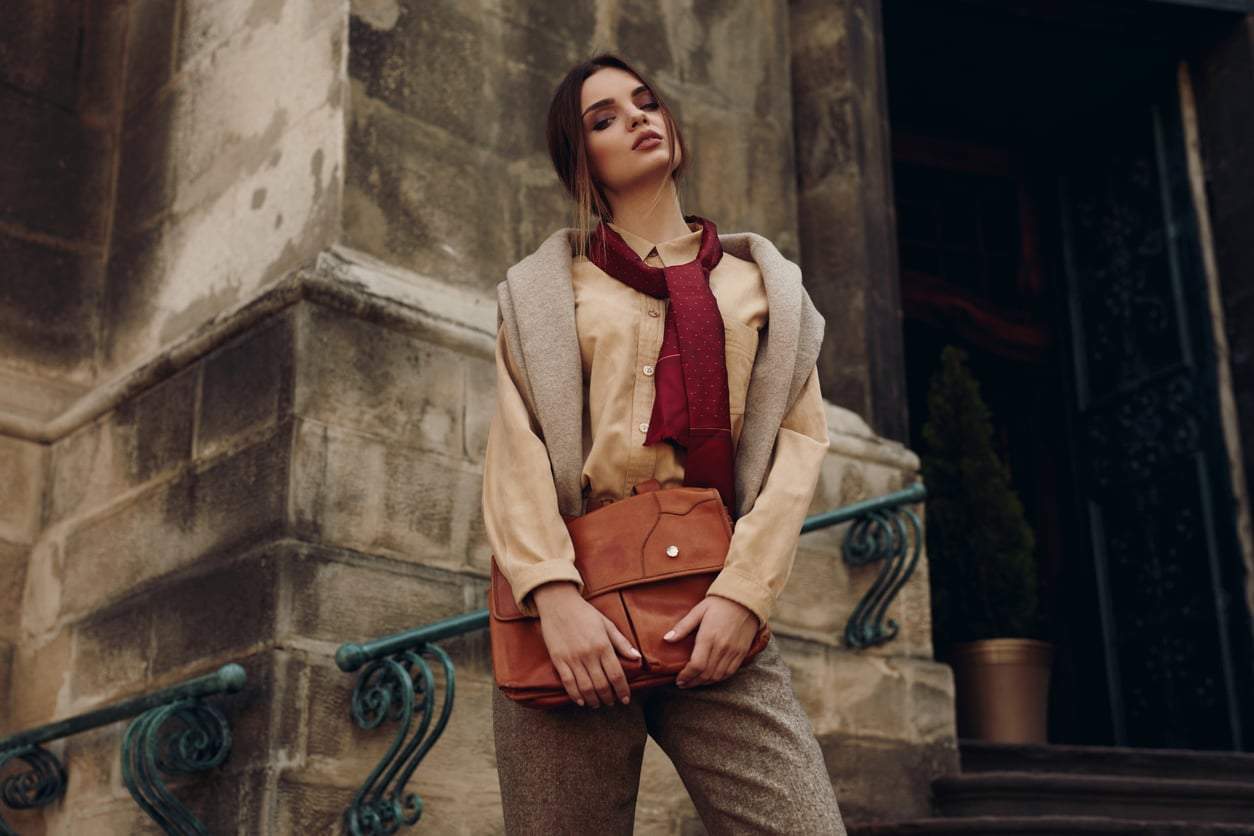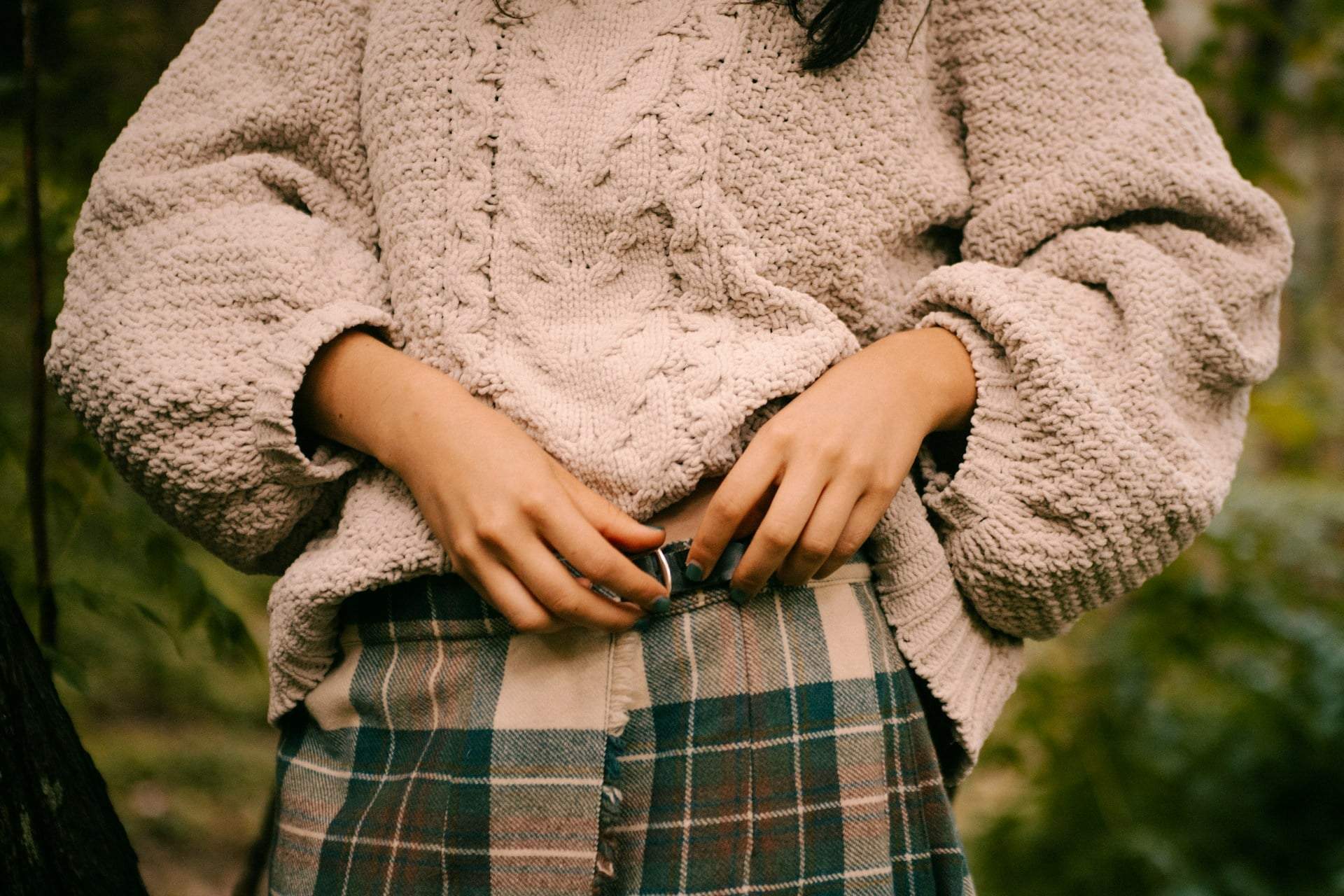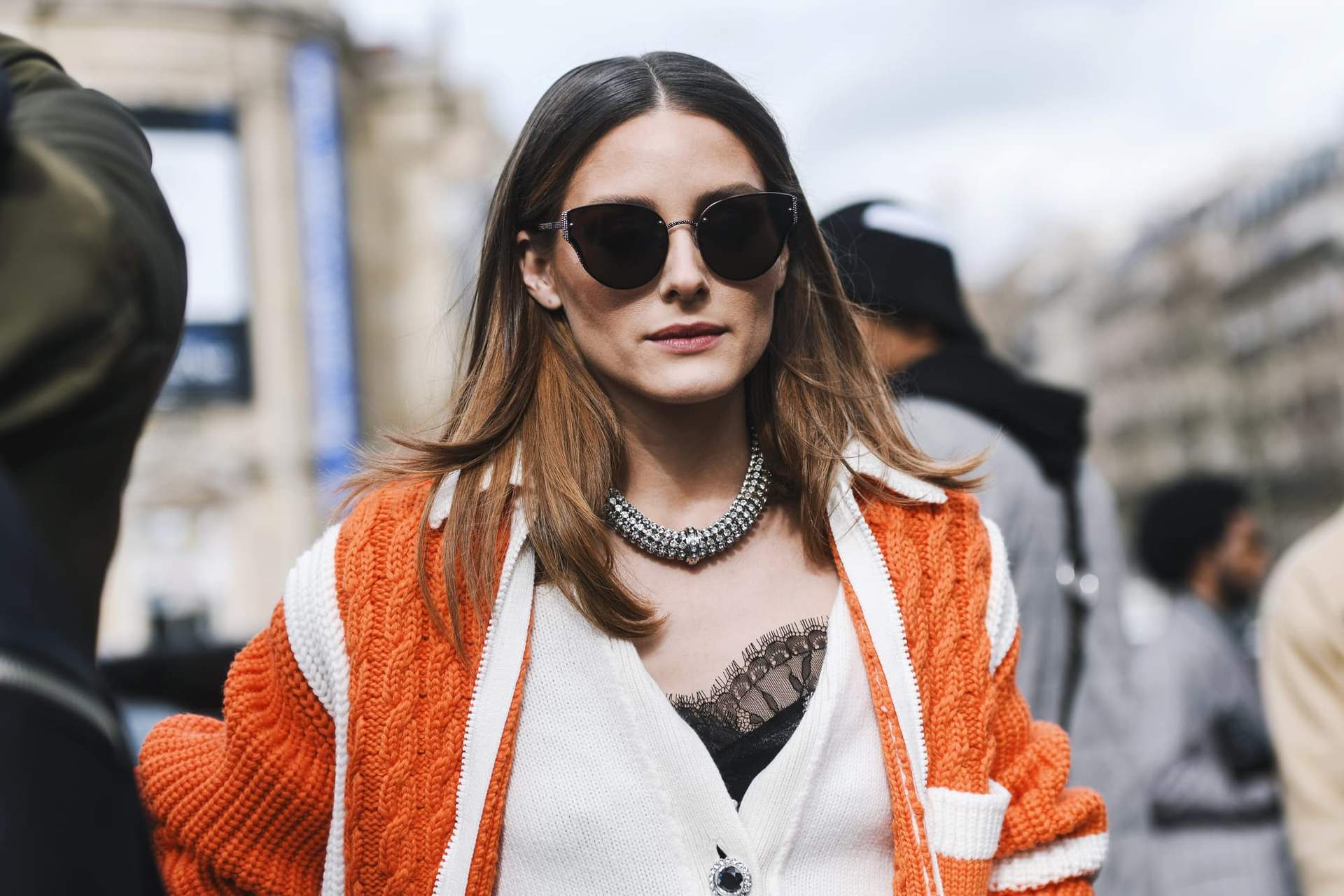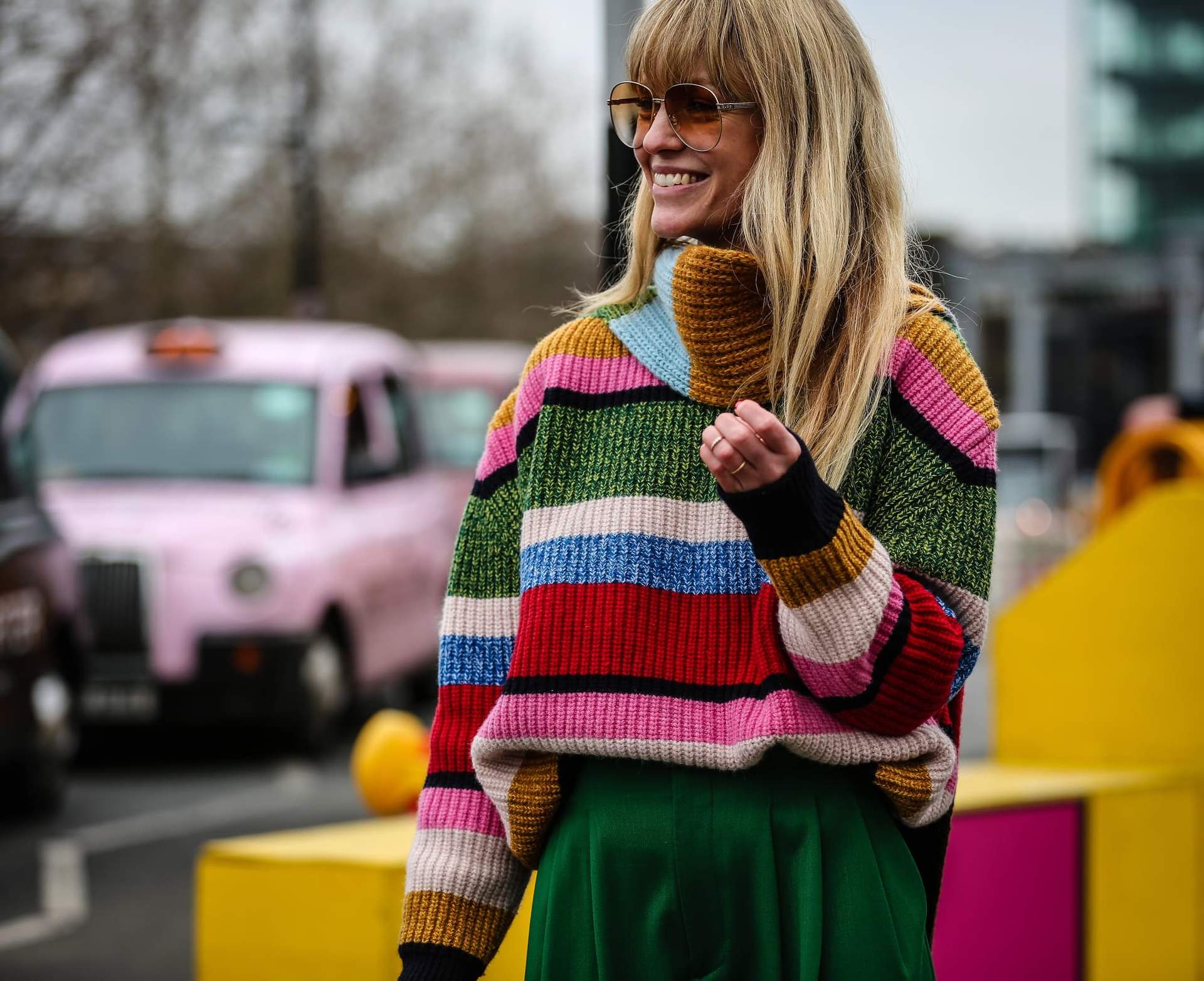
Somewhere between the tenth navy jumper and the fifth identical black coat, autumn dressing gets very quiet. A brooch is the cheapest, fastest interruption I know. It needs no new silhouette, no colour commitment, no trip to a changing room — just one small object pinned somewhere slightly unexpected, and suddenly the outfit reads as a decision rather than a default.
Why a pin works harder than another necklace
Necklaces sit where everyone already looks. A brooch moves the eye sideways and upward, to a lapel, a shoulder, a collar point, and that asymmetry is what makes an outfit look composed. It also solves the problem of high necklines: once you are in roll-necks and scarves from October onwards, a chain disappears entirely while a pin stays visible.
The other advantage is that brooches are genuinely forgiving. Nothing has to match. A brushed gold leaf on a grey wool coat, an enamel flower on a denim jacket, a cluster of tiny pearls on a cardigan — none of it requires a complete jewellery wardrobe, and the secondhand options are endless, which is where most of the interesting ones live.
Five placements that read as deliberate
The classic is the left lapel of a blazer or coat, sitting roughly a hand's width below the shoulder seam, parallel to the lapel line rather than horizontal. That is the one that always works. After that, experiment: high on the shoulder of a plain knit, almost where a military epaulette would fall, which looks modern because it is not where anyone expects jewellery. Or at the point of a shirt collar, with a second small pin on the other side if you want symmetry.
Lower placements are the current pleasure. Pin one at the hip of a wrap skirt, or where a blazer's waist seam sits, and you create a focal point that lengthens the torso. A brooch on a bag strap or on the ribbon of a felt hat is the lightest-touch version of all — decorative, slightly eccentric, and nothing you have to live with against your skin all day.
Scale matters more than price. One large piece on a plain, heavy fabric looks intentional. Several small ones scattered on a thin cardigan looks like a sewing basket tipped over. If you want to cluster, keep them within a palm-sized area and vary the sizes rather than lining them up evenly.
Protect the fabric, or you'll only do it once
The reason so many people abandon brooches is the hole left in a favourite jumper. Fine, loose knits are the vulnerable ones. The fix is simple: cut a small circle of sturdy fabric — felt, a scrap of denim, even a folded piece of leather — and pin through that on the inside, so the pin passes through the knit once and the backing takes the weight. On a very delicate knit, pin through the seam or the ribbing instead of the open stitch field, where the yarn can snag and run.
Check the clasp before you wear anything you care about losing. Old C-clasps with no locking mechanism were designed for heavier Victorian fabrics and can work themselves open on a modern coat. A rubber pin guard pushed onto the end is unglamorous and completely effective.
Where exactly should a brooch sit on a blazer?
On the left lapel, high enough to be visible when the jacket is buttoned, usually between the shoulder seam and the top button — about a hand's width down is a reliable starting point. Angle it so it follows the diagonal line of the lapel rather than sitting flat and horizontal, as the diagonal flatters the shoulder and the neck. If your jacket is collarless, move the pin up towards the shoulder instead and treat the whole chest panel as your canvas.
How do I stop a brooch from damaging my knitwear?
Always back the pin with a small piece of firm fabric inside the garment so the stress is spread rather than concentrated on two or three stitches, and choose your spot along a seam or rib where possible. Avoid heavy pieces on fine cashmere or mohair altogether — put those on a coat, a bag or a scarf instead. If a small hole does appear, a gentle rub with a damp fingertip and a bit of steam will often coax the fibres back together before it becomes a snag.