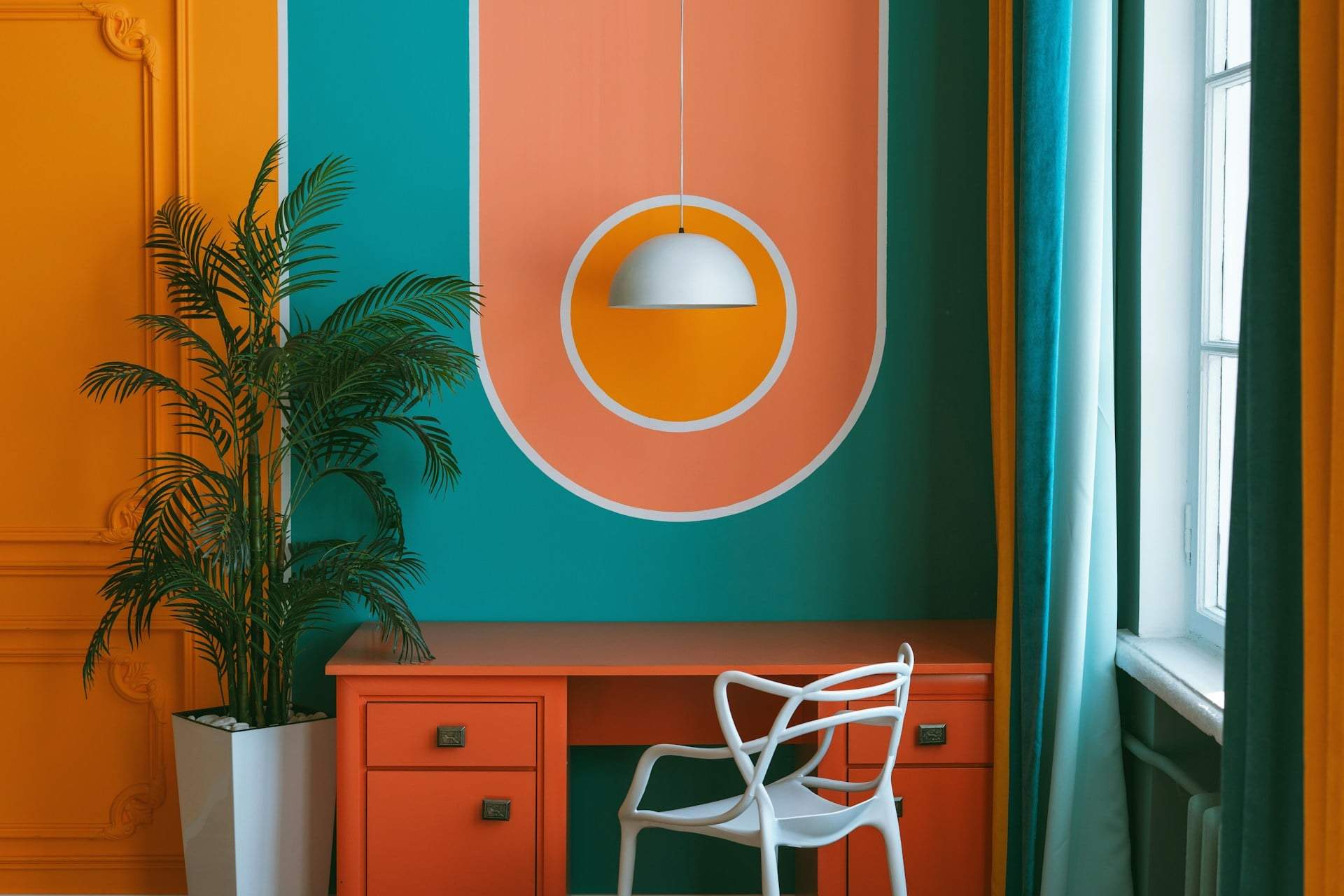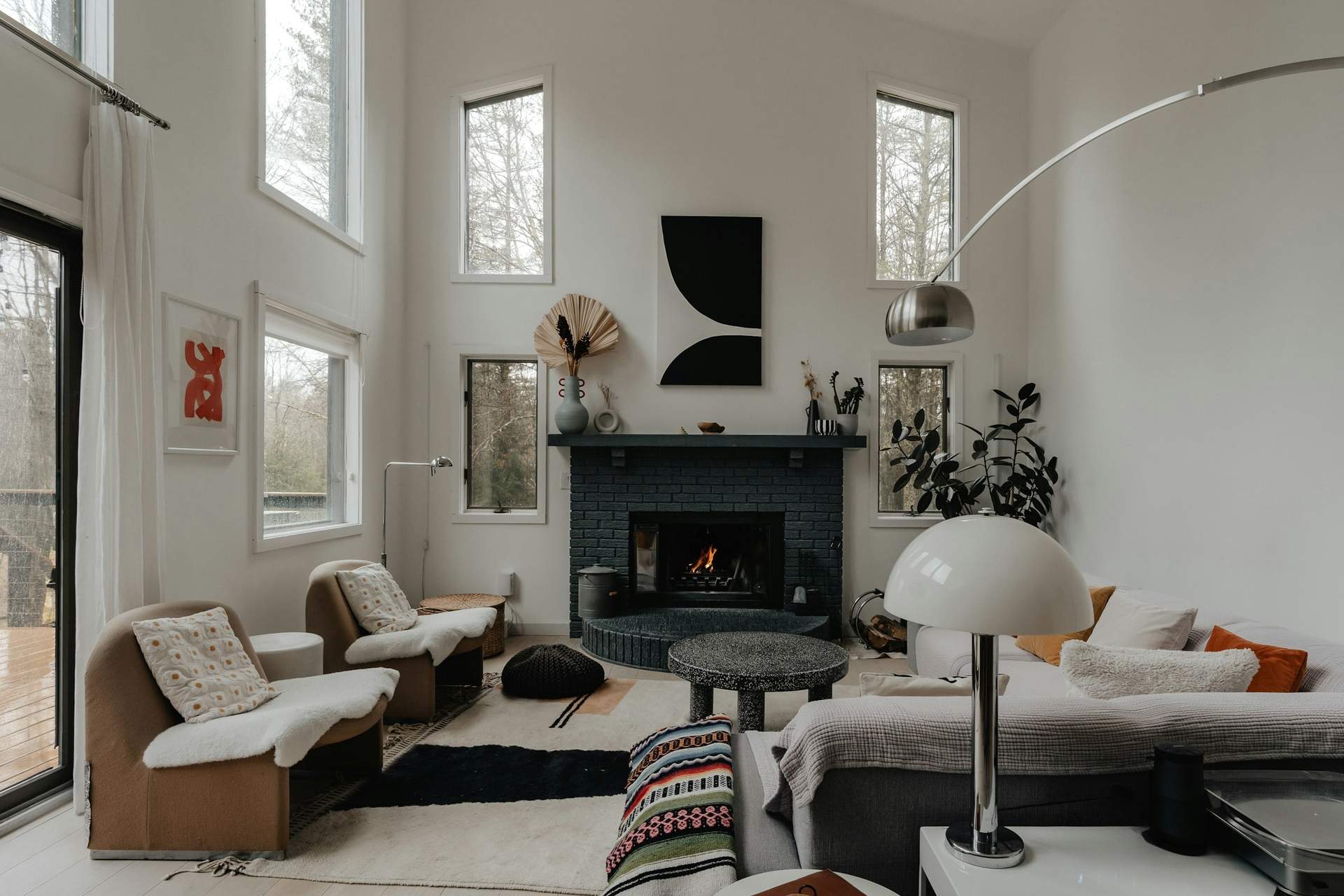
Take the colour onto the woodwork and the ceiling
This is the single biggest difference between dark rooms that feel luxurious and dark rooms that feel like a mistake. Leaving skirting boards, architraves and the ceiling in brilliant white creates a hard outline around every surface — and an outline is exactly what draws attention to how small a space is.
Painting woodwork in the same colour, in a harder-wearing finish, makes the room read as one enveloping volume. If a fully dark ceiling feels like too much, mix a little of the wall colour into a lighter tone so the ceiling relates rather than contrasts. The effect is softer and the join between surfaces stops shouting.
Finish matters more in dark colours than pale ones. A flat matt swallows light beautifully but shows every scuff; a soft sheen bounces lamplight around in a way that can rescue a gloomy corner. In a hallway with bags, coats and small people, lean towards the more washable option.
Light it in layers, never from the middle of the ceiling
A dark room under a single overhead pendant is genuinely grim — the light falls straight down, the walls stay black, and everyone looks tired. The fix is several small sources at different heights: a table lamp, a floor lamp in a corner, something low, maybe a picture light or a wall fitting.
Warm bulbs are non-negotiable here. The cooler, bluer light that looks crisp against white walls turns deep colours muddy. And put your lamps near the walls rather than in the middle of the room, so the light washes the colour and reveals its depth instead of leaving it as a flat backdrop.
Mirrors earn their place too, but not opposite the window where they just reflect grey sky. Hang one where it will catch lamplight in the evening.