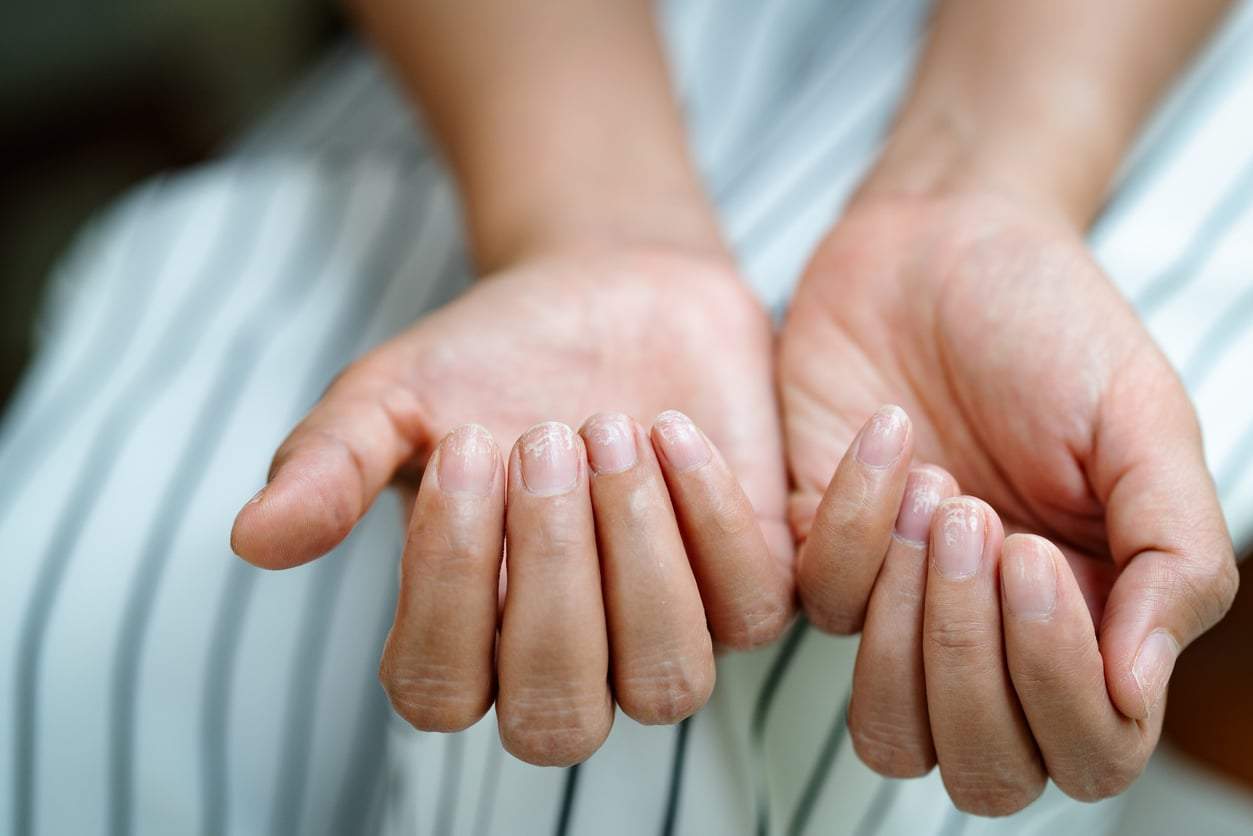
If someone’s ever told you, “Stop cracking your knuckles or you’ll get arthritis!”, you’re not alone. But does regularly hearing that popping sound actually cause harm? The answer is surprisingly comforting. Many of us instinctively stretch or crack our fingers during the day when we’re tired, stressed, or focused. This simple move often acts like a mini break, relaxing both body and mind. That’s why scientists have long been curious about what really happens inside the joints when we crack our knuckles.
Readers Weigh In – To Crack or Not to Crack?
In a poll, 46% of Instagram commenters said cracking knuckles is totally fine. One shared, “I’ve been cracking since 1996, and my fingers are perfectly fine.” Others find the sound simply unbearable. “It’s just as rude as burping out loud,” argued another. Some took a middle ground: it’s a personal choice, but better not to do it around others. Clearly, this small habit sparks surprisingly strong opinions—everyone reacts differently to the sound and feeling.

What Do Doctors Say?
Experts like Eric Ruderman, a rheumatologist at Northwestern University, Erin Nance, a hand surgeon in New York, and Kanika Monga from Houston’s Methodist Hospital agree: knuckle cracking doesn’t cause arthritis or harm your joints. The myth linking cracking to rheumatism was debunked decades ago. For example, a California doctor cracked only the knuckles on his left hand twice daily for 50 years, leaving the right hand untouched. When he published his results in 1998, there was no difference between the two—no swelling, inflammation, or pain. This study has become legendary among medical circles and is often cited whenever the old myth resurfaces.
Interestingly, this doctor, Donald Unger, even won an Ig Nobel Prize for his experiment—a playful yet serious award recognizing creative approaches to everyday questions. In the 1970s, the Western Journal of Medicine also found no link between cracking and joint problems. While a 1990 study suggested frequent crackers might have mild hand swelling, a 2017 study found no connection between knuckle cracking and weakened grip strength. In fact, modern imaging shows tiny gas bubbles form and quickly dissolve in the joint fluid after cracking, meaning no lasting damage occurs.

What Causes That Popping Sound?
Experts explain the sound actually comes from gas bubbles bursting in the joint fluid. When you stretch your finger, the pressure changes suddenly, causing these bubbles to "pop"—that’s the familiar crack. It doesn’t cause any harm, just a satisfying feeling similar to squeezing a stress ball. Interestingly, your brain responds too.
MRI scans show the brain’s reward center activates slightly at the moment of cracking, which is why many people almost get "hooked" on this move.
When to Be Careful
Dr. Nance adds a word of caution: “Don’t stretch your joints beyond their natural range, as this can cause stiffness or swelling over time.” So if cracking feels natural, it’s fine. But if it’s forced or painful, it’s best to stop. Some people try to “crack” other body parts like the neck or back regularly, which can be riskier—especially if not done properly.

Fun Fact – Why Is It So Divisive?
The “don’t crack your knuckles” rule likely comes from cultural, not medical, roots. Experts say many parents just disliked the sound, and that belief spread. Interestingly, in Japan and South Korea, cracking knuckles in public is still considered rude, while in the U.S., most people don’t mind. Psychologists note this little habit often acts as a stress relief, like shaking your leg, so it’s the reason behind it that matters more than the habit itself. Science today confirms knuckle cracking doesn’t harm joints, cause arthritis, or deform fingers. The sound is just gas bubbles releasing. Just remember: don’t overdo it or force it. So go ahead and enjoy that little, satisfying pop—it’s a simple way to ease tension. And next time someone tells you to stop, just smile and know it’s scientifically proven you’re doing no harm.