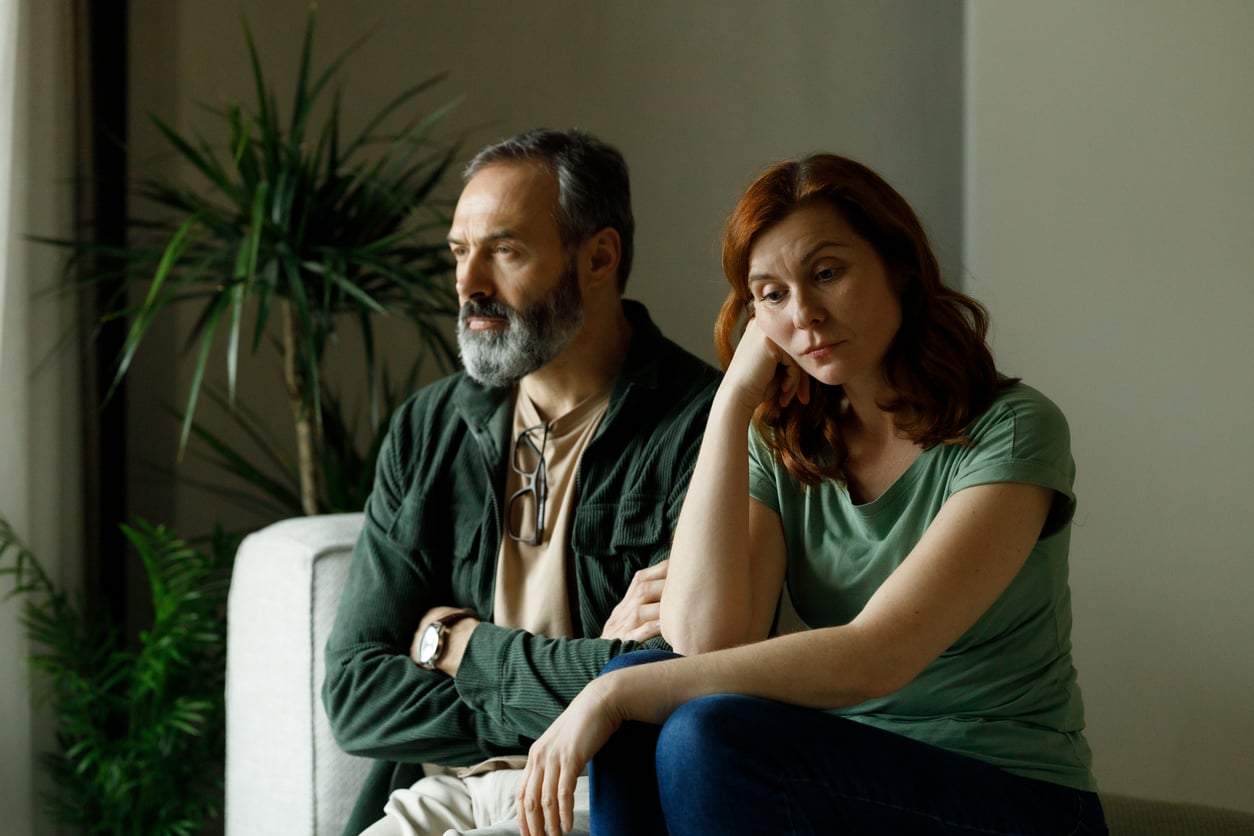
Every woman who has loved an emotionally unavailable man has told herself the same thing: I'll be the one who gets through to him. She won't. And deep down, she probably knew it from the start — she just didn't know what she was looking at yet.
These are the signs. They were there from the beginning.
He treated independence like a weapon
On our third date, I asked him what he thought mattered most in a relationship. I said communication. He said keeping your independence. At the time, I thought that sounded mature — evolved, even. Looking back, it was the first warning I chose to ignore.
There's nothing wrong with valuing your own space. But he didn't use independence as something healthy — he used it as a shield. A reason never to open up. He believed that building walls around himself made him strong. When I told him it was actually the opposite — that real strength is letting someone in — he took it as an insult.
There was always a "right girl" — and it was never anyone real
He mentioned he'd only had short, mostly physical relationships. He never went into why. Every single ex was dismissed with the same line: "She just wasn't the right girl." No reflection, no nuance, no ownership.
For a while, I hoped I'd be different. Eventually I understood the truth: the "right girl" for a man like this is whoever never threatens his emotional isolation. Anyone who asks for real closeness automatically becomes the wrong one.
He never said what he felt — ever
If I asked him why he was acting distant, or what was going on inside him, he'd just shrug. He was permanently stoic — not in a calm, grounded way, but in a way that made it seem like he genuinely didn't have the tools to describe his own inner world.
I tried to be patient. I tried to be empathetic. But a relationship only works when both people are willing to show up for it — and I was the only one doing the work. In the end, that's why we broke up.
If you recognize this pattern in your own relationship, it might be worth reading about emotional loneliness and what it really looks like — because often, the person beside you can make you feel more alone than being on your own.
"Don't ask about my past — it doesn't matter"
I'm not the type to dig through a partner's history or demand a full account of every past relationship. But it's healthy to know the broad strokes of who someone is and where they came from. He disagreed.
He told me, more than once, not to ask about his past because it didn't matter. I knew nothing about his childhood, his family, old friends, or formative experiences. And he showed just as little curiosity about mine.
Burying the past isn't mindfulness — it's avoidance. It means the person is incapable of self-reflection, and without that, you can never truly know each other.
He lived only in the present — and used it to keep the exit open
Living in the moment sounds wonderful in theory. In practice, with him, it meant he refused to commit to anything — not a dinner reservation two weeks out, not a holiday, not even a rough plan. Once, when we traveled together, he bought the plane tickets and booked the accommodation on the morning we left. Same day.
It wasn't spontaneity. It was a strategy. By never planning ahead, he kept the escape route permanently available. The relationship could always be exited cleanly, with minimal entanglement. That's not living in the present — that's never fully arriving.
Everyday life didn't exist for him
Most of a real relationship is made up of ordinary moments — quiet evenings, small conversations, the unremarkable texture of shared days. With him, none of that existed.
There were no gentle, intimate exchanges. Only activities and monologues. If I'd been reading a book, he had no interest in what I thought of it. Ask him about a film and you'd get a surface-level summary — never what it stirred in him, never anything personal. His work, his days, his inner life — all of it stayed behind a closed door. Without those small points of connection, there was nothing to actually hold us together.
It was always about his needs — never mine
He wasn't cruel. He wasn't deliberately selfish. But his needs were simply the only ones that registered. I gave. He accepted. Nothing came back.
It was painfully one-sided. I didn't feel like an equal partner — I felt like a supplier. Someone who kept the relationship stocked and running while he remained comfortably uninvested. Love isn't unconditional in the sense that one person carries everything. That's not love — it's exhaustion.
The moment conflict appeared, he disappeared
This was where his emotional unavailability showed itself most clearly. Whenever a problem came up — any friction, any issue that needed to be addressed — he didn't engage. He left. Physically walked out, like a child leaving the playground when a game stops going their way.
Then, a few days later, he'd reappear as if nothing had happened. No acknowledgment, no conversation, no resolution. Just a reset button he pressed whenever things got uncomfortable.
Unsurprisingly, we never actually resolved anything. Problems didn't get solved — they just got pushed aside, stacking up quietly until there was no room left for anything else.
Emotional unavailability isn't always loud or obvious. Sometimes it looks like calm, like independence, like someone who "just isn't ready yet." The signs are there early — and they rarely change on their own.