Bien Logo

Drying Laundry Indoors Without Turning the Flat Into a Swamp

Lena Hartley4 min read
Share:
Drying Laundry Indoors Without Turning the Flat Into a Swamp — Household

One room, door shut, air moving

The system that works in most homes is containment plus extraction. Pick one room to be the drying room — ideally the bathroom, a utility space, or the room you use least — and put the airer there. Shut the door so the moisture doesn't wander into bedrooms. Then give the water a way out: window on the smallest vent setting, or the extractor fan running, for the duration.

Yes, you're letting warm air out. You're also letting wet air out, and dry air is cheaper to heat than wet air. A few hours of a trickle vent will cost you less than treating a wall.

If you want things dry fast, airflow beats heat every time. A small fan on low, aimed across the airer rather than at it, will dry a load in a fraction of the time still air takes — this is the single change people are most surprised by. A dehumidifier in a closed room does the same job and collects the water in a tank so you can see exactly how much came out of your clothes, which is a bracing education.

The habits that quietly make it worse

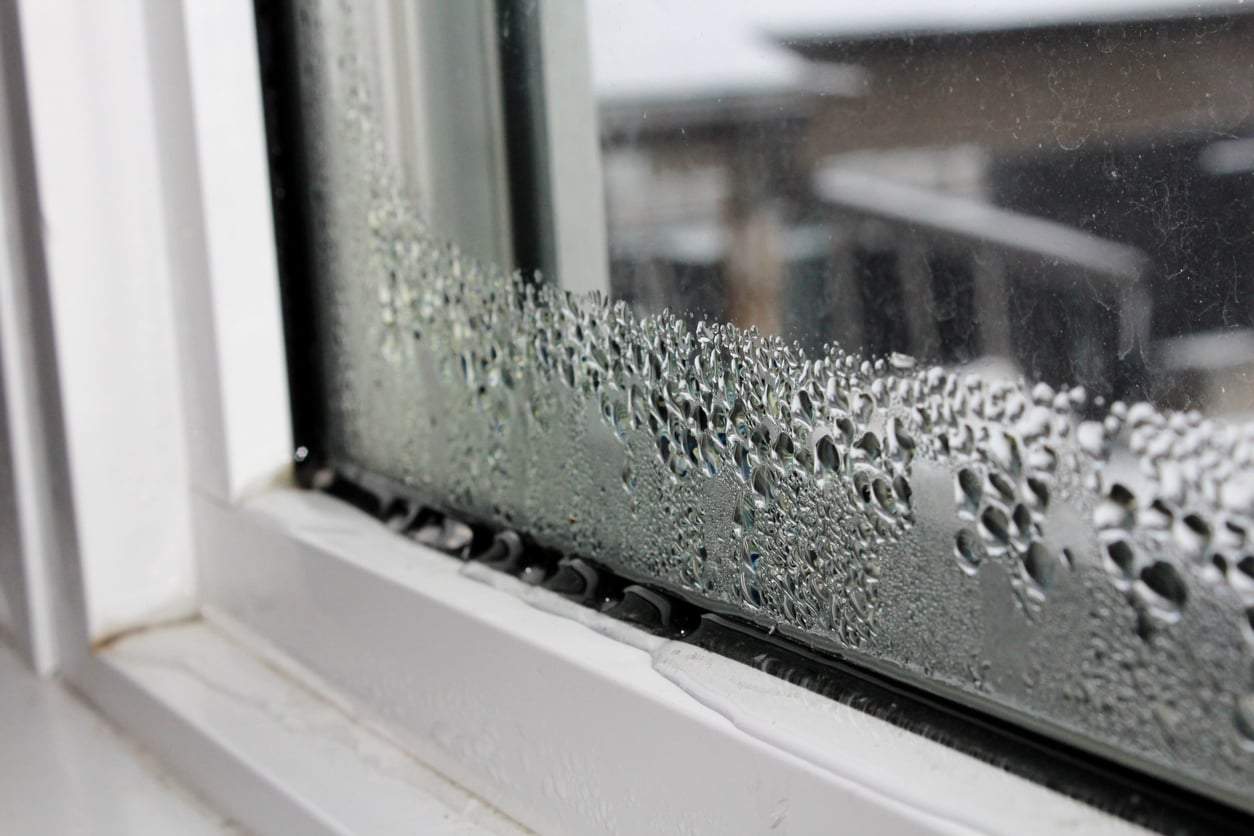
Drying clothes over the bedroom radiator and then sleeping in that room with the door shut and the window closed. Pushing the airer against an external wall, where the coldest surface in the room meets the wettest air. Running a vented tumble dryer with the hose poked loosely out of a window so half the steam blows back in. Stacking the rack in a hallway with no ventilation at all, because hallways are where the airer fits.

Related reads

Drying Laundry Indoors in Winter Without Making the Whole Flat Damp — Household

Drying Laundry Indoors in Winter Without Making the Whole Flat Damp

When the garden line is out of action for four months, all that water has to go somewhere — usually into your walls. Here is how to dry a full load indoors and keep the air breathable.

Lena Hartley•
Why the Spare Duvet Smells of the Cupboard — and How to Store Bedding So It Doesn't — Household

Why the Spare Duvet Smells of the Cupboard — and How to Store Bedding So It Doesn't

You pull out the winter duvet or the guest bedding and there it is: that flat, closed-in smell. Here's what causes it, how to rescue textiles that already have it, and the storage habits that keep linen smelling of nothing at all.

Lena Hartley•
How to Clean a Washing Machine So Your Towels Stop Smelling Damp — Household

How to Clean a Washing Machine So Your Towels Stop Smelling Damp

If clean laundry comes out of the drum already smelling faintly sour, the machine is usually the culprit — not the detergent. Here is the hour of work that resets it, and the five-second habits that keep it fresh.

Lena Hartley•
How to Clean Silver at Home Without Scrubbing the Shine Off It — Household

How to Clean Silver at Home Without Scrubbing the Shine Off It

Tarnished candlesticks, a blackened christening cup, cutlery you only use twice a year — here's how to bring silver back gently, and which shortcuts quietly ruin it.

Nora Bellamy•
Why Your Winter Coats Smell of the Cupboard — and How to Fix It Before You Wear Them — Household

Why Your Winter Coats Smell of the Cupboard — and How to Fix It Before You Wear Them

That faint stale note when you pull out last year's wool coat isn't dirt — it's stored air and trapped moisture. Here's how to freshen outerwear properly, and what to do so it doesn't happen next year.

Sofia Marlowe•
How to Clean an Oven Without the Fumes — The Slow Method That Does the Work for You — Household

How to Clean an Oven Without the Fumes — The Slow Method That Does the Work for You

Roasting season has started and the glass door has gone brown. Here is the patient, low-drama way to clean an oven using what is already in your cupboard — plus the parts you should never scrub.

Sofia Marlowe•