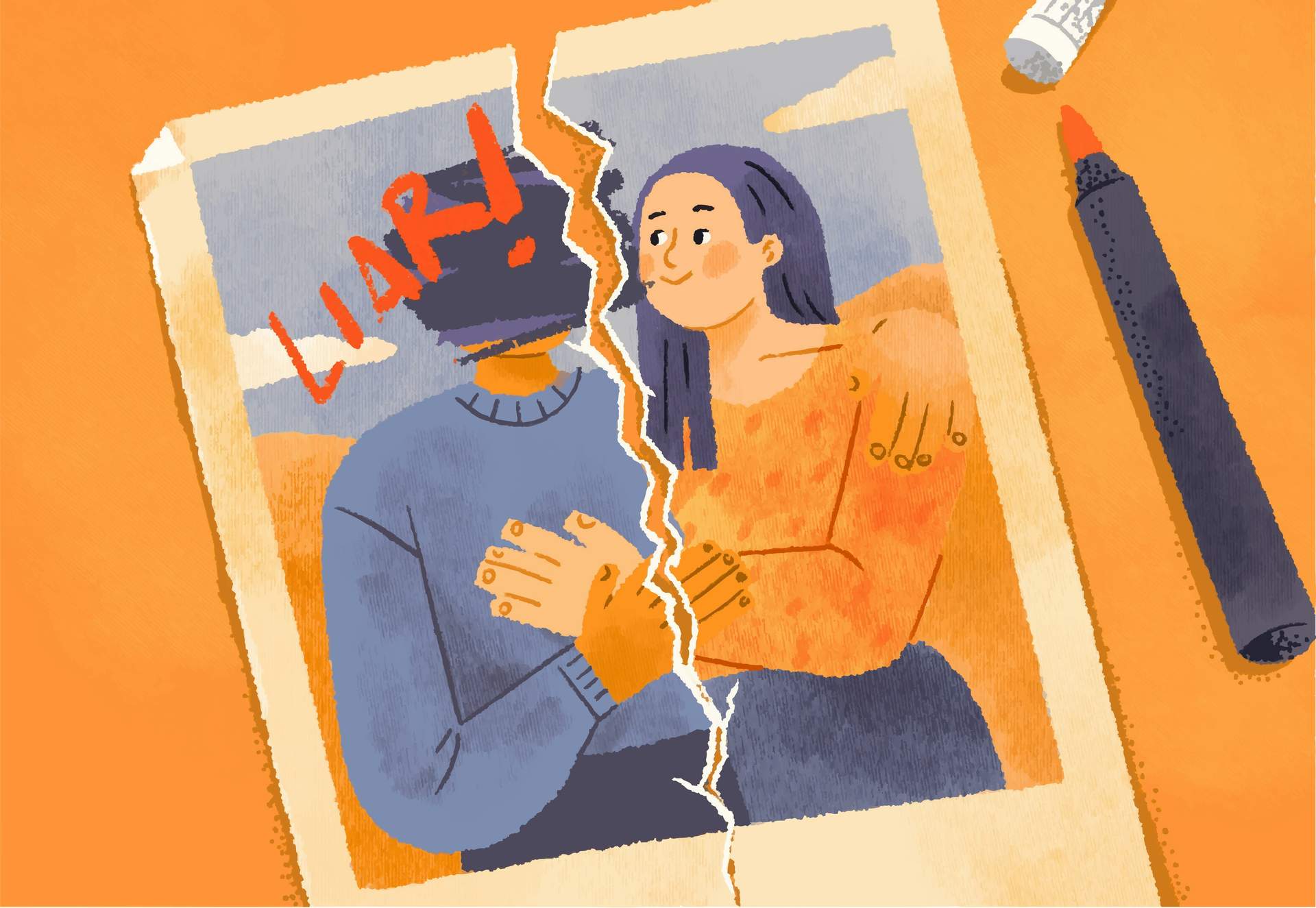
You don't need bruises for it to be abuse. Financial abuse — controlling a partner through money — is one of the most common and least talked-about forms of domestic violence. It can look like generosity, practicality, or even love. These real stories show just how many faces it wears.
"I had to bring home the grocery receipt so he could check it"
He managed all the money. I was home with our two kids, and every time I needed to buy something, I had to ask him for cash — like a child begging their parents for a few coins to buy ice cream. Except I was feeding our entire family with it.
He always gave me far less than we actually needed. I had to get incredibly creative with weekly meal planning just to stretch what he gave me — while he worked as a senior executive.
He demanded I account for every penny. I had to bring home the receipt from the grocery store so he could review it. He'd criticize me for "unnecessary luxury items" like a cheap moisturizer. Even now, I can't understand how I lived in that humiliating situation for years.
"He said he just wanted me to rest"
He wouldn't let me go back to work. He framed it as caring — "don't push yourself, just stay home and relax" — but the reality was control. He kept me financially trapped so I wouldn't have the means to leave.
When I eventually got a job and started earning my own money, he became hostile and resentful. He said it was an embarrassment that his wife worked as a secretary, "like some kind of commoner."
What actually bothered him was simple: he no longer held all the power in our marriage.
"I had to justify every trip to the gas station"
He earned more and was the household's designated "money person." I was given a monthly allowance that was just about enough in the first two years — but he refused to adjust it for inflation. By year six, the amount had become almost insulting.
Then it hit me: why was I begging for money and explaining every fuel stop, when I was an independent, employed woman with my own salary? What on earth was I doing?
If any of this sounds familiar, it's worth reading about the signs of financial control in relationships — many women don't recognize it until years later.
"Two years of my salary had simply vanished"
When we got married, we opened a joint account — because we were one economic unit now, right? Girls, please don't ever do what I did: I naively closed my own account, thinking there was no point having one if everything was shared.
My dear husband handled everything. I had no direct access to the account, but I didn't care — we had a nice home, the bills were paid, and there was always some cash around if I needed it.
The truth came out when my parents urgently needed a short-term loan they could repay within two months. My husband flatly refused. When I pushed back, he started murmuring something vague about money being "tied up in investments."
The reality? He had quietly drained the account. To this day I don't know what he spent it on — I can guess. Two years of my solid salary — a sum that should have been at least $57,000 — was simply gone. Completely untraceable.
"He took my money every month — and hid the unpaid bills"
He offered to handle all the utility bills. I was relieved — I hated dealing with paperwork. For two years we split costs fifty-fifty; I handed him my half in cash every single month without question.
Then one evening he announced his feelings had changed, packed a bag, and left. It turned out he'd had a new girlfriend for months — but that wasn't even the worst part.
The worst part was that the utilities started getting cut off one by one. He hadn't paid a single bill in months. He'd pocketed my money and hidden every warning letter from me. The landlord was furious, and I had to cover months of back payments plus reconnection fees — all on my own.
I spent two months freezing in that apartment in January with no heating. And all of this was done by a man whose birthday I had been quietly saving up for — because I wanted to surprise him with a trip.
Why financial abuse is so hard to see
Each of these stories is different, but they share a common thread: the abuser used money — or the lack of it — as a tool for control. Sometimes it looked like "managing the household." Sometimes it was framed as protection or love. Often, the victim didn't recognize it as abuse until long after it ended.
Financial abuse doesn't require physical violence. It only requires one person holding power over another's economic freedom — and using it to keep them from leaving.
If you recognize your own situation in any of these stories, know that what happened to you has a name, and you are not alone.
What is financial abuse in a relationship?
Financial abuse is a form of domestic abuse where one partner controls or manipulates the other through money — by restricting access to funds, sabotaging employment, creating debt, or concealing financial information. It often occurs alongside other forms of emotional or psychological abuse.
Can financial abuse happen even when both partners work?
Yes. Several of the stories above involve women who were employed and earning their own income. Financial abuse can still occur through forced joint accounts with no individual access, withholding allowances, or secretly spending or hiding shared money.
Is it financial abuse if my partner just "handles the finances"?
Not automatically — but it becomes abuse when that arrangement removes your autonomy. If you have no access to account information, must ask permission for basic purchases, or are kept in the dark about shared finances, those are warning signs worth taking seriously.
What should I do if I think I'm experiencing financial abuse?
Start by rebuilding financial visibility — open a personal account in your name only, document shared finances as much as possible, and reach out to a domestic abuse helpline. Organizations like the National Domestic Violence Hotline (1-800-799-7233) offer confidential support and practical guidance.