Why Do We Cry When Cutting Onions?
To find the solution, we first need to understand the problem. Onions contain harmless chemicals when intact. But once you cut into the cells, enzymes are released and react with sulfur compounds. This creates a volatile gas called propanethial S-oxide, which escapes into the air and reaches your eyes. It irritates the cornea, triggering your tear ducts to flush it out. That’s why the tears start flowing.
Science-Backed Tips: How to Cut Onions Without Tears
Luckily, there are several effective tricks that work in practice and make sense chemically and physically.
Chill Your Onions
Pop your onion in the fridge for at least 30 minutes before cutting. The cold slows enzyme activity, reducing gas release and irritation. It’s a simple, practical hack—especially if you plan ahead.
Use a Sharp Knife
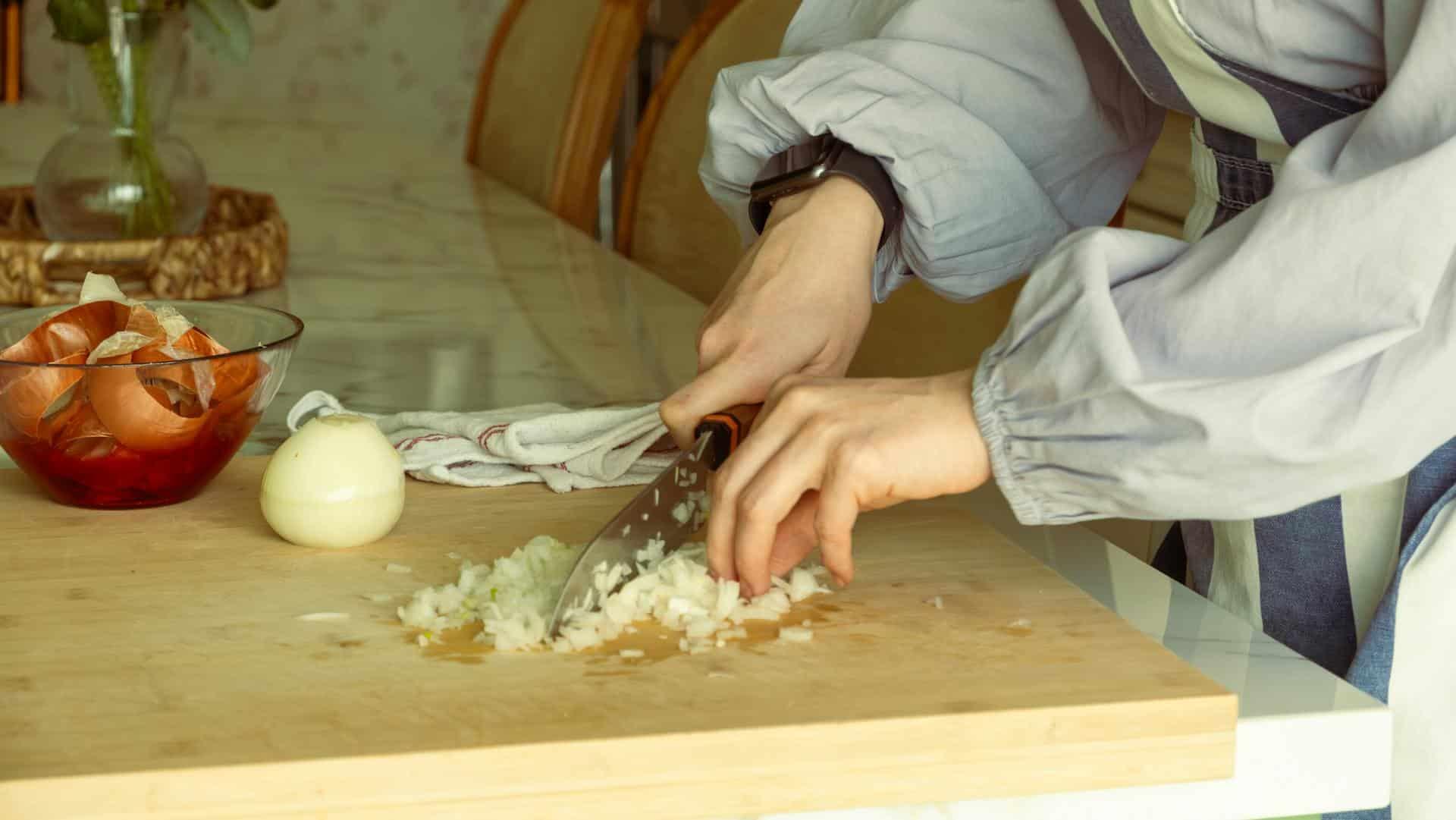
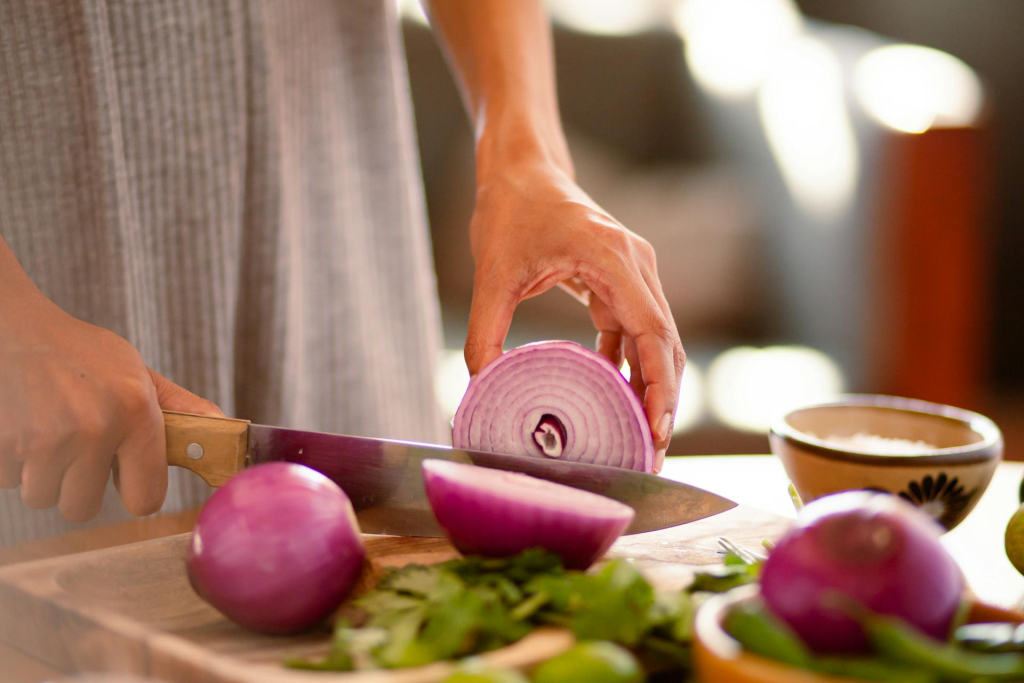
Dull knives crush more cells, releasing more gas. A razor-sharp knife slices cleanly, causing less damage and fewer tears. It’s faster and way less tearful.
Direct the Gas Away While Cutting
Using a fan or kitchen hood helps move the irritating gas away from your eyes. Even a small tabletop fan can ease the sting and reduce tears.
Cut Under Water or on a Wet Surface
Cutting onions underwater isn’t the most practical but it’s very effective. Water traps the gas before it reaches your eyes. Similarly, wetting your knife and cutting board before slicing can reduce irritation—just watch out for slippery surfaces to avoid accidents!
Save the Root End for Last
The root end holds most of the enzymes that release tear-inducing compounds. Start by cutting off the opposite end, then slice the onion in half, and leave the root intact until the very end. This simple step can significantly cut down the gas released.
What to Avoid: Ineffective Tricks
Some suggest chewing bread, lighting a candle, or wearing goggles, but these are either uncomfortable or not scientifically proven. Focus on the methods that really work—especially if you cook with onions often and want to skip the suffering.
Cutting onions doesn’t have to mean tears. With science on your side, a sharp knife, some chilling, good airflow, and gentle handling of the root can make your onion prep faster, easier, and tear-free.