My kitchen was organised, technically. Everything had a place. The problem was that the places had been chosen years earlier, by a tired woman unpacking boxes at eleven at night, and nobody had questioned them since. The pasta lived two rooms away from the hob. The mixing bowls lived above the mixing bowls I actually used. And every single evening I walked the same illogical loop around my own small kitchen, three or four hundred unnecessary steps, without once thinking to change it.
The fix wasn't more storage. It wasn't matching jars. It was watching myself cook for a week and then putting things where my hands kept reaching.
Start by tracking your own loops, not by emptying anything
Resist the urge to pull everything out on a Saturday morning. That produces a mountain, a crisis of confidence and a worse kitchen by dinnertime. Instead, cook normally for three or four days and pay attention to your irritations. Where do you stand most? Which cupboard do you open while holding something hot? What do you have to crouch, stretch or move a stack to reach?
Most kitchens have three or four hot spots: the hob, the sink, the kettle or coffee corner, and the counter where you chop. Almost everything you own should be stored according to which of those zones it serves. Oil, salt, pepper, wooden spoons and pan lids belong within one arm's reach of the hob. Colander, washing-up things, chopping boards and knives cluster near the sink. Mugs, tea, coffee and sweeteners live in one small kingdom of their own so anyone can make a hot drink without opening five doors.
Once you've named the zones, the moves become obvious. You're not inventing a system. You're just admitting where things already want to be.
Prime real estate goes to daily things — everything else earns its place
The shelf between your hip and your eyeline is the most valuable space in the kitchen, and in most homes it's occupied by a slow cooker used twice a year and a set of glasses inherited from someone's grandmother. Be ruthless about this. Daily plates, daily bowls, daily pans, the three knives you actually use: eye level and waist level.
Above eye level goes to light, occasional things — vases, the good serving platter, the picnic set. Anything heavy stored high is a genuine hazard, so keep the cast iron low. The deep, awkward bottom cupboards take big, hardy items: stockpots, baking trays on their sides in a rack or magazine file, the food processor body.
Then there's the middle category nobody talks about: the things you use monthly. Cake tins, the big roasting dish, the jar of specialist flour. These don't deserve prime shelf space, but they shouldn't be buried either. Give them one clearly designated cupboard rather than distributing them through the kitchen like landmines.
Stop stacking and start filing
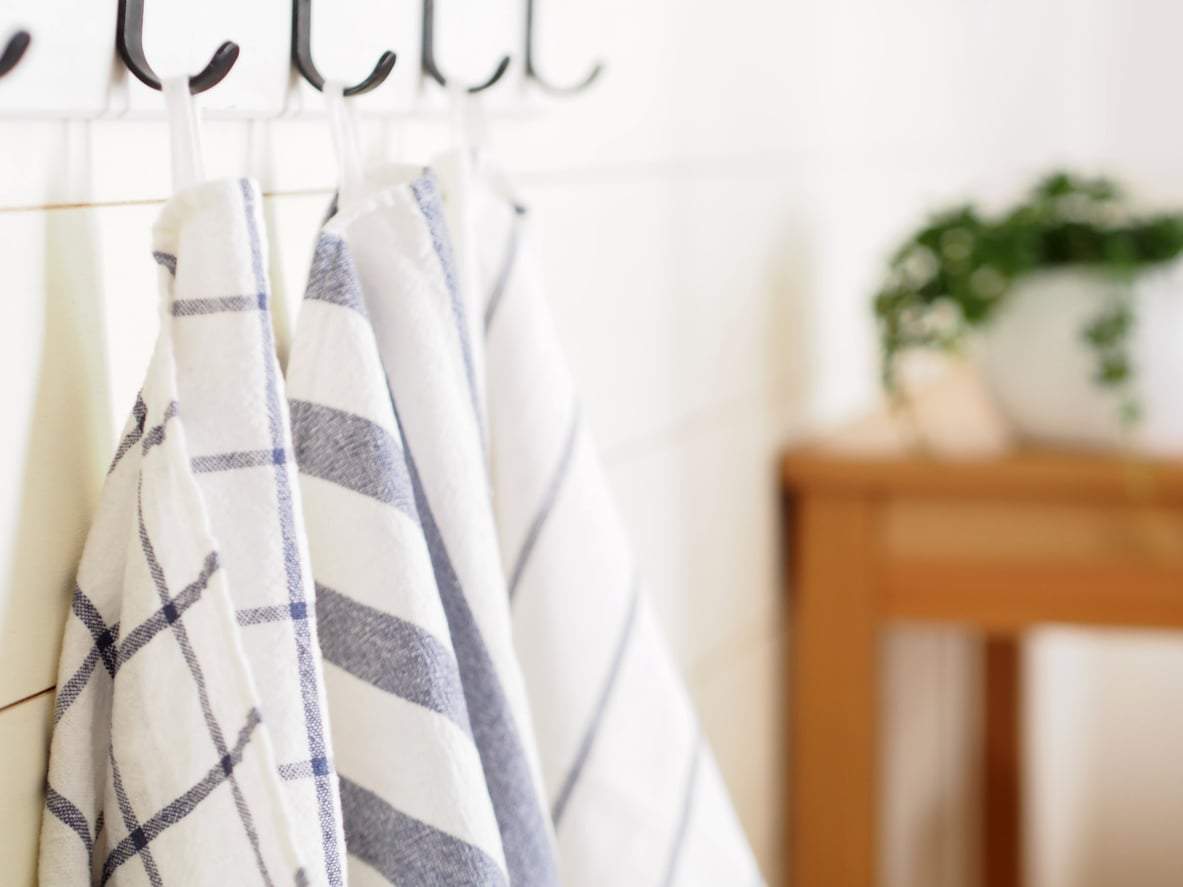
The single biggest change in my cabinets was turning horizontal stacks into vertical files. Baking trays, chopping boards, pan lids and muffin tins stored upright in a cheap wire divider mean you take out one item instead of excavating four. The same logic works in drawers: tea towels and dishcloths rolled and standing on end, spice jars lying in a shallow drawer with labels on top rather than crowded on a shelf where the back row is unreachable.
Two more habits keep it from collapsing. First, one turntable in the corner cupboard — the deep dark one where oils and vinegars go to die. Second, a rule I call the empty shelf: leave one shelf or one drawer section deliberately clear. It absorbs the chaos of a big shop, a gift, a phase of baking, without forcing you to redo the whole system.
How do I organise kitchen cabinets in a small kitchen with almost no storage?
In a small kitchen the answer is usually subtraction before organisation. Count your mugs, your plastic containers, your almost-identical wooden spoons, and keep only what a full day of realistic cooking and one round of guests would require — the rest goes to a box in the hallway for a month to see whether you miss it. Then use the vertical air you're ignoring: a rail under a cabinet for utensils, hooks inside cupboard doors for measuring spoons, a narrow shelf riser to double a shallow shelf. Small kitchens don't need clever gadgets so much as fewer objects and better height use.
How often should I redo my kitchen cabinets?
A full reorganisation is rarely needed more than once every couple of years, and usually only when your life changes — a new baby, a child leaving home, someone taking up bread-making, a diet shift that alters what you buy. What does help is a fifteen-minute review every season: wipe one shelf, check for expired things at the back, and move anything you've been irritated by into a better spot. Systems fail when they're treated as finished; they survive when you allow them to keep evolving with the way you cook.