I cook most nights, often with oil hot enough to do something interesting to an onion, and for years I couldn't work out why my kitchen never felt properly clean. The worktops were wiped. The hob was scrubbed. Then one afternoon the light came in sideways and I saw it: a dull, tacky film across the cupboard doors nearest the pan, holding onto dust like flypaper. That's the bit nobody cleans, and it's the bit that makes a kitchen feel tired.
Cooking grease is aerosolised fat. It rises, drifts, lands and then slowly polymerises — which is why a few months of it turns into something that laughs at a damp cloth. The trick is not brute force. It's heat, the right surfactant, and patience in the correct order.
Start with the mildest thing that works
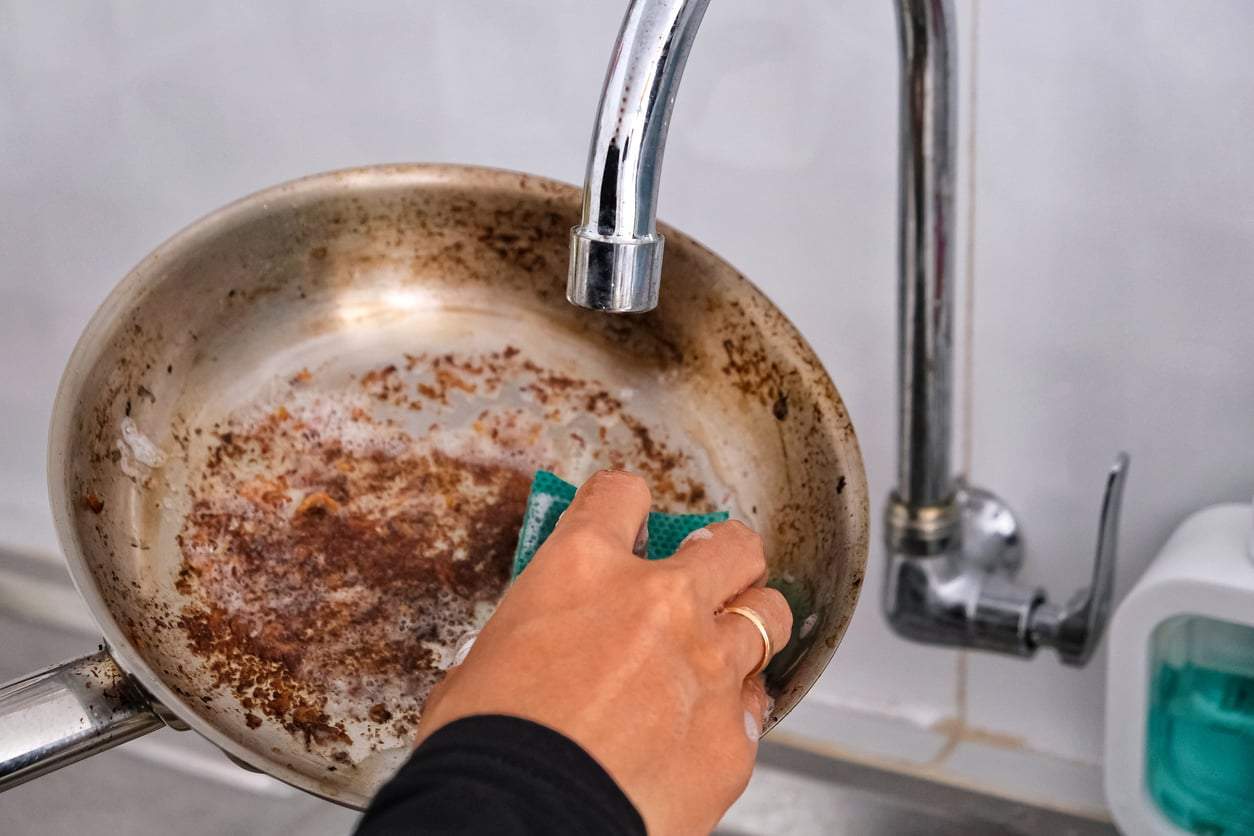
Hot water and washing-up liquid, properly concentrated — more than you'd use for dishes — removes a surprising amount of grease if you give it contact time. Wring a cloth out in it so it's hot but not dripping, lay it against the worst patch, and leave it for a minute or two before wiping. Wiping cold, with a nearly dry cloth, is what makes people conclude that grease is impossible.
Work from the top of the door downwards, rinse the cloth often, and change the water the moment it turns cloudy. Then go over everything a second time with a cloth wrung out in clean warm water, and dry with a soft tea towel. That final rinse matters: detergent residue left behind feels tacky and attracts the next layer of grease faster.
For the sticky corners, two home methods
Where the film has gone truly gummy — handles, the edge nearest the hob, the underside of a wall unit — make a loose paste of bicarbonate of soda and a little warm water, apply it with a soft cloth, let it sit for a few minutes and then wipe away. Bicarb is mildly abrasive and mildly alkaline, which is exactly what old fat dislikes. Use a cloth or a soft sponge, never a scouring pad, and test on a hidden corner first, because on high-gloss and painted doors anything gritty can leave fine scratches.
The second method sounds wrong and works beautifully: a few drops of neutral cooking oil on kitchen paper, rubbed over the sticky area. Like dissolves like, and oil lifts the polymerised residue in a way water struggles to. Then you must degrease the oil itself with hot soapy water, or you've simply applied a fresh coat. I use this on greasy handles and the extractor's metal frame.
Know what your doors are made of
Most modern kitchen doors are a wood composite with a foil or laminate wrap, and their weak point is the edges, where water can creep in and lift the covering. So: damp cloths, not wet ones, and dry immediately. Real wood and oiled wood don't want prolonged moisture either, and painted doors can be dulled by strong solvents.
Vinegar gets recommended for everything, and it does cut light grease, but it's acidic — keep it off natural stone worktops, unsealed wood and anything brass or marble-effect, and don't leave it sitting on painted finishes. Likewise, resist the heavy-duty degreasers sold for ovens on cupboard fronts; they're formulated for enamel, not for a painted MDF door, and they can leave a permanent dull patch.
Then make it stick less next time
Three habits keep the film from rebuilding. Turn the extractor on before you start cooking, not halfway through, and leave it running for several minutes after, since the airborne fat lingers. Use a splatter guard for anything frying hard. And wipe the doors immediately either side of the hob once a week while the kitchen is still warm, when the residue is soft and comes away with almost nothing.
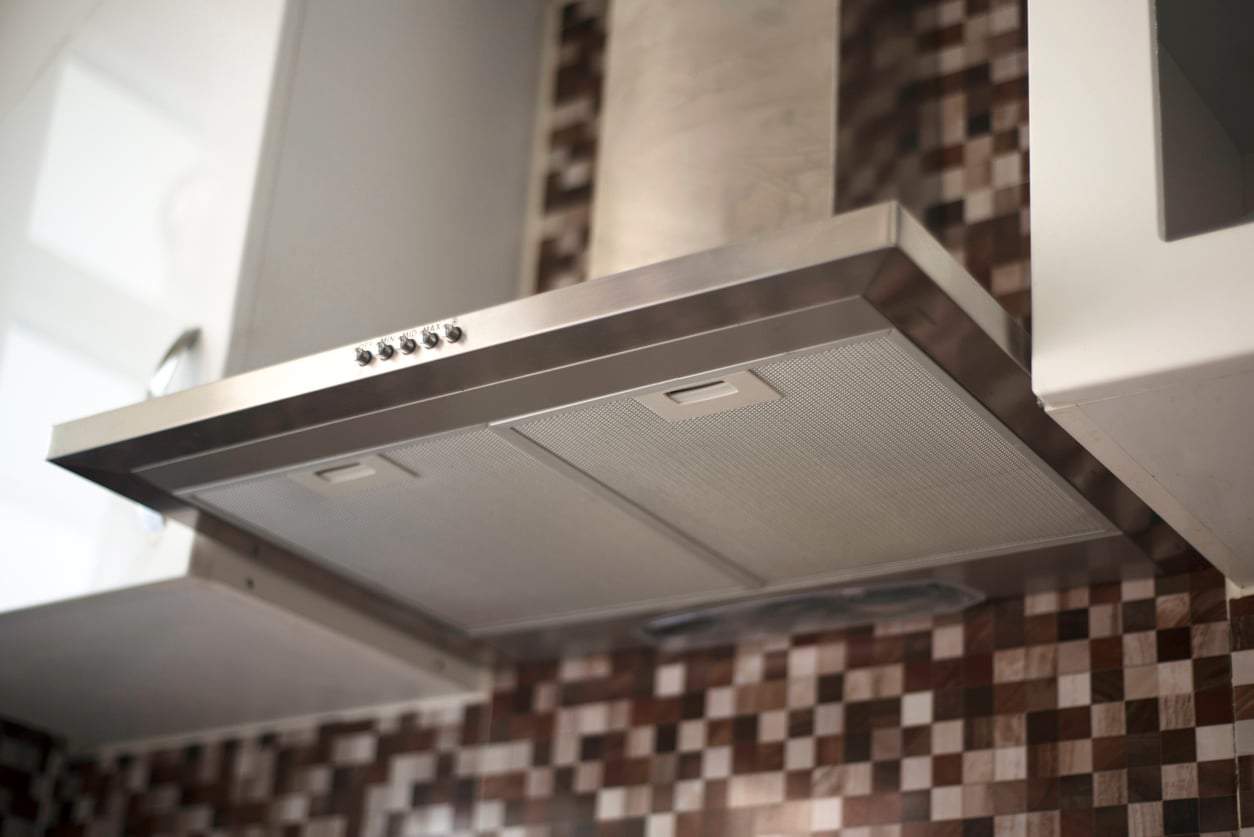
Wash the extractor's metal mesh filter regularly too — in hot soapy water, or on a hot cycle in the dishwasher if the manufacturer allows it. A clogged filter stops pulling air, and everything it fails to catch lands on your cupboards instead.
Can I use bicarbonate of soda on painted cupboard doors?
Usually yes, as a soft paste rather than a dry scrub, and always tested on an out-of-sight corner first. Apply it with a cloth or soft sponge, never a scourer, keep the contact brief and rinse and dry afterwards, because leaving it to dry on a painted surface can leave a chalky bloom.
Why does the grease come back so quickly?
Because the source is still there: every pan of hot oil throws a fine mist that settles across a surprisingly wide area, and any detergent residue left on the doors gives the new layer something to cling to. Running the extractor longer, rinsing properly after cleaning and doing a quick weekly wipe near the hob will stretch the gap between deep cleans considerably.