There's a particular disappointment in opening the cupboard in June, pulling out the light summer duvet cover you were looking forward to, and catching that closed-up, faintly cardboard smell. I used to assume it meant the cupboard was the problem. It almost never is. It's what happened in the twenty minutes before the linen went in.
The swap from summer to autumn bedding is one of the few household jobs with a genuinely satisfying payoff, and it's worth doing properly once rather than hastily every year. Here's the routine I've settled on, done on a dry afternoon with the windows open.
Wash Everything, Even the Things That Look Clean
Anything that has spent a summer on a bed or in a cupboard near a bed has picked up body oils, and body oils are what turn into that yellowish tinge and stale smell after months in the dark. So the spare set that was only slept in twice by a guest in July goes in too. This is also the moment for the items that get skipped all year: the mattress protector, the pillow protectors, the light blanket at the foot of the bed, and the pillows themselves if the care label allows it.
Wash at the warmest temperature the fabric can genuinely take, and go easy on the detergent — an overloaded machine with too much detergent leaves residue in the fibres, and residue is what smells sour later. Skip fabric softener entirely on anything you're storing. It coats fibres, reduces absorbency and doesn't age well in a closed cupboard.
The Step Everyone Rushes: Dry It Completely
If you take one thing from this, take this one. Bedding that is 95 per cent dry feels dry to the hand and will still develop a musty note within weeks of being folded away. Cotton and linen hold moisture deep in thick hems, seams, corner ties and the elasticated edges of fitted sheets, and those are the exact places that smell first.
So dry fully, then leave the folded pile somewhere airy overnight before it goes into storage — draped over the back of a chair or on a spare bed rather than pressed into a stack. Give hems and seams a squeeze between your fingers before you commit. Pillows need the most patience of all; if the inside still feels cool and heavy, it isn't ready.
Store It So It Can Breathe
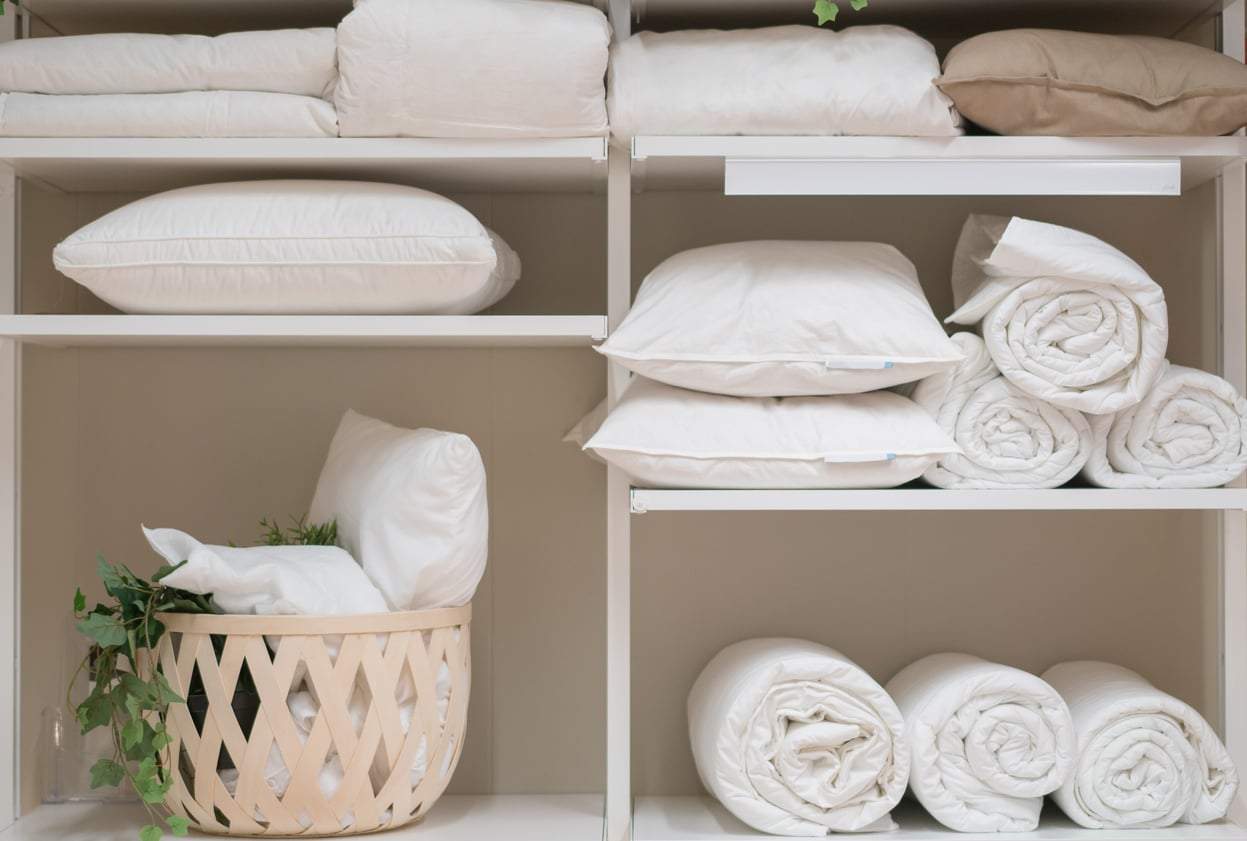
The best container is fabric: an old cotton pillowcase per set is my favourite trick, because you fold the sheets and the duvet cover into their own matching pillowcase and the whole set stays together and identifiable. Cotton drawstring bags work just as well. What doesn't work is a sealed plastic box or a bin bag, which traps whatever residual humidity exists and holds it against the fibres all winter.
Keep bedding off bare chipboard shelving and out of direct contact with cardboard boxes, both of which can transfer their own smell. If you want scent, use a cloth sachet of dried lavender or a bar of soap in its wrapper tucked between the folds — never perfume or essential oil dropped straight onto fabric, which stains and can go rancid over time. Choose a cool, dry cupboard away from the bathroom wall and away from radiators; alternating warmth and cold encourages condensation.
While the Bed Is Bare, Do the Ten-Minute Extras
An empty bed is a rare opportunity. Vacuum the mattress surface and the seams, then leave it uncovered for an hour to air before the protector goes back on. Wipe down the slats and the inside of the bed frame, and vacuum whatever has accumulated underneath. If you rotate or flip your mattress, now is the natural moment. Then bring in the autumn layers: heavier duvet, brushed cotton or flannel sheets if you use them, an extra blanket folded at the end of the bed.
How Often Should I Wash Bedding in Autumn?
Weekly is ideal for the sheet and pillowcases you sleep on directly, and every ten days or so is fine if the room is cool and nobody has allergies or pets on the bed. Duvet covers can stretch a little longer, but pillowcases are the item worth being strict about, since they sit against skin and hair every night.
Can I Store Bedding in Vacuum Bags?
You can, for short periods and only if the fabric is bone dry, but I'd avoid it for a whole season with natural fibres. Compression creases linen and cotton deeply, and any trapped moisture has nowhere to go. If space is genuinely tight, use vacuum bags for synthetic duvets and blankets and keep your sheets and covers in breathable fabric bags instead.