You know the ones: those chalky, rainbow-tinted marks that cling to the bottom of your favorite pots no matter how hard you scrub. They look like the metal is ruined for good. It isn't.
Honestly, I was skeptical too. I didn't believe something sitting in my pantry could lift stains that survived rounds of dish soap and elbow grease. But one try was all it took to change my mind: plain vinegar works, and it works fast.
Here's exactly how to do it — with both a cold method and a hot one, depending on how stubborn the buildup is.
The cold vinegar method
This is the easiest approach, and for light or medium stains it's usually all you need. No stove, no fuss — just a little patience while the vinegar does the work.
Follow these steps
Step 1: Get the vinegar-to-water ratio right
Pour enough vinegar into the pot to fully cover the stained area, then add an equal amount of water. A simple 1:1 ratio does the job in most cases.
Step 2: Let it soak
Leave the mixture sitting in the pot for about an hour. The acidity in the vinegar gradually breaks down the cloudy buildup so it lifts away instead of clinging on.
Step 3: Scrub gently and rinse
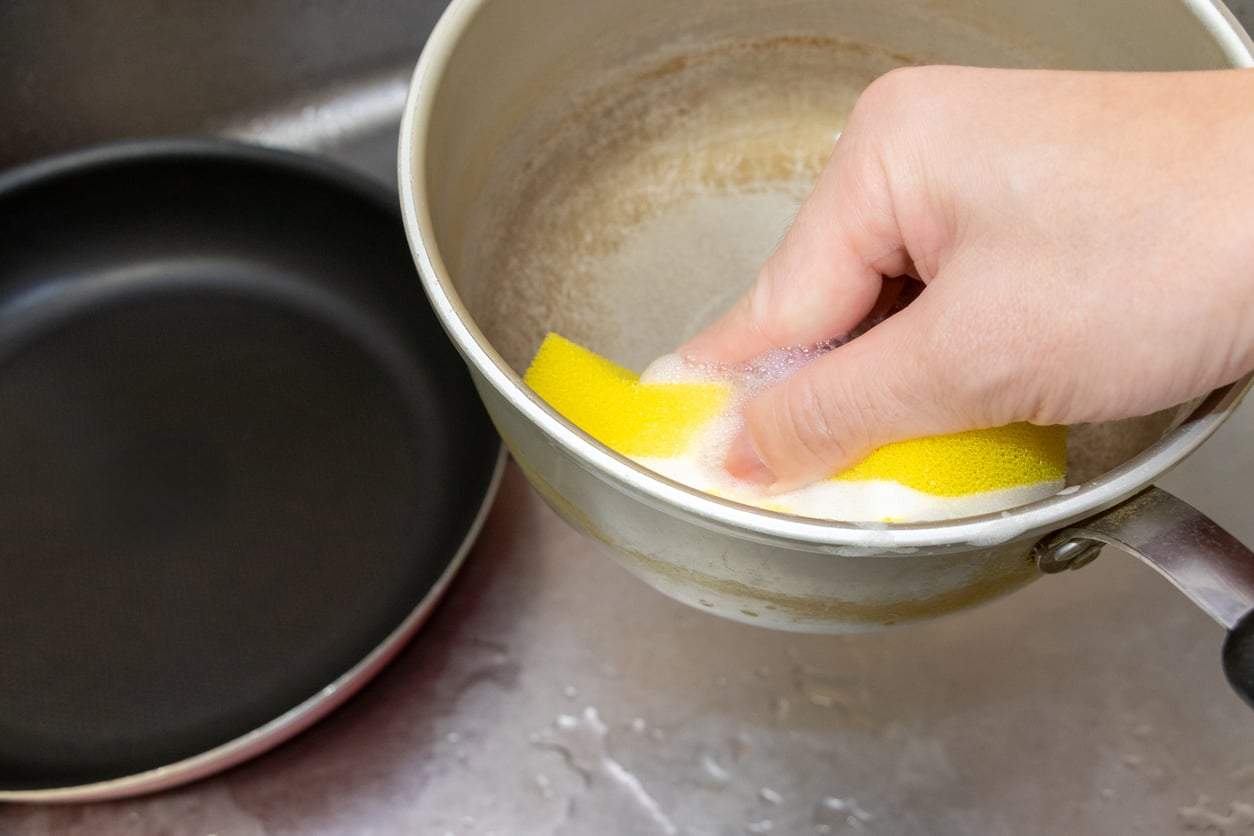
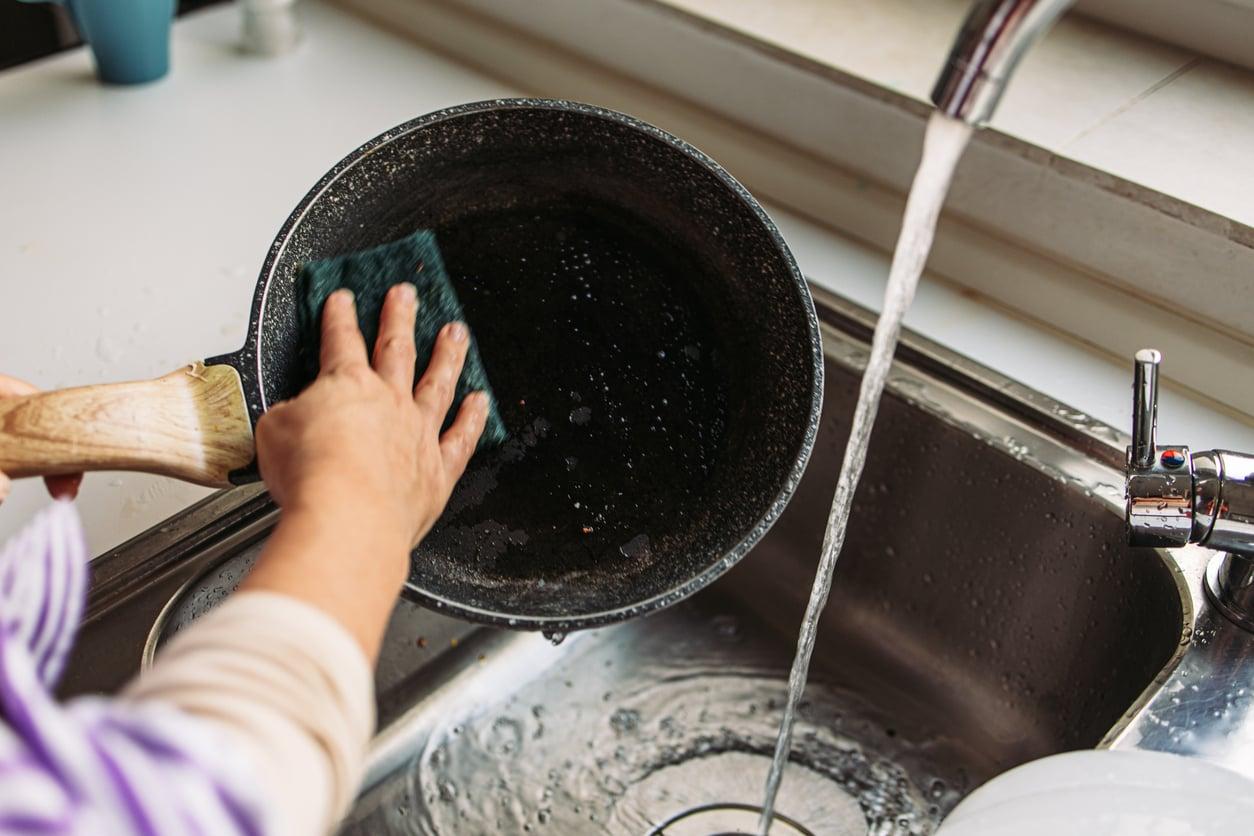
Grab a soft sponge or a dish brush and gently work over the bottom of the pot. Then rinse thoroughly with clean water. That rainbow film should slide right off.
The hot vinegar method
If the cold soak doesn't fully do the trick — say the stains are older or baked on — warming the vinegar gives it extra power.
Step 1: Heat the vinegar
Pour vinegar into the pot until the problem area is completely covered, then warm it over low heat. Don't let it come to a full boil — you just want it hot enough to start steaming.
Step 2: Let it rest for a few minutes
Turn off the heat and let the vinegar sit for a few minutes. This gives it time to sink into the buildup and loosen it even more.
Step 3: Wipe and rinse
Using the warm vinegar still in the pot and a sponge, wipe down the surface. Then rinse everything away with hot water. The difference is usually obvious right away.
Which vinegar works best?
Plain white vinegar is the winner here. It's cheap, colorless, and does exactly what you need without leaving any residue behind. If you love simple fixes like this, you'll find plenty of other clever vinegar tricks for around the home worth keeping on hand.
How often should you do it?
Once a month is a good rhythm, or simply whenever you notice that cloudy film creeping back. Staying on top of it means the buildup never gets a chance to set in hard.
Does vinegar damage pots?
Used as described — diluted or briefly warmed, then rinsed well — plain white vinegar is a gentle way to lift buildup. Always finish by rinsing thoroughly with clean water.
Why do these rainbow stains appear in the first place?
They're a form of mineral and heat-related buildup on the bottom of the pot. The good news is they're surface marks, not permanent damage, which is why vinegar can lift them.
Should I use the hot or the cold method?
Start with the cold soak — it handles most cases with the least effort. If the marks are older or particularly stubborn, switch to the hot vinegar method for extra lifting power.