You ran a full wash cycle. You used fresh detergent. You even cranked the temperature up — and yet your dish towels still come out smelling faintly of old cooking grease. It's frustrating, but it's not your fault, and it's not your washing machine's fault either. The real problem is how grease behaves inside fabric fibers — and most standard washing routines aren't built to deal with it.
Why regular washing doesn't remove grease from dish towels
Cotton and linen fibers — the materials most dish towels are made from — have a tiny, sponge-like structure. When cooking oil or grease lands on them, it doesn't just sit on the surface: it soaks deep into the fibers. Detergent alone often isn't strong enough to pull that embedded grease out, especially on shorter or lower-temperature cycles.
Every time a greasy towel dries out and gets used again without a proper wash, another layer of grease builds up. Eventually, the fibers become saturated — and no amount of regular washing will fully clear them.
The fabric softener mistake that makes it worse
It seems logical to add fabric softener to keep dish towels smelling fresh and feeling soft — but with greasy towels, it actually makes the problem worse. Fabric softener coats the fibers with a thin, waxy layer. That layer feels pleasant, but it traps existing grease inside the fabric and repels water at the same time. The result? Each subsequent wash becomes less effective, and the towel gradually stops absorbing properly — it starts repelling liquid instead of soaking it up.
If you've been using fabric softener on your dish towels, skipping it is one of the easiest wins you can make right now.
The cheap fix: hot soaking with baking soda
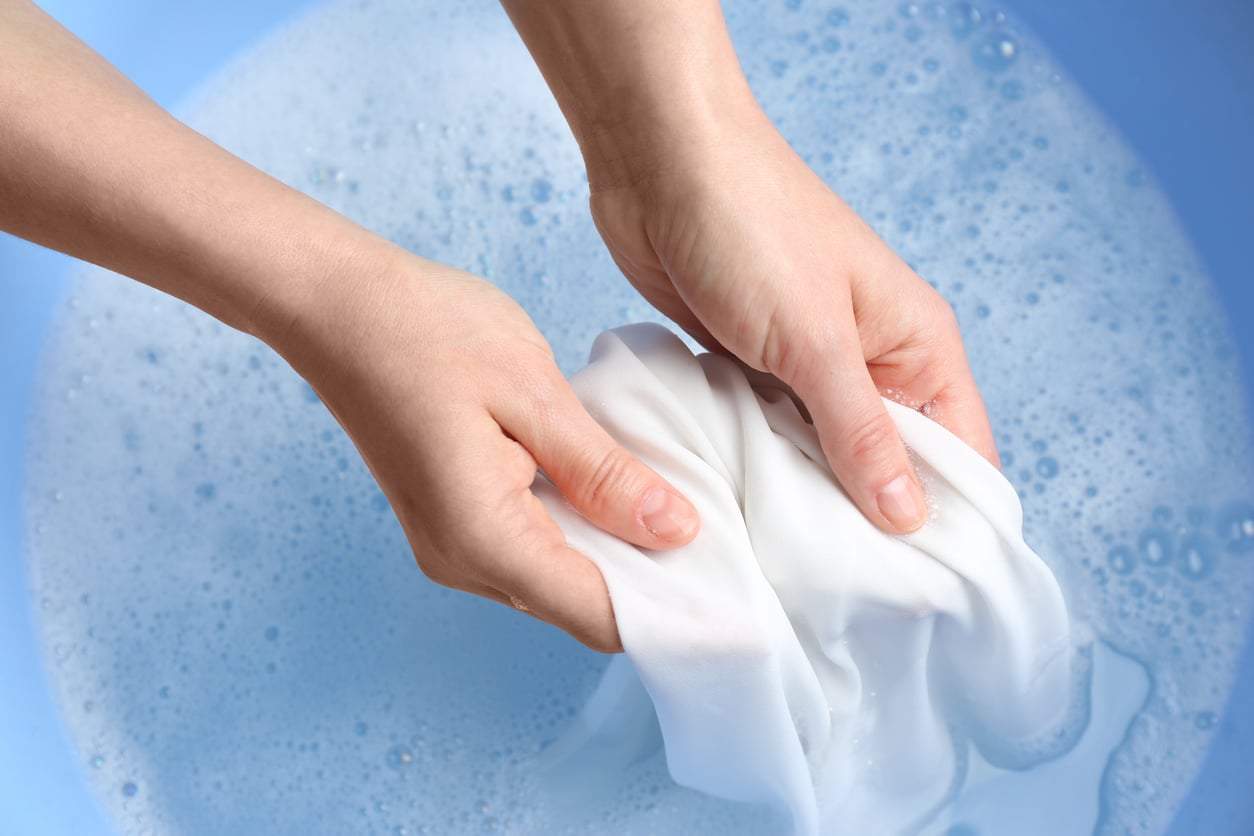
Before the towels go anywhere near the washing machine, try this first. Soak them in a bowl of hot water with a few tablespoons of baking soda. The alkaline nature of baking soda breaks down grease at a chemical level, while the hot water opens up the fibers so the grime can actually escape. Even thirty minutes of soaking makes a noticeable difference — and leaving them overnight works even better.
- Mix two to three tablespoons of baking soda into roughly a quart (1 liter) of hot water.
- Submerge the greasy dish towels and leave them to soak for at least 30 minutes, or overnight for heavily soiled ones.
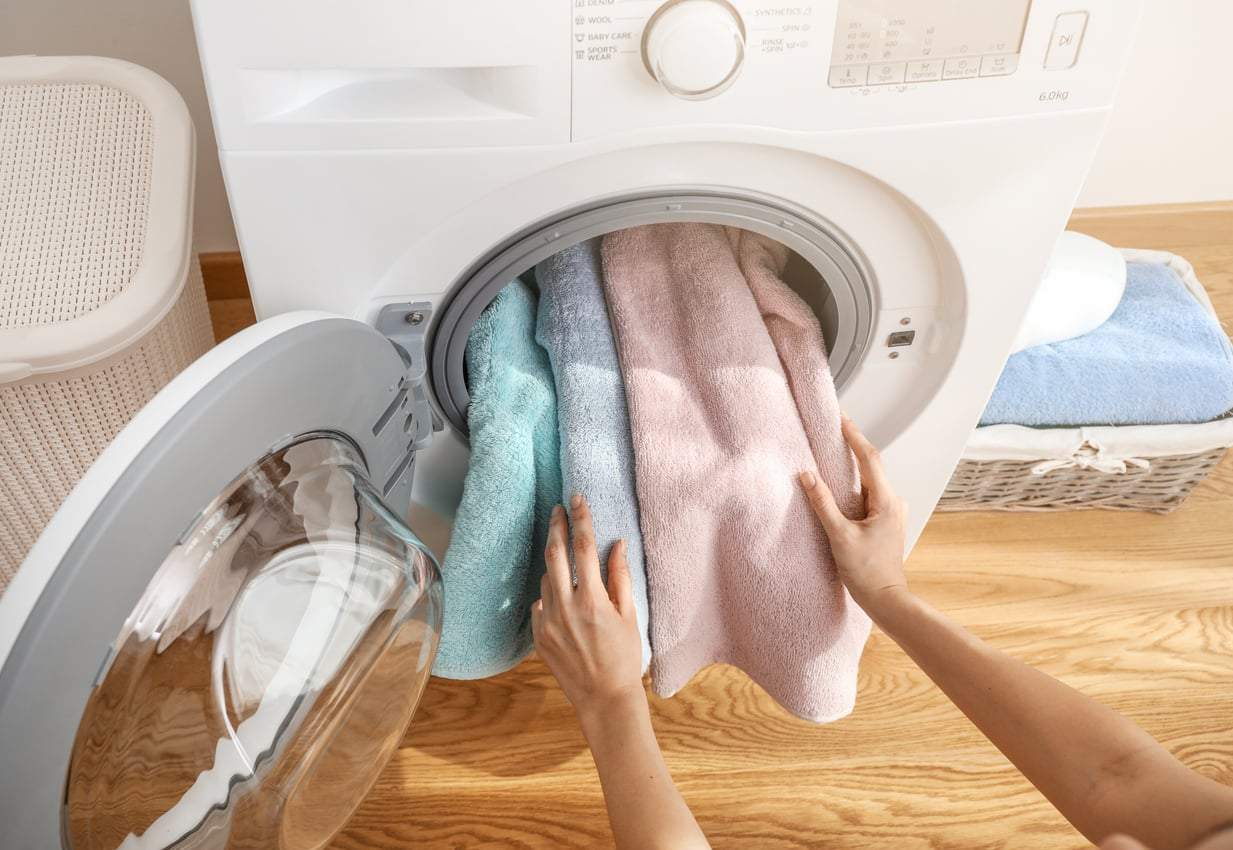
- Then wash them in the machine on a high-temperature cycle, without fabric softener.
White vinegar: helpful, but not at the same time
White vinegar is another excellent grease-cutter for dish towels — but there's one important rule: never use it at the same time as baking soda. The two react with each other and cancel each other out, leaving you with neither benefit. Instead, use vinegar as a fabric softener replacement: pour a small amount into the softener drawer before the cycle starts. It keeps the fibers soft and fresh without creating any water-repelling coating.
Wash temperature: don't skimp on this
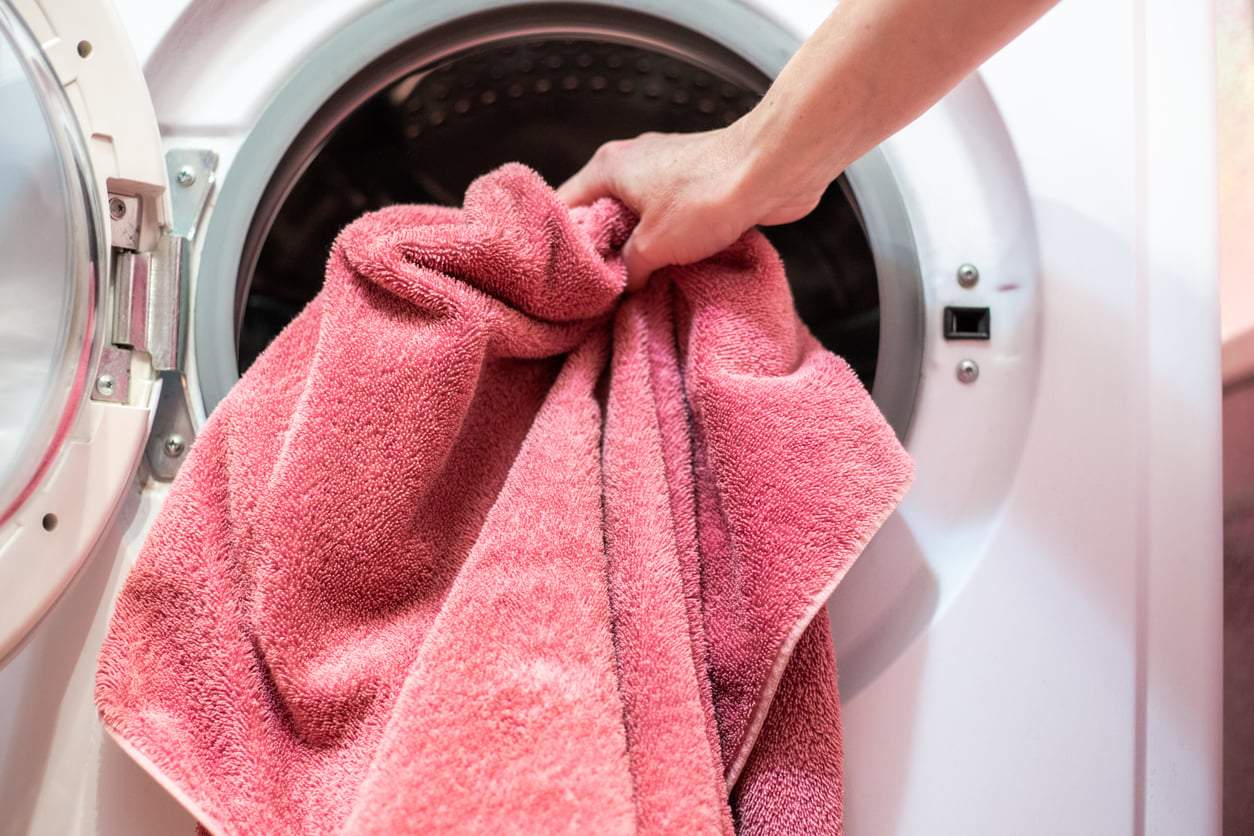
A 86°F (30°C) or 104°F (40°C) wash is energy-efficient and fine for most laundry — but it's simply not hot enough for greasy dish towels. 140°F to 158°F (60°C to 70°C) is what you need to properly dissolve deep-set grease. If your towels are in really bad shape, combine the baking soda soak with a high-temperature machine wash for the best results. That one-two punch is usually enough to rescue even heavily neglected towels.
How to stop the grease from building back up
The single best prevention strategy is simple: wash dish towels more frequently, in smaller batches. The longer a greasy towel sits waiting for laundry day, the deeper the grease penetrates. A towel washed after one or two days of use is dramatically easier to clean than one that's been sitting for a week.
Drop the fabric softener permanently for this category of laundry. Replace it with a splash of white vinegar in the softener drawer, or add a small amount of washing soda to the drum. Your towels will stay genuinely clean — not just surface-clean — and the fibers will stay absorbent far longer.
Why does my dish towel still smell after washing?
Grease soaks deep into cotton and linen fibers and standard detergent often can't fully remove it, especially at lower temperatures. The smell is residual grease that was never fully lifted out during the wash cycle.
Is fabric softener bad for dish towels?
Yes — fabric softener leaves a waxy coating on the fibers that traps grease and makes the towel water-repellent over time. It's best to skip it entirely for dish towels and use white vinegar in the softener drawer instead.
Can I use baking soda and vinegar together on dish towels?
It's better not to use them at the same time. They react with each other and neutralize their individual cleaning effects. Use baking soda for pre-soaking, and vinegar separately as a rinse aid in the machine.
What temperature should I wash dish towels at?
For greasy dish towels, 140°F to 158°F (60°C to 70°C) is recommended. Lower temperatures don't dissolve deep-set grease effectively. Always check the care label to confirm your towels can handle high-heat washing.