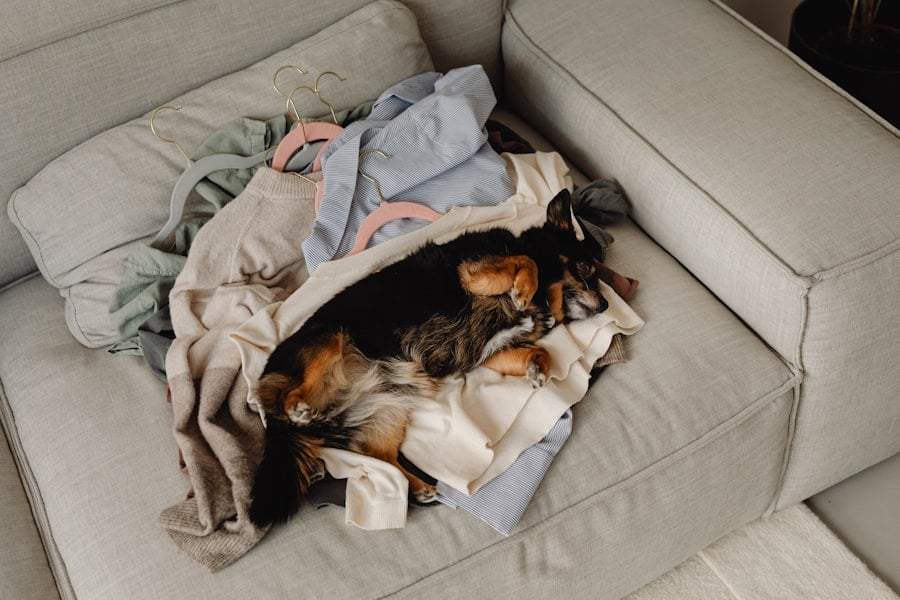
What happens to a child who grows up surrounded by mountains of clutter, broken appliances, and things that were never, ever thrown away? For some, the answer is a life defined by its exact opposite — and the emotional weight that comes with it.
A problem no one would name
My mother had a well-paying, high-status job. From the outside, she looked like she had it all together. But she never would have admitted she had a problem — not even the day I spent half an afternoon moving piles of stuff just to reach the blocked drain under the kitchen sink, and found, buried in the clutter, the mummified remains of our cat Cirmi, who had "gone missing" two years earlier.
Even the trash wasn't trash
My father refused to throw anything away — and I mean anything. Once, he shouted at me for trying to toss a chocolate wrapper. He smoothed it out carefully and put it away for later.
That experience left a mark I still carry. Even now, letting go of objects feels genuinely difficult. Before I throw something away, I have to repeat to myself: "This is trash. You don't need it." Only then can I drop it in the bin.
How I live now: ultra-minimalism
My apartment contains only what is strictly necessary. Nothing else.
I sleep on a mattress on the floor — a bed frame feels like unnecessary excess. I have no table, no chairs. I eat and work sitting on my bed. No armchair, no sofa. I read and watch TV from bed too. Everything I own — every piece of clothing, every belonging — fits inside a single wardrobe. I own 30 items of clothing, shoes included, and I'm careful never to exceed that number.
I have no books; I use an e-reader. One glass, one mug, one of each piece of cutlery. Not a single decorative object. The mere thought of having knick-knacks around me makes me feel ill.
Extreme minimalism isn't a lifestyle choice for me. It's the only way I can function.
Where it all came from
My great-grandparents had almost nothing. They lived through war and the upheaval of 1956. They knew real deprivation, so they repaired everything until it was beyond saving — because there was no alternative. That mindset was passed down to my grandfather, and then to my father.
The problem was that my father grew up in relative comfort, where nothing was ever truly scarce. The result was mindless accumulation: he'd been taught never to throw anything away, but he also kept buying new things. The old ones just stayed.
He became the archetypal hoarder — junk stacked to the ceiling, narrow paths winding through the apartment like trails through a jungle. I'm honestly not sure I would be any different if it weren't for my husband, who stages a ruthless annual clear-out every year while I'm visiting family abroad. We argue about it every time. But in all these years, he has never thrown out a single thing I actually missed — so deep down, I can't complain.
The shame of bringing someone home
I invited a classmate over exactly once as a child. The look on her face when she saw our apartment said everything. After that, no one ever came over again. I was too ashamed.
As an adult, my home is the opposite: spotless, ordered, ready for visitors at any moment. You could eat off the floor. Compulsive tidiness and cleanliness are my defaults now — a direct inheritance from the chaos I grew up in.
"It'll come in handy someday"
That was my parents' motto for everything. Rotting fence posts? A cracked plastic basin? A rusty piece of wire? A 40-year-old broken coffee grinder, torn clothes, yellowed newspapers? "It'll come in handy someday."
Nothing ever did. The only thing all that clutter was good for was giving me dust allergies, asthma, and anxiety that followed me into adulthood. Today I declutter on a precise schedule: the kitchen every week, the rest of the apartment every month. My children will not grow up in a junkyard.
Genetics: the same story, different ending
I didn't become a hoarder. My younger sister did. She lives exactly the way our parents did.
My mother was almost certainly neurodivergent. She would throw herself into creative projects with enormous intensity — sewing, beading, macramé, pottery, painting — and abandon each one within about two weeks. The apartment filled up with fabric, three unused sewing machines, boxes of beads, paint palettes, clay, yarn. We could have stocked three craft shops with her unfinished projects.
My father, meanwhile, was obsessed with gadgets: pocket radios, small TVs, cameras, metronomes, watches. What started as a small hobby corner gradually spilled into the living room, the hallway, even the bathroom. When I was 16, I came home one day to find boxes of their things had been moved into my bedroom — my one small sanctuary. I completely lost it.
As an adult, I am fiercely territorial. I find it genuinely difficult to share living space with anyone. My home is mine. Every object in it is there because it matters to me — nothing more, nothing less.
The house they left behind
My mother died three years ago. My father passed away last year. Their house in the countryside has stood untouched ever since, because I don't have the emotional strength to face what's inside.
Part of me wants to burn it all down. But I can't — because buried somewhere among the tonnes of accumulated junk are valuable antique furniture, heirlooms, jewellery, and photographs I actually care about. I hope I won't leave my own children with a task like this. But if I'm honest with myself, I'm probably heading in the same direction.
The cost of keeping everything
My mother never threw away a broken appliance. If a machine stopped working, she kept it anyway — "for spare parts." After her death, I paid a removal company a significant sum just to haul away everything she had accumulated over a lifetime.
In the back garden: washing machines, ancient televisions, video players, refrigerators. Inside the house: clothes and junk stacked to the ceiling. The clothes alone filled three large skips.
I am the complete opposite. If something doesn't work perfectly, it goes. I don't take things to be repaired — I get rid of them and buy new ones. For me, objects hold no sentimental value. They are either useful or they are gone.
Maybe that's an overcorrection. Maybe it's survival. Either way, it's the only way I know how to live.