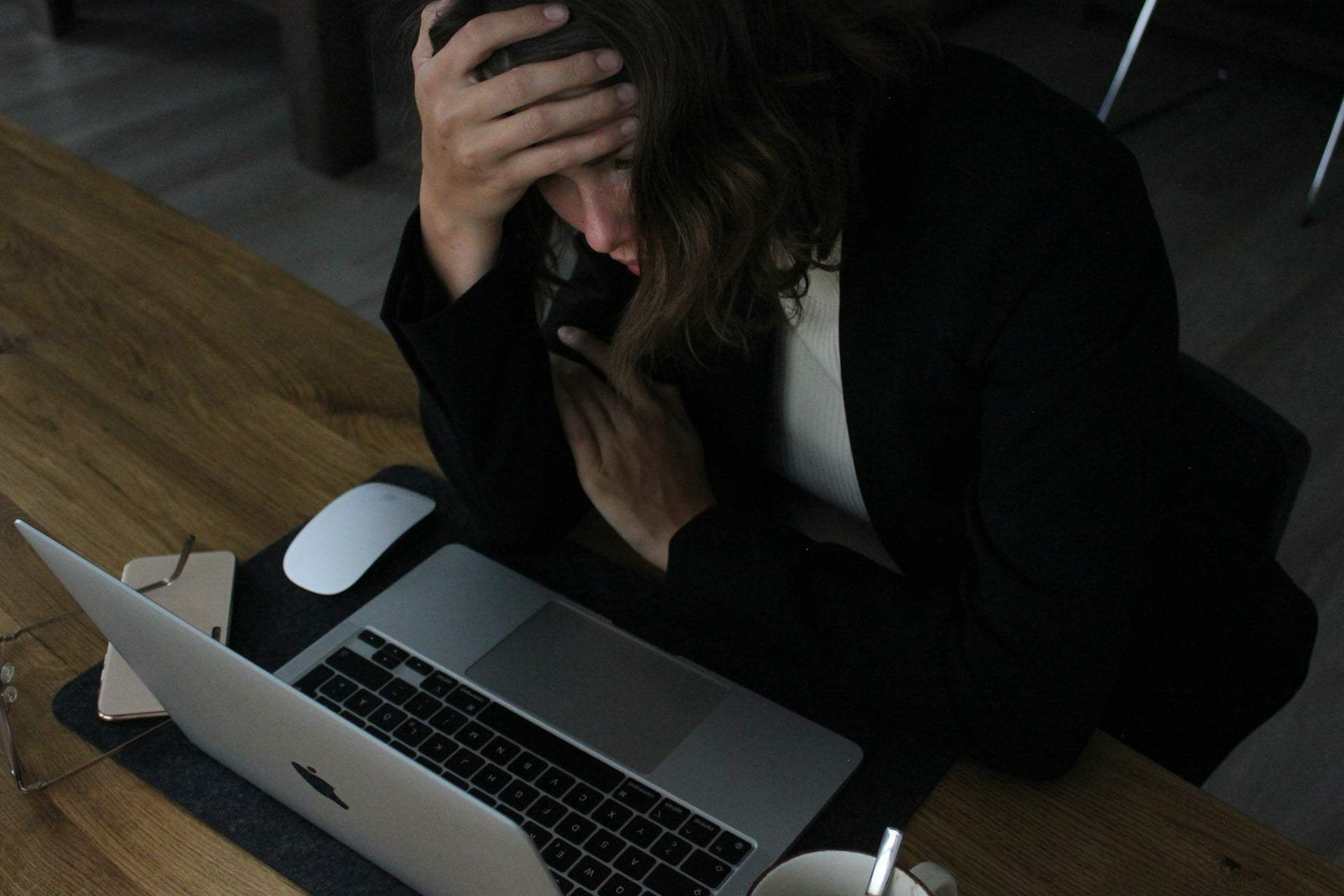
I sit in front of a screen all day. Not because I can't stop, but because it's literally my job. I manage social media, plan content, and monitor platforms — and I do it all on the same internet where I'm also trying to hold on to my sanity.
It's a bit like a pastry chef who bakes cakes all day and still tries to eat well, even though tasting is part of the work. Not impossible, but it takes real attention. Over the years I've built a handful of rules I stick to — and without them, this job probably would have burned me out a long time ago.
Notifications: never
Notifications are designed to interrupt whatever you're doing and hijack your attention. That's not an accident — it's a deliberate design choice.
An Instagram or TikTok alert is almost never actually urgent, yet your brain treats it like it is.
I turned all of them off. My phone stays on silent by default, and when I want to check something, I open the app on purpose — not because the app pinged me. That one step alone changes everything about whether you're running your phone, or your phone is running you.
Be intentional about who you follow
Because of my job, I follow a lot of accounts I'd never choose to as a private person. Competitors, clients, trends. That's unavoidable. Which is exactly why I keep my personal feed ruthlessly clean.
There, I only follow accounts I genuinely wanted to follow — not ones my job forced on me. If someone consistently leaves you feeling worse, whether it's envy, anxiety, or the sense that you're not good enough, that's reason enough to unfollow. You don't need a big dramatic exit, and you don't owe anyone an explanation. Your feed is your space, not theirs.
The three C rule
If you look at content for work all day, the last thing you need is to spend your free time scrolling through more noise. On my personal profile I only follow accounts that give me one of three things: comfort, curiosity, or connection.
The comforting accounts make me laugh, lift my mood, and leave me feeling good. The ones that spark curiosity teach me something or make me think, "I want to know more about this." And the ones that offer connection tie me to a community — to people, interests, and values I care about. If an account gives me none of the three, it has no place in my feed.
If you're wondering whether stepping back entirely might help even more, it's worth reading about what actually happens when you quit social media.
Use the mute button
Muting is one of the best features social media ever invented. If someone's posts regularly leave you feeling bad, there's no need for drama or explanation — you just mute them. They'll never know, you won't feel worse, and you simply stop seeing what you didn't want to see in the first place.
For work relationships this is especially useful. You might have to collaborate with someone, but that doesn't mean you have to see their content every single day if it irritates you or drains your energy.
The secondary account
Plenty of people have one, and there's nothing to be embarrassed about. I keep one too, mostly for work, so it doesn't tangle up with what I actually want to see as a private person. When I check something for work, it shouldn't rewrite my personal algorithm.
But I know a secondary account makes it dangerously easy to keep tabs on people you shouldn't — exes, people you've lost touch with, accounts that following really doesn't do you any good. If you have a secondary account, treat it like anything you know can harm you in excess. You don't have to give it up, but it's worth using in moderation.
The 24-hour rule
When something you posted unexpectedly blows up — whether the reaction is positive or negative — the first instinct is almost always to keep watching it, unable to look away. That's human. But I set myself a rule: for 24 hours I can watch, respond, and follow what's happening.
From hour 25, I let it go. The internet moves on fast, and you have to move on with it. Whatever feels enormous on day one has almost always vanished by day two.
Set a daily time limit
This one is the hardest for me, because my work hours and my leisure scrolling happen on the exact same platforms — it's tough to know exactly where one ends and the other begins. That's precisely why I set a daily time limit on social media apps on my personal phone.
When it runs out, the phone warns me — it doesn't lock me out instantly, but it pauses me for a moment, and that moment is often enough to stop me from tapping "five more minutes" and actually put the phone down. I don't manage it perfectly every day, but just having the boundary makes a real difference.
Do notifications really affect your mental health?
Yes. Notifications are designed to interrupt you and pull your attention, and your brain treats even trivial alerts as urgent. Turning them off helps you control your phone instead of the other way around.
What is the three C rule for a healthy feed?
It means only following accounts that give you comfort, curiosity, or connection. If an account offers none of these, it doesn't belong in your personal feed.
Is it bad to have a secondary social media account?
Not necessarily — many people keep one to separate work from personal use. The risk is that it makes it easy to follow people you shouldn't, so it's best used in moderation.
Why is a daily time limit worth setting?
When work and leisure happen on the same platforms, it's hard to know when to stop. A time limit pauses you long enough to put the phone down instead of scrolling on autopilot.