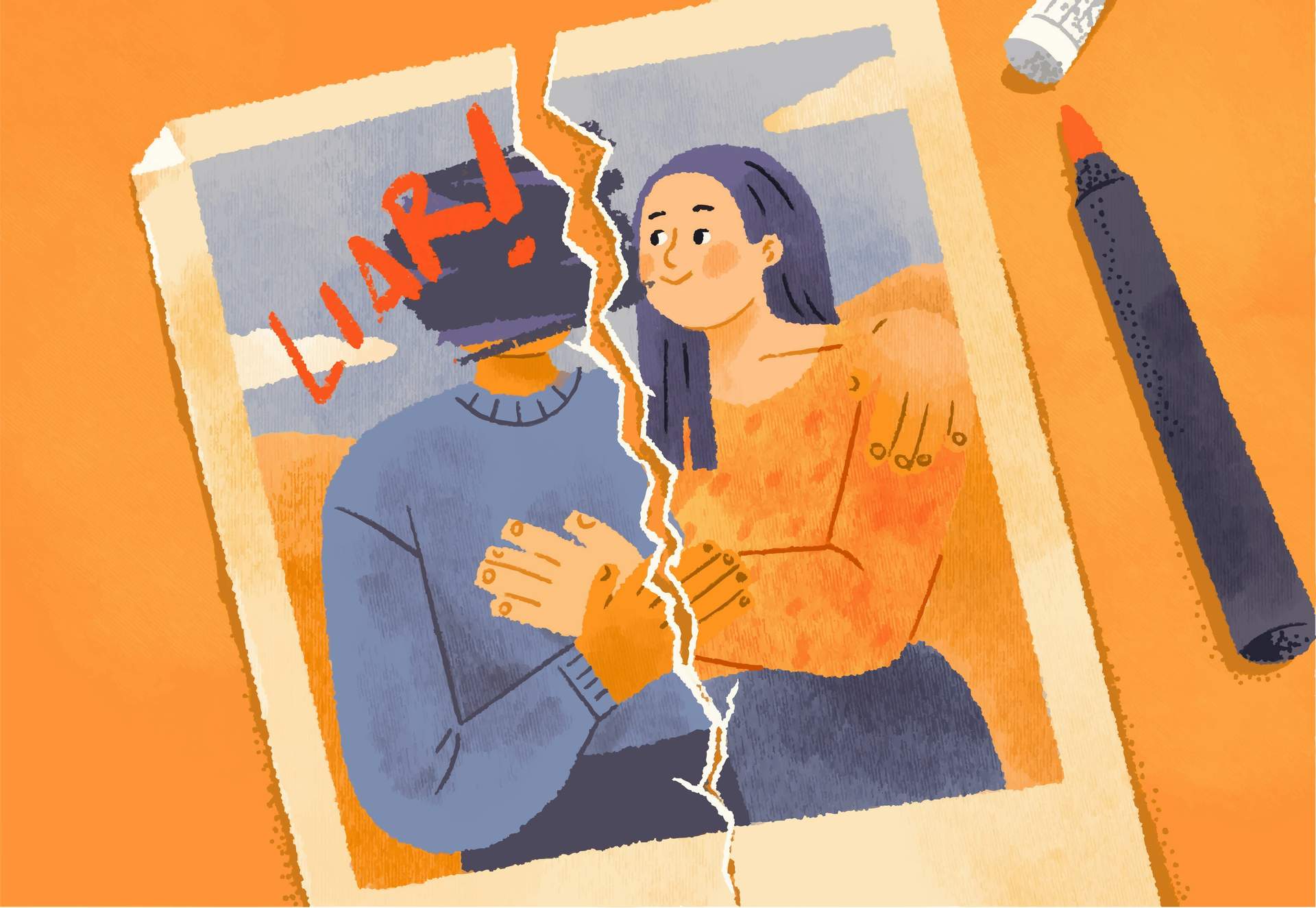
In a healthy marriage, a husband's loyalty belongs to his wife — not his mother. But setting that boundary is easier said than done. These are the moments when real husbands finally stood their ground.
"Back off."
My wife is the best mother I could have ever hoped for our children. And yet my mom never stopped criticizing her. It didn't matter what Anna did — my mother would find fault with it and quietly undermine her decisions.
I talked to her about it. Then warned her twice more. She didn't pull back. The third time, I told her calmly but clearly: go home, and only come back when you're here to help — not to judge. We haven't seen her since. And honestly, that's okay.
Constantly interfering
My mother had an opinion about everything in our lives, and it was exhausting. She weighed in on which washing machine we should buy — because the one my wife liked obviously wasn't good enough. When we fell in love with an apartment, she came along and spent half an hour tearing it apart.
My wife was the one who pointed it out: whatever she gets excited about, my mother immediately kills it. She was right. My mom protested indignantly, but I chose my wife. We decided my mother would not come to our home, and my wife would not be required to see her. I still visit her occasionally and call her several times a week — but I had to draw a line, because she was deliberately trying to destroy our marriage.
The comment about my weight
She took a dig at me the very first time we met. We'd been together three months when my then-boyfriend introduced me to his mother. We had barely finished shaking hands when she looked me up and down — twice — and said with a smirk:
"She's a little heavier than the others, but I suppose that's fine..."
My husband didn't hear it — he was talking to his father — and I didn't want to make a scene in the first five minutes. But that comment set the tone for everything that followed with my mother-in-law. I did my best to avoid her until the wedding.
The first time we visited them as a married couple, she didn't hold back. Before we'd even sat down, she said:
"You looked so slim at the wedding — I hope you're not going to put it all back on!"
My husband told her immediately — right there, in front of everyone — that what she said was disgusting, and if she ever spoke to me like that again, we would never set foot in their house. She just sputtered. It was clearly the first time in her life anyone had called her out on it.
Two years later, after our first child was born, I was carrying some extra weight and I could see her eyeing my body with that familiar tight-lipped look. I smiled at her sweetly and said: "Would you like to say something?" She didn't dare. She'd learned her lesson.
The ultimatum
One day my mother stood in front of me and told me to choose: her or my wife. I didn't hesitate for a second. I chose my wife. We haven't seen each other since. Anyone selfish, childish, and manipulative enough to force their own son to choose between his mother and his partner doesn't deserve a place in our lives.
Learning what boundaries actually mean
My mother-in-law had to be told — more than once — not to bring things into our home without asking, not to throw our belongings away, and not to show up whenever she felt like it. This was our home. She didn't get it. So my husband told her, firmly, that if she rang our doorbell uninvited at 9 p.m. again, we wouldn't open the door.
She burst into tears and tried to guilt-trip him — why couldn't he see that I was the one driving a wedge between them? He told her to drop the act. And just like that, she stopped crying instantly, dried her eyes, and walked out furious. Her expression went from devastated to livid in about a tenth of a second — tears and all. It was so surreal we ended up laughing about it afterward.
The moment the whole family turned
My mother-in-law didn't just target me — she had terrorized her entire family for years, and they had simply accepted it as normal. Then one evening I made a full three-course dinner. She looked at it and announced:
"Enthusiastic amateur work. Plenty of room for improvement."
I put down my spoon and walked to the bedroom to cry. My husband followed me. I told him: maybe he grew up with this, but I didn't have the emotional bandwidth to absorb this level of cruelty on a loop. Because that's what it was — pure meanness, designed to hurt.
To my complete surprise, he went back out and told her: enough. They had tolerated it long enough, and from now on she could keep her remarks to herself. And then something extraordinary happened — his sister backed him up. So did his brother-in-law. So did his grandfather. Even his father spoke up:
"Klara, the boy is right. You could ease up on that sharp tongue of yours — this meal is excellent."
She erupted. She accused everyone of conspiring against her — all because of me. But it was obvious what was really bothering her. She had lost control over her beloved son. And she had no idea what to do with that.
Frequently asked questions
Is it normal for a husband to prioritize his wife over his mother?
Yes — in a healthy marriage, a husband and wife form their own primary unit. This doesn't mean cutting a mother out entirely, but it does mean her role naturally shifts when a son builds his own family.
What's the difference between a difficult mother-in-law and a truly toxic one?
A difficult mother-in-law may be overbearing or thoughtless, but she can adjust when given clear feedback. A toxic one — as several of these stories show — manipulates, guilt-trips, and doubles down rather than reflecting on her behavior.
What should you do if your husband refuses to set limits with his mother?
Start by having an honest conversation about specific incidents rather than general frustrations. Many of the husbands in these stories didn't act until their wives clearly explained the emotional impact — not as an attack on their mother, but as an expression of their own pain.
Can a relationship with a toxic mother-in-law ever improve?
It can — but only when real boundaries are enforced with consequences, as these stories demonstrate. Empty warnings rarely change long-standing behavior patterns.