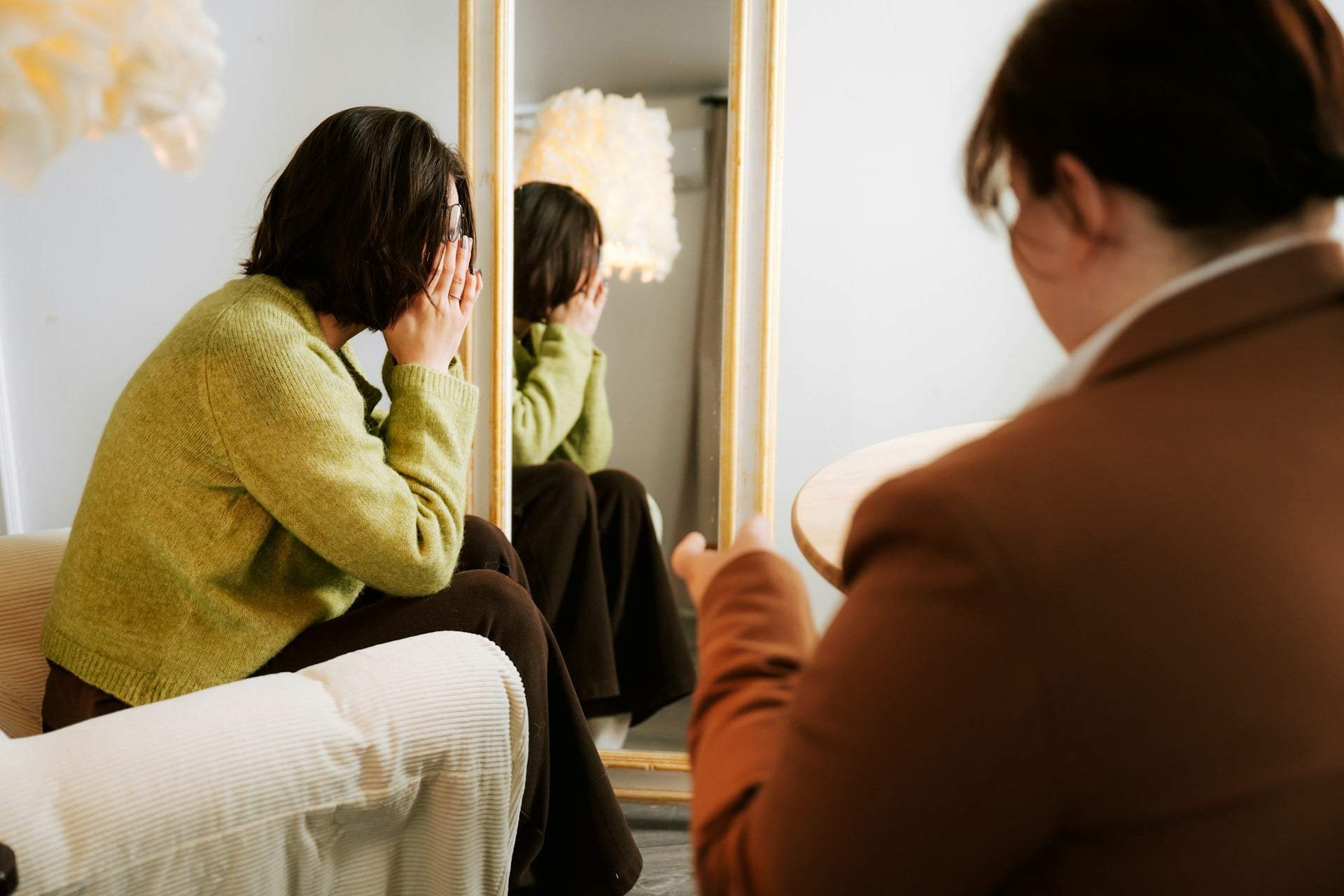
You walk into a café alone, and before you've even settled into your seat, the feeling hits: everyone is looking at you. Your face flushes, your movements turn stiff, and suddenly you're overthinking how to hold your cup so it doesn't look weird.
But here's the reality. The people at the next table are scrolling their own phones. The barista is thinking about the next order. No one is paying you any real attention at all.
Where does the spotlight effect come from?
The term comes from psychologist Thomas Gilovich of Cornell University and his colleagues, who ran a now-classic series of experiments on just how aware we are of how little others actually notice us.
In one of their best-known studies, university students had to walk into a room full of strangers wearing a deliberately embarrassing T-shirt — one printed with the face of Barry Manilow, a singer considered distinctly uncool at the time. Before they walked in, the students were asked how many people they thought would notice and remember the shirt.
Their estimates were far higher than what the people in the room actually recalled afterward.
We think we're the star of our own life inside other people's heads too — but most people are busy running their own script.
Why do we believe everyone is watching us?
The reason is simple: our own experience feels so intense and immediate that we struggle to imagine other people aren't living it just as vividly. Drop a glass in a restaurant, and to you the moment stretches out endlessly and feels humiliating. Meanwhile most of the people around you glance up at the crash, then return to their conversation and forget it within minutes.
Our brain simply can't step outside its own point of view. Psychologists call this egocentric bias.
This bias doesn't only show up in awkward moments. The same thing happens when you walk into work with a new haircut or a new outfit, certain that everyone will notice instantly. Usually, far fewer people comment than you expected. Not because you're uninteresting, but because everyone is mostly wrapped up in themselves — their own deadlines, worries and plans.
With anxiety, it can feel even stronger
The effect becomes genuinely draining in anxious situations. Someone dealing with social anxiety often feels that every gesture and every sentence is being examined under a microscope.
This false belief can turn into a self-reinforcing loop: the more you monitor yourself, the more tense you become, which can genuinely make your behavior more noticeable — though nowhere near as much as it feels from the inside.
It's not just about awkward moments
Research also revealed that the spotlight effect doesn't only apply to negative or embarrassing situations. When someone is proud of a strong performance, they tend to overestimate how many people noticed it and will praise them.
The sheer weight of our inner experience distorts our picture of the outside world — whether it's about shame or success.
How to make it easier
The good news is that simply becoming aware of this bias often makes the situation easier to handle. Next time you sit alone in a café and feel every gaze fixed on you, take a moment to look around: how many people are truly looking your way, and how many are staring at their own cup or phone?
The café isn't a stage, and you're not its only performer. At most you're one of many — someone others are paying just as little attention to as you're paying them.
What is the spotlight effect?
It's the tendency to overestimate how much other people notice and remember about us. Psychologists identified it through experiments showing our estimates of being noticed are far higher than reality.
Why do I feel like everyone is staring when I'm alone in public?
Because your own experience feels so intense that it's hard to imagine others aren't focused on it too. In truth, most people are absorbed in their own thoughts, phones and conversations.
Does social anxiety make the spotlight effect worse?
Yes. With social anxiety, you may feel every move is being scrutinized, which can create a self-reinforcing loop where self-monitoring increases tension — though far less noticeably to others than it feels to you.
How can I feel more comfortable sitting alone in a café?
Reminding yourself of this bias helps. Look around and notice how few people are actually watching you — most are focused on their own cup, phone or conversation.