Recently, I came across a short video clip from an interview where Dr. Gábor Máté shared a few thoughts that have stayed with me ever since. Especially when reflecting on my own relationships, including the one with my sibling. Ever since my older brother left for boarding school, he became a kind of elusive, “gray zone” in my life. Is it because of gender differences and the six-year age gap? Or is there something else behind it?
We’re still good siblings with no drama between us. When things get tough, we’re there for each other, and we both know we can count on one another. Yet, somehow, it feels like a whole world separates us. Long conversations are rare, but when we pick up the thread, there’s strong agreement and a shared rhythm. For a while, the occasional nature of this connection really hurt because I thought it shouldn’t be this way. After all, we grew up together, in the same family, with the same parents... But through my self-awareness journey, it gradually became clear that this might be one of our biggest, most common misunderstandings.
Even as siblings, we can never get the same – ever
Dr. Gábor Máté’s idea was exactly about this: there’s no such thing as two siblings growing up in the same family getting the same experience, and no two kids have exactly the same parents. At first, this sounds provocative, but if we lean in a little, many things fall into place. It’s true biologically and psychologically: parents aren’t the same people with their first child as they are with their second, and naturally, the children can’t respond to their parents in the same way.
The birth order question comes up right away
The arrival of the first child is often “the big experiment.” Everything is new and uncertain, filled with questions, fears, expectations, and often a lot of self-criticism. I’m “just” a mom to a daughter, but I deeply feel how much the first experience shaped me. Parents from Generation X and Y tend to overthink, constantly self-check, and wonder if they’re doing enough.
If I had a second child, life might be logistically more complicated, but mentally it would come with a very different routine. I’m not saying there’d be less anxiety (I’m sure I’d find things to worry about), but we’d approach it with more experience, greater confidence, and different decisions in some areas. That alone would mean a completely different childhood for that child.
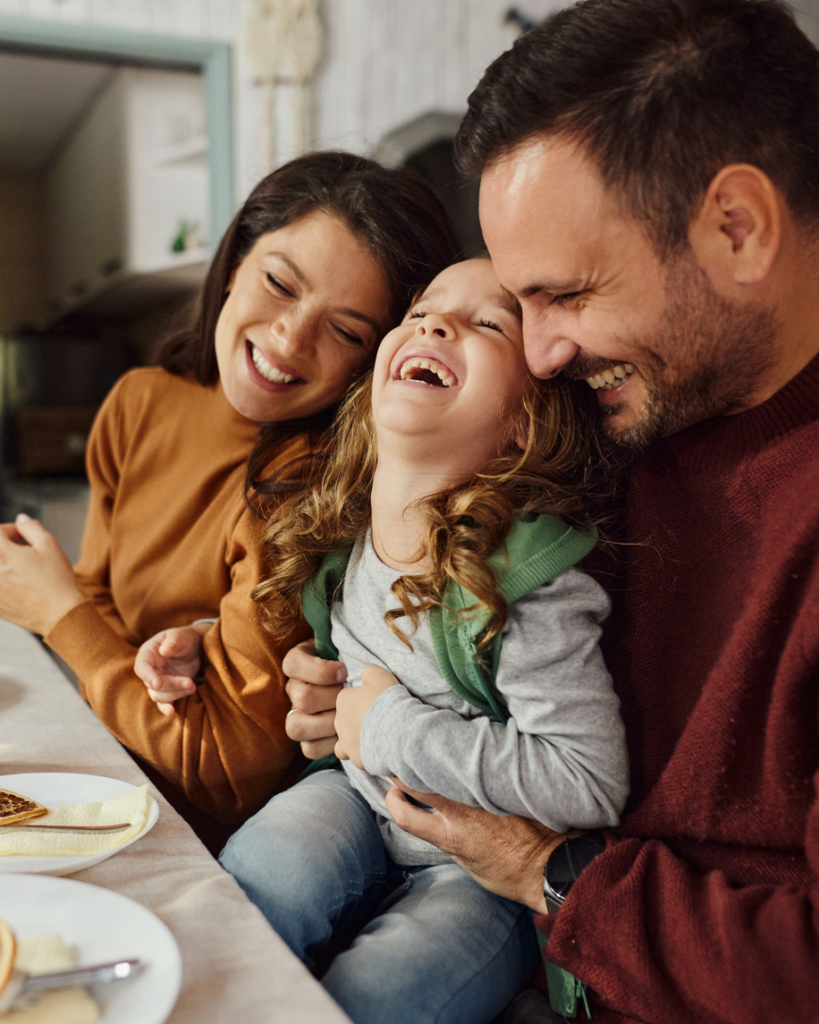
Then come the gender differences
We often think we’ve moved past these, but they’re still very much alive within us.
Even though we talk about equality, boys and girls often still face different expectations.
On a personal level, what we see as strength, sensitivity, success, or failure also varies. A father plays differently with his son than with his daughter, and so does a mother, even when the best intentions and awareness are behind it.
Another key difference is that, according to Dr. Máté, children don’t experience love “in theory” but through the way their parents connect and show love. And that love takes on a slightly different form in every relationship.
Parents’ financial situation isn’t constant either
Family life is always in motion and rarely stays in the same place for long. For example, my brother was born into much more uncertain circumstances than I was. And interestingly, the same exact pattern happened with my own child (and theirs too).
Looking back now, it feels almost irresponsible, but our daughter was conceived before we fully recovered from a long financial dependency. Although she never lacked anything, her early years were marked by the stress of renovations, moving, and expenses. I don’t think these things formed clear memories for her, but they definitely affected her emotionally—just like the fact that her dad worked abroad a lot to help us get ahead as soon as possible.
Parents’ lives evolve, sometimes in dramatic ways
Everyday events like moving, changing jobs, illness, loss, or unresolved trauma all change how present we can be in our children’s lives. Even if the age gap between siblings is small, parents aren’t in the same life phase when relating to each child. Kids are incredibly sensitive to these shifts, even if they can’t put them into words.

And finally, siblings themselves are often very different
I’m always amazed by how different some siblings can be—sometimes it feels like they have nothing in common. We often forget this factor, but children come with distinct temperaments, which doesn’t make parenting any easier. As if everything we’ve already discussed wasn’t enough!
Siblings perceive the world differently, react in unique ways, and have different needs and desires. This naturally leads to different responses from parents.
Some connections are easier because energy levels, thinking, and rhythms align, while others are tougher because they constantly hold up a mirror, ask questions, test boundaries, and confront our weaknesses. It’s not about how much love there is, but about different dynamics. Still, both parents and children feel these differences, and often, these experiences carry their own emotional weight.
Looking at it all from this perspective, it becomes clearer why we couldn’t have gotten the same, even growing up together under the same roof with the same parents. It’s healing to realize that our paths diverged not because anyone made a big mistake, but because we were shaped by different experiences and life circumstances from the start.