Match the formula to how your skin behaves now
Skin in your forties and beyond often behaves differently in different zones, and that is the thing to design around. If your cheeks feel tight by mid-morning, avoid anything described as long-wear matte across the whole face; a satin or luminous formula on the cheeks with a light powder only on the T-zone will hold better and look far more alive. If your skin has become oilier around the nose and chin — which happens more often than people admit — you don't need a matte base everywhere, just a mattifying primer where the shine appears.
Texture matters more than coverage. On mature skin, the enemy of a good base is not thin coverage, it is product pooling in lines and around the nose. Anything thick, dry-finishing or heavily silicone-based will emphasise exactly what you were hoping to soften.
Prep does more than the product
Almost every complaint about a base — patchiness, sliding, clinging to dry flakes — is a preparation problem. Gentle exfoliation two or three times a week keeps the surface even enough for pigment to sit smoothly. Moisturiser needs a couple of minutes to sink in before anything goes on top; if you apply base onto damp cream, it will move all day.
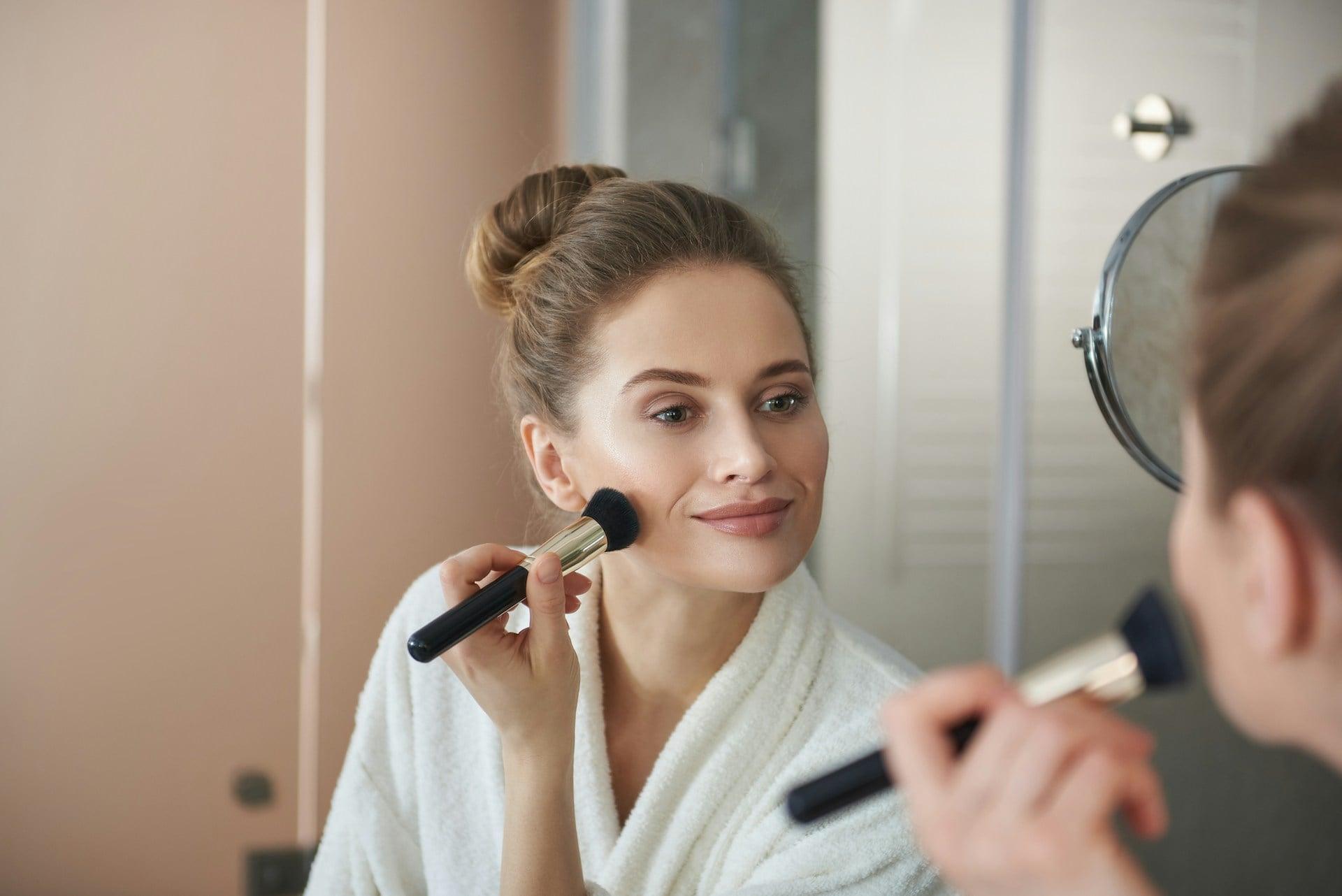
Application matters too. Warm the product on the back of your hand, apply with fingers or a damp sponge from the centre of the face outwards, and stop before you reach the hairline and jaw. Coverage should be concentrated where you actually want it — around the nose, on any redness, over pigmentation — and almost absent everywhere else. That contrast is what makes skin look like skin rather than a mask.