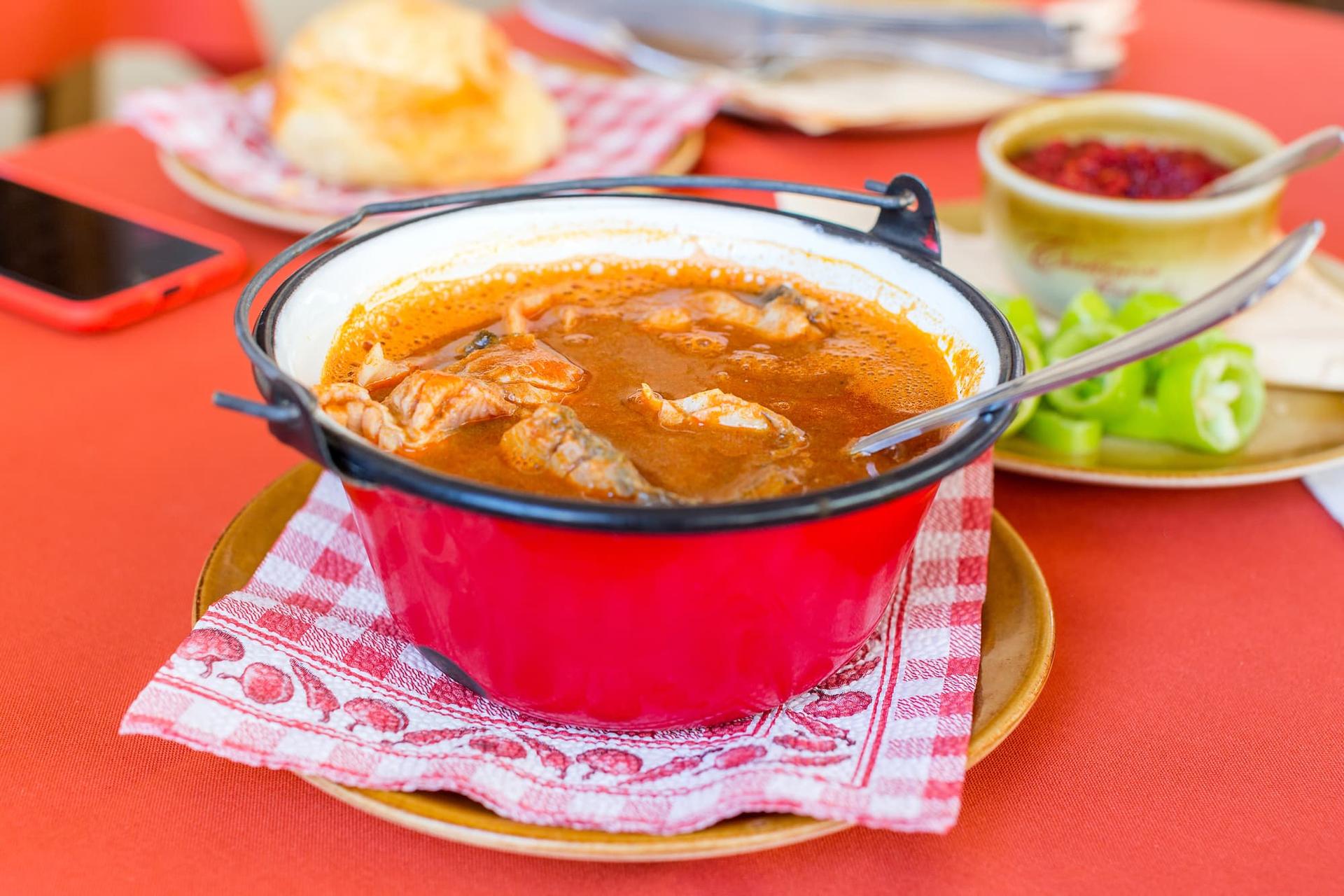
Most people only think of Hungarian fish soup at Christmas, but this bold, paprika-fired dish deserves a place on your table all year round. When it's made properly, it's one of the most satisfying things you can cook on a weekend — slow, aromatic, and deeply rewarding. Every decision you make, from the fish you choose to the heat under the pot, shapes the final result.
Which fish to use
Traditional Hungarian fish soup is built around carp, catfish, or pike — and many cooks use a combination of all three. The carp and smaller bony fish go into the stock, while the clean, boneless fillets of catfish are what ends up in the bowl. Pike is worth using for its flavor, but it's notoriously bony: after filleting, the distinctive Y-shaped pin bones running along the spine need to be carefully cut out or scored before serving.
If you have access to a fish market or fishmonger, ask what came in fresh that day. If possible, request roe and milt alongside the fish — they add a wonderful richness and depth to the stock.
The stock is always built from the small bony fish, heads, backbones, and fins. The filleted flesh only goes in at the very end. This one step decides whether your soup has true, deep fish flavor — or is just spiced water.
The onion base that makes or breaks it
The soul of a great Hungarian fish soup is onion — and you need more of it than you might expect. Recipes vary, but as a general rule, use roughly 5–6 oz (150–170g) of onion per 2 lbs (about 1 kg) of fish. Slice it thin and sweat it slowly in lard or oil over low heat until completely soft and translucent. Do not rush this step. Onion cooked too fast over high heat turns bitter, and that bitterness will follow your soup all the way to the table.
Paprika and seasoning
Once the onion is soft, add sweet Hungarian paprika generously — but pull the pot off direct heat first, because paprika scorches in seconds and turns acrid. Add hot paprika or a few whole dried chili peppers to taste; the whole peppers can be fished out at the end if you want the heat to stay subtle. Many cooks also stir in a spoonful of crushed or puréed tomato at this stage — it gives the soup its characteristic slight acidity and rounds out the depth of flavor beautifully.
How to cook it, step by step
- Clean the small fish, heads, and backbones thoroughly, then add them to a large pot on top of the softened onion base.
- Cover with cold water — just enough to submerge everything — and simmer gently with the lid on for about 1.5 to 2 hours, until the flesh falls apart completely.
- Pass the stock through a fine sieve into a clean pot, pressing everything through so you are left with a smooth, creamy, bone-free base.
- Stir in the paprika, hot chili, and tomato (if using), then bring back to a gentle boil.
- Add the fish fillets, which you should have salted 1–2 hours before cooking. Simmer for just 10–15 minutes until the flesh is just cooked through — no longer.
- Taste before adding any extra salt, since the pre-salted fish will have already seasoned the broth.
Szeged style vs. Baja style
Hungary's two great fish soup traditions differ in both method and spirit. The Szeged version is what most people picture: the stock is passed through a sieve until silky smooth, giving it a rich, velvety body without any cream or thickener. The result is deeply concentrated and glossy.
The Baja version takes a more rustic, all-in-one approach. The onion, paprika, fish heads, and thick fish slices all go into the pot together. The liquid is never strained — it stays clear and vivid red, with the fish pieces remaining whole in horseshoe-shaped rounds. By tradition, Baja-style fish soup is served over egg noodles placed in the bottom of the bowl before the hot broth is ladled over them.
Neither is more authentic than the other — it comes down to which regional tradition feels like home to you. If this is your first time making it, start with the Baja approach: it's simpler, more forgiving, and still absolutely delicious. Once you're comfortable, experiment with the Szeged-style sieving technique.
Storing and serving
One of the best things about this soup is that it often tastes even better the next day, once the flavors have had time to deepen and meld. It keeps safely in the refrigerator for two to three days, and can also be frozen — though the texture of the fish fillets may soften slightly after thawing.
Serve it with fresh crusty bread or a soft white roll to soak up the broth. A glass of well-chilled dry white wine alongside makes the whole experience complete.
Can I make Hungarian fish soup without a whole fish?
You can use fish fillets alone, but the soup will lack the deep, complex flavor that comes from simmering bones, heads, and small bony fish for the stock. If whole fish isn't available, a good-quality fish stock from a fishmonger is the best substitute.
Does Hungarian fish soup have to be spicy?
Not at all. The heat level is entirely adjustable. Use only sweet paprika and skip the hot chili for a mild version, or add whole dried chili peppers that can be removed before serving if you want a hint of warmth without full-on heat.
What's the difference between Szeged and Baja fish soup?
The Szeged version is made by sieving the stock until smooth and silky. The Baja version is cooked all in one pot without straining, leaving a clear red broth with whole pieces of fish, traditionally served over egg noodles.
Can I use salmon or other non-traditional fish?
Purists would say no, but at home you can experiment. The flavor profile will be different — carp, catfish, and pike have a distinctive freshwater richness that defines the dish. That said, the technique and seasoning method will work with other firm-fleshed fish too.