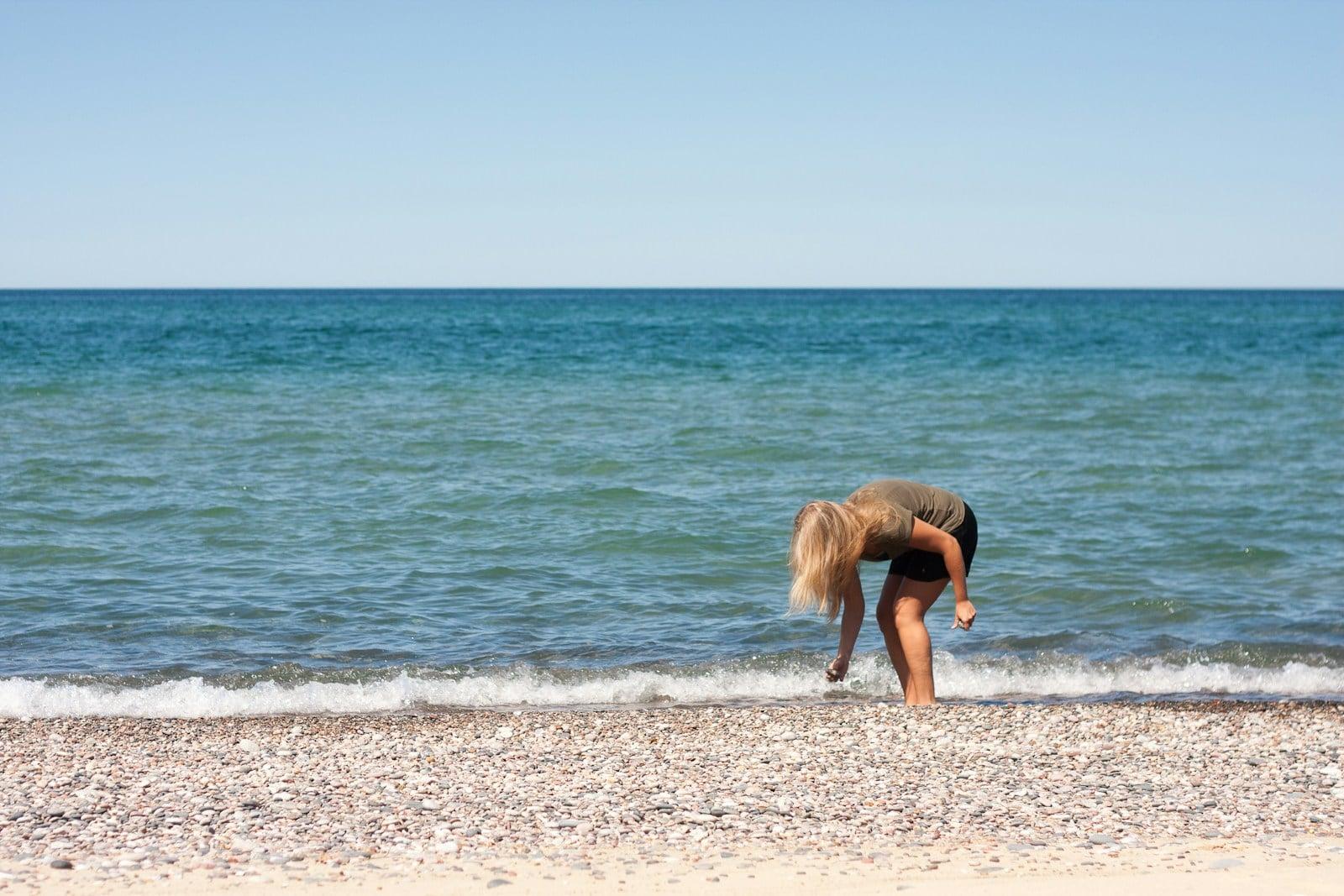
There's a stretch of Florida coastline where people don't walk on the beach — they shuffle forward, hunched over, eyes locked on the sand. If you've seen it before, you know exactly what's happening: they've arrived on Sanibel Island, and they've caught the famous "Sanibel Stoop."
Sanibel Island sits off Florida's southwest coast, just a short hop from Fort Myers, and for decades it's been one of North America's legendary shelling destinations. The reason comes down to geography. Unlike most barrier islands in the Gulf of Mexico, which run north to south, Sanibel lies on an east-west axis — and that quirk lets underwater currents sweep shells straight onto the shore before they have a chance to break apart.
The result? On a good day, some stretches of beach are carpeted inches deep in shells.
Why does it happen here?
The explanation from geologists and biologists is simple, yet quietly fascinating. On most islands, the waves roll in parallel to the shore. But Sanibel sits almost sideways to the tide. That means the shells of open-water mollusks, sea snails and other marine creatures don't get ground down over a long, chaotic journey — they arrive on the sand after a relatively short trip, still intact.
After a storm, especially in the fall and winter, locals say you can sometimes wade ankle-deep through shells at the water's edge.
Bowman's Beach, where the locals actually collect
Ask a Sanibel resident where the best shelling is, and most of the time you'll get a vague answer. Not because there's no good spot — but because there is, and nobody wants it swarmed by tour buses tomorrow.
Still, Bowman's Beach, on the island's western end, isn't really a secret. It's just far enough from the main road that the crowds racing to the nearest sand rarely make it out there. From the parking lot, you have to walk or bike about a mile (1.5 km) along a wooded path before the open water finally comes into view.
That short trek is exactly what filters out the casual visitors — and it's why the sand here is still almost untouched by shells in the early morning.
The most beautiful shells are never where the crowd is standing — they're where no one can be bothered to walk.
Lighthouse Beach and the morning light
Lighthouse Beach Park, on the island's eastern tip, is far easier to reach, with parking and a lighthouse to match. And precisely because it's so accessible, plenty of people write it off — surely there can't be anything left there.
In reality, in the first hours after low tide, early in the morning, you can still find perfect, intact shells here too: tiger snails, angel wings, and occasionally rarer specimens with a soft pinkish hue. The local anglers and early-rising retirees show up almost ritually at the same hour — before the sun warms the sand and coaxes everyone else out of the house.
Why nobody talks about it out loud
Shelling on Sanibel isn't a free-for-all. The owners of the island's shell shops and the longtime vacation-home crowd know that the less they say about a great day or a great spot, the longer that stretch of beach stays peaceful.
For decades, an unspoken etiquette has held sway on Sanibel: you never take a live shell, only empty ones — and nobody rushes to post exactly where they found a rare piece.
That quiet restraint is what keeps the island one of the best shelling spots in all of North America, even as the mass tourism on the mainland shore, just a few hundred yards away, tells a completely different story.
When you finally go
Stand once on the wet sand of Bowman's Beach or Lighthouse Beach in the early light, bend down for that first intact, still-damp shell, and you'll understand why everyone stoops.
It's not about quantity. It's about those few seconds when you turn a shape over in your palm that you've never seen before. Sanibel doesn't shout about how special it is. It simply lets the water, after every tide, hand a fresh gift to anyone willing to bend down for it.
When is the best time to go shelling on Sanibel?
The first hours after low tide, early in the morning, tend to be ideal. After storms — especially in the fall and winter — the shell haul can be even bigger, with shells sometimes piling up ankle-deep at the water's edge.
Which beach is best for finding shells?
Bowman's Beach on the western end stays quieter because of the mile-long walk from the parking lot, so its sand is often almost untouched at dawn. Lighthouse Beach on the eastern tip is easier to reach and still yields perfect shells early in the morning.
Why is Sanibel so good for shells?
Unlike most Gulf barrier islands, Sanibel runs east to west and sits almost sideways to the tide. That lets underwater currents carry shells ashore over a short distance, so they arrive intact instead of getting ground down.
Is there a right way to collect shells there?
Yes — there's a long-standing local etiquette. You take only empty shells, never living ones, and locals tend not to broadcast exactly where they found a rare piece, which helps keep the beaches peaceful.