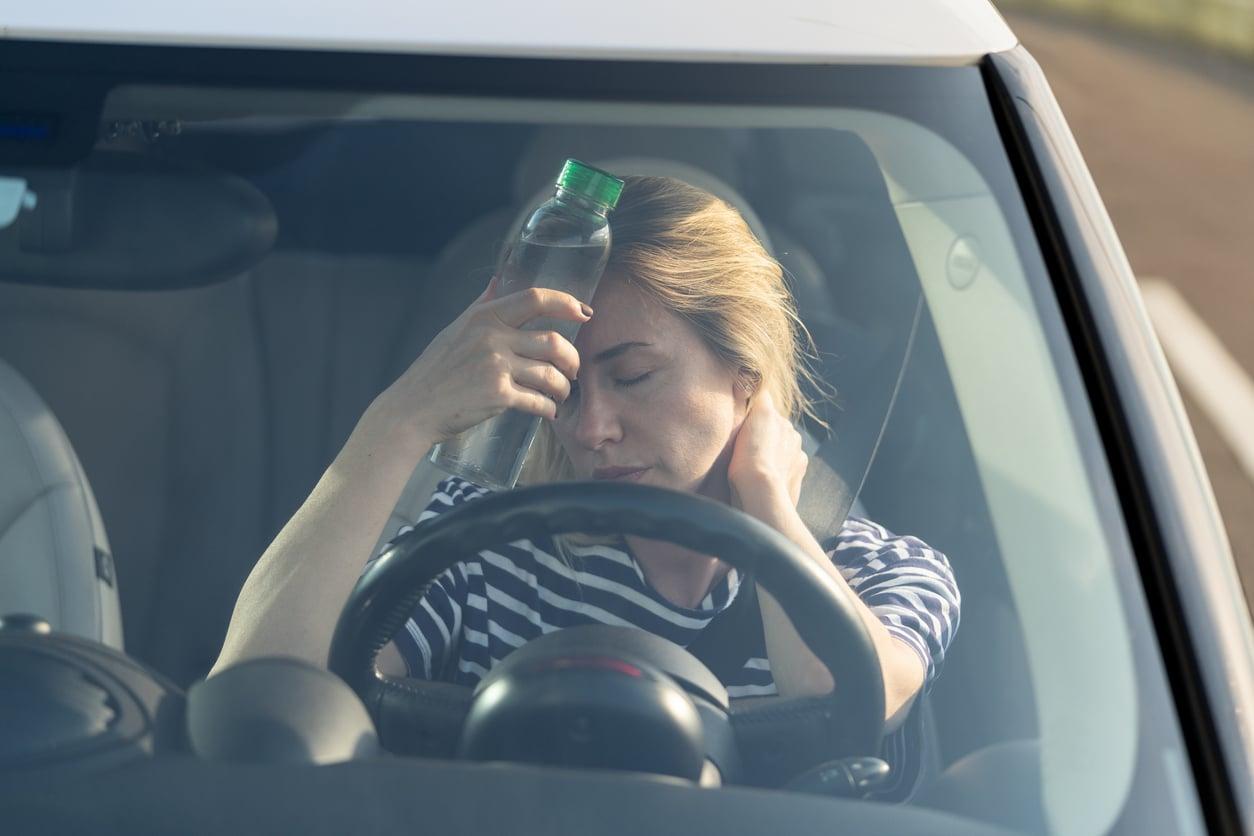
In a heatwave, most of us remember to drink enough water, put on sunscreen, and stay in the shade during the hottest hours. But there's one danger almost nobody talks about — the one waiting for you behind the wheel.
High temperatures don't just make you feel uncomfortable. They can quietly impair your attention, your reaction time, and your decision-making — and that's a recipe for the kind of mistakes you'd never make on a cooler day.
Research shows that on hot days, the risk of traffic accidents — including fatal collisions — rises significantly.
You might assume your car's air conditioning solves the whole problem. The reality is far more complicated.
Heat puts a strain on your brain, too
Carlos Alós-Ferrer, an economist and behavioral researcher and professor at Lancaster University Management School, shared his thoughts on Psychology Today about how extreme heat weakens our judgment and lowers our self-control. As a result, we're more likely to make rash decisions, react impatiently to what's happening on the road, and let our attention drift.
Behind the wheel, those changes can show up in very real ways. Speeding, sudden lane changes, forgetting to signal, risky overtaking, tailgating, or a generally aggressive driving style all become more common. And in summer traffic jams, tempers flare far more easily.
A phenomenon we've known about for decades
Scientists didn't just stumble onto the link between heat and traffic accidents. Studies from the 1970s and 1980s already found that high temperatures reduce concentration, increase fatigue, and can even bring on drowsiness.
Today's research only reinforces this. Intense heat slows your reaction time and makes distractions more likely, while blinding sunlight worsens visibility. Each of these raises the risk of an accident on its own — together, they create an even more dangerous situation.
5 signs the heat may already be affecting your driving
If you notice any of the following while driving, it's worth being extra cautious and taking a short break:
- you're finding it harder to concentrate,
- you feel more irritable than usual,
- you're yawning more often or feeling tired,
- you spot hazards later than you normally would,
- you're more impatient in traffic.
If you often feel on edge when it's hot, you may find it interesting to read how heat affects your mood more broadly.
The statistics tell a revealing story
Numerous studies suggest that on hot days, the risk of traffic accidents — including fatal crashes — climbs.
One American analysis that examined more than 46 million police accident records found that on days above 27°C (80°F), the rate of fatal traffic accidents was nearly 9 percent higher than on moderate days between 10 and 16°C (50–61°F).
A Spanish study found that during heatwaves, the overall risk of road accidents rose by almost 3 percent. But when researchers looked only at crashes clearly caused by driver error, the increase jumped to nearly 8 percent.
They also observed that every additional degree Celsius pushed the odds of a driver-error accident even higher. Similar results emerged in South Korea and Italy, suggesting this isn't a national quirk but a basic feature of human physiology.
It's not just drivers who are at risk
When the weather turns hot, more people head out on foot, by bike, or on electric scooters. That puts more vulnerable road users into the mix at exactly the same time — people who are far less protected in a collision.
Experts say this is another key reason accident numbers rise. And when the heat also dulls drivers' attention, the two factors combined become an even bigger threat.
Why we feel more confident than we actually are
Here's a curious psychological quirk: most drivers rate their own skills as above average. Statistically, of course, that's impossible.
According to Carlos Alós-Ferrer, heat is especially dangerous precisely because it doesn't discriminate. It doesn't matter how experienced you are — high temperatures can lower anyone's concentration and slow anyone's reactions. Often the reason we don't notice the change is that we feel like we're driving exactly the way we always do.
How to drive more safely on the hottest days
The most important thing is to keep in mind: in the heat, it's not just you who reacts more slowly — everyone else on the road does too.
Leave a bigger following distance, allow more time to brake, and ease off your usual pace. Even dropping your speed by a few kilometers per hour can buy you precious seconds in an unexpected situation.
Before you set off, make sure you're properly hydrated and, if you can, cool down the cabin. On longer trips, stop to rest regularly.
Pay extra attention to pedestrians, cyclists, and scooter riders, too — they feel the effects of the heat just as much as you do, while being far more fragile in a crash.
And if you have the choice, skip the hottest hours in favor of early morning or evening travel. If your job allows it, working from home or flexible hours can also cut the risks that come with driving in extreme heat.
Summer driving demands more of your attention
As climate change makes heatwaves more frequent and longer-lasting, summer road safety is placing new demands on drivers. Cars keep getting smarter, but the single most important safety factor is still the human being behind the wheel.
Simply being aware that intense heat can quietly erode your concentration and your decisions is already an important step toward safer driving. When the temperature climbs, it's worth adapting not only your body — but your driving style too.
Does car air conditioning fully protect you from heat while driving?
No. While air conditioning helps keep the cabin cool, the reality is more complex. Factors like fatigue, slower reaction times, and blinding sunlight can still affect your driving even with the AC running.
At what temperature does the risk of accidents start to rise?
According to the American analysis cited in the article, days above 27°C (80°F) saw nearly 9 percent more fatal traffic accidents than moderate days between 10 and 16°C (50–61°F).
How can I tell if the heat is affecting my driving?
Watch for warning signs like trouble concentrating, irritability, frequent yawning or tiredness, spotting hazards later than usual, and feeling more impatient in traffic. If you notice these, take a short break.
What's the simplest way to drive more safely in a heatwave?
Keep a larger following distance, allow more time to brake, ease off your usual speed, stay hydrated, and cool the cabin before setting off. If possible, drive in the early morning or evening instead of the hottest hours.