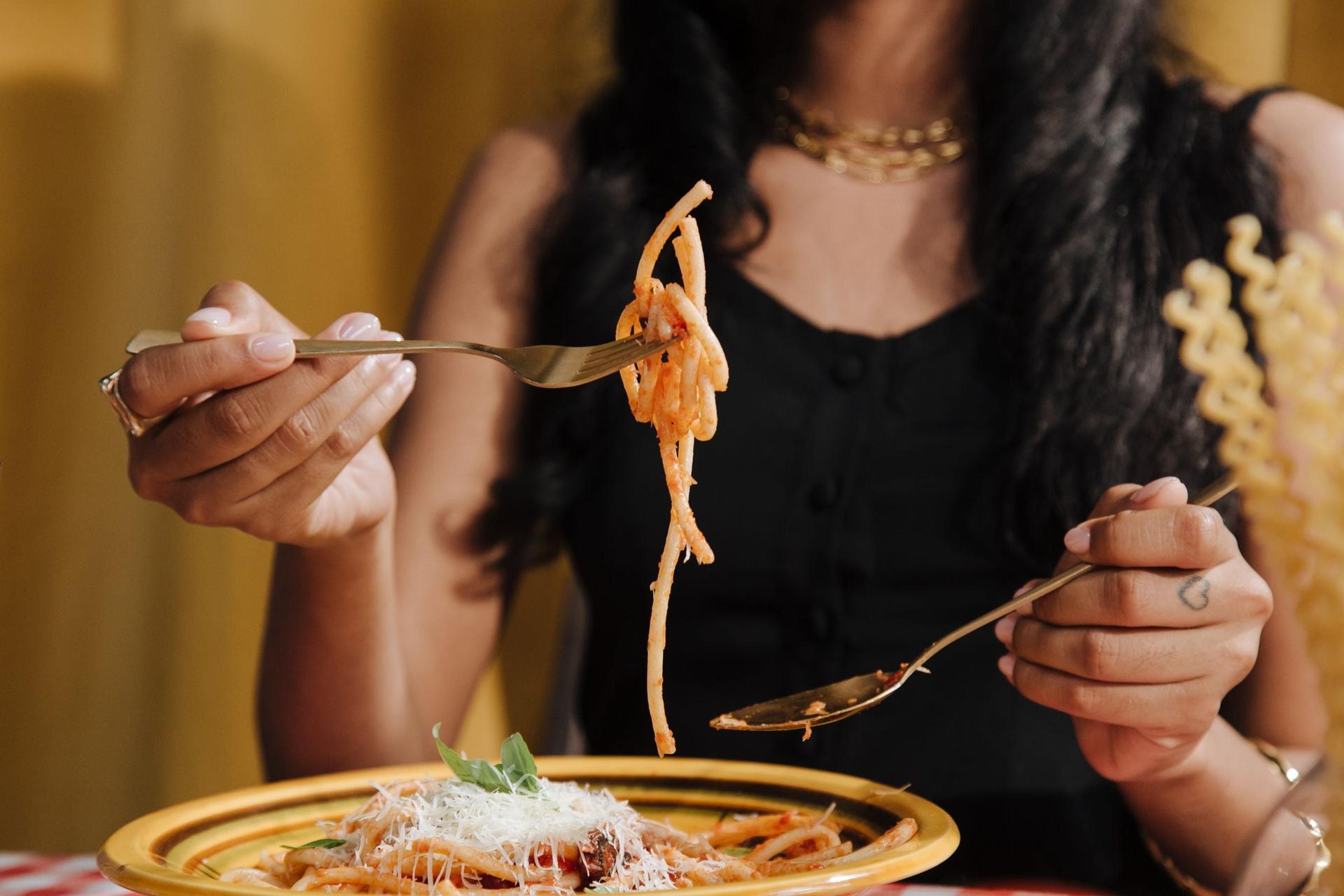
Be honest: when you make pasta, you probably just reach into the cupboard and grab whatever box is closest. Spaghetti tonight, penne tomorrow, no real thought behind it. But ask an Italian, and they'll tell you a great pasta dish doesn't start with the sauce — it starts with choosing the right shape.
There's a very simple reason for this. Different shapes were designed for different types of sauce. Ridged pasta grips thick, meaty ragùs. Hollow shapes let the sauce flow inside. Long strands are perfect for a lighter coating. That's what makes every bite feel balanced instead of accidental.
Of course, if all you have at home is spaghetti, nobody's going to scold you for pouring bolognese over it. But once you try the same dish with the shape it was actually made for, you'll taste the difference instantly.
Spaghetti, linguine, capellini: made for lighter sauces
Long, thin pasta isn't built to carry big chunks of meat clinging to it. It works far better with sauces that coat the strands evenly. Dishes like clam pasta or garlic-and-olive-oil pasta, for example, shine with spaghetti or linguine. A penne would soak up too much sauce and completely change the character of the dish.
Best matches:
- marinara
- aglio e olio
- carbonara
- cacio e pepe
- vongole
- lemon butter sauce
- puttanesca
Tagliatelle, fettuccine, pappardelle: built for hearty ragùs
If you're making a rich, meaty or mushroom ragù, forget the spaghetti.
Wide ribbon pasta has a large surface area, so it holds far more sauce — and the pieces of meat don't slide off. It's no accident that even in Bologna, the famous ragù is never served with spaghetti.
The best pairings:
- bolognese ragù
- game ragù
- creamy mushroom sauce
- sausage and mushroom sauce
- Alfredo
- truffle cream sauce
Penne, rigatoni and ziti: the versatile crowd-pleasers
Hollow pasta works with just about any thicker sauce. The sauce clings both inside and out, so every bite is more flavorful. Ridged rigatoni is especially good at grabbing hold of dense sauces.
If you're building a weeknight repertoire, these shapes are the ones you'll reach for most — they're the reliable all-rounders every cook should keep stocked. Here are a few easy ideas worth having on hand.
Try them with:
- arrabbiata
- tomato and meat sauce
- vodka sauce
- creamy pesto
- baked pasta dishes
- vegetable ragùs
Fusilli: one of pesto's best friends
There's a reason spirals are so popular. Their twists trap exactly the right amount of sauce, while little pieces of vegetable nestle neatly into the curves. But for a classic bolognese, they're less ideal — the ground meat just tumbles off.
Best with:
- basil pesto
- tuna pasta
- zucchini and vegetable sauces
- mushroom sauces
- light tomato sauces
Shell pasta (conchiglie): a scoop of sauce in every bite
The shell shape works almost like a spoon, so it's brilliant at collecting thicker sauces. The larger conchiglioni shells are nearly always stuffed with ricotta, spinach or ground meat, then baked with tomato sauce and béchamel.
Especially good with:
- meaty ragù
- creamy tomato sauce
- pesto
- cheese sauce
- minestrone
- pasta and pea soup
Bucatini: when the sauce gets inside the pasta too
Bucatini looks like spaghetti from the outside, but it's hollow inside. Part of the sauce flows right into the center, which is exactly what makes the flavor so intense.
Perfect with:
- amatriciana
- cacio e pepe
- simple tomato sauces
Ravioli and tortellini: let the filling shine
With stuffed pasta, the sauce isn't the star. Choose something too intense and the flavor of the filling gets completely lost.
The best choices:
- sage butter
- melted butter and parmesan
- a light four-cheese sauce
- chicken broth (for tortellini)
Lasagne: a classic for good reason
Lasagne sheets were invented for layering. You can experiment, of course, but it's hard to beat the original recipe.
The classic combination is still unbeatable:
- bolognese ragù
- béchamel
- parmesan
Ditalini, orzo and the other tiny shapes
Tiny pasta shapes feel most at home in soups and salads. They don't overpower the other ingredients — instead, they pull the whole dish together.
Ideal for:
- minestrone
- chickpea soup
- lentil soup
- summer pasta salad
- lemon butter orzo
5 pairings Italians probably wouldn't choose
None of these are forbidden. But if you're after an authentic result, these are worth avoiding.
1. Spaghetti + bolognese ragù
Maybe the most famous "mistake" of all. In Italy, bolognese is almost always served with tagliatelle.
2. Penne + aglio e olio
The garlic-and-olive-oil sauce is simply too light to work with hollow pasta.
3. Fusilli + carbonara
Carbonara's creamy sauce coats long strands far more beautifully.
4. Ravioli + heavy meat ragù
The delicate filling disappears under such a bold sauce.
5. Bucatini + creamy Alfredo
Bucatini is at its best with simpler oil-based or tomato sauces.
One rule worth remembering
If you don't want to memorize every single pasta shape, just keep this one principle in mind:
- light, runny sauces go with long pasta;
- thick, chunky ragùs call for ridged or wide pasta;
- stuffed pasta deserves a restrained sauce;
- and for soups and salads, the tiny shapes work best.
Follow this, and it's almost impossible to go wrong — you'll get a far better result from the very same recipe.
Does it really matter which pasta shape I use?
Nobody will stop you from pouring any sauce over any pasta. But shapes are designed for specific sauces, and once you match them properly, you'll taste a noticeably more balanced result from the exact same recipe.
What pasta should I use for bolognese?
Wide ribbon pasta like tagliatelle, fettuccine or pappardelle. Their large surface area holds the meaty sauce, and the pieces of meat don't slide off the way they do with spaghetti.
Which pasta is best for pesto?
Fusilli is one of pesto's best friends. The spirals trap just the right amount of sauce, and small pieces of vegetable settle neatly into the twists.
What's the easiest rule to remember?
Light sauces go with long pasta, thick ragùs with ridged or wide pasta, stuffed pasta with a restrained sauce, and tiny shapes with soups and salads. Stick to that and it's hard to go wrong.