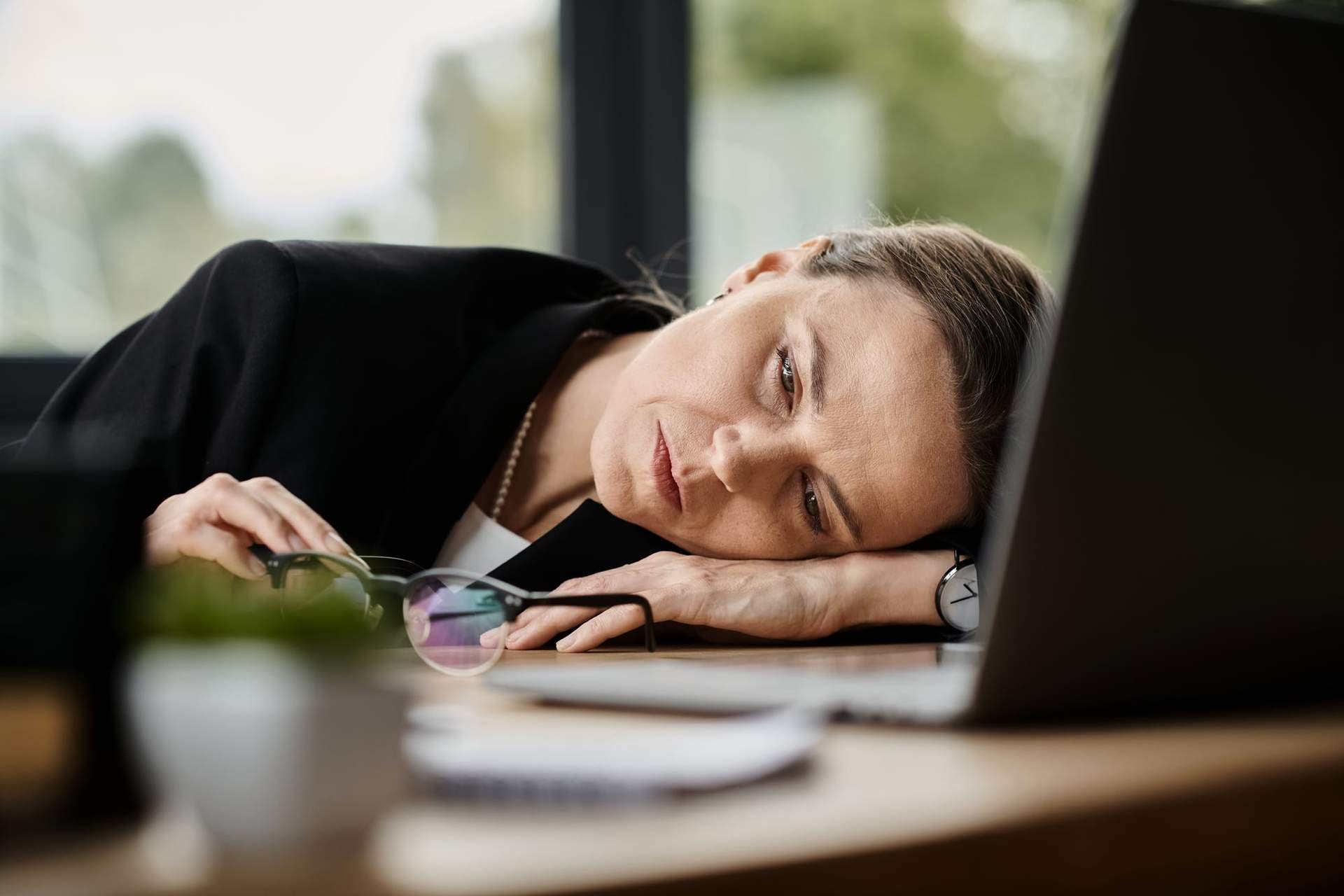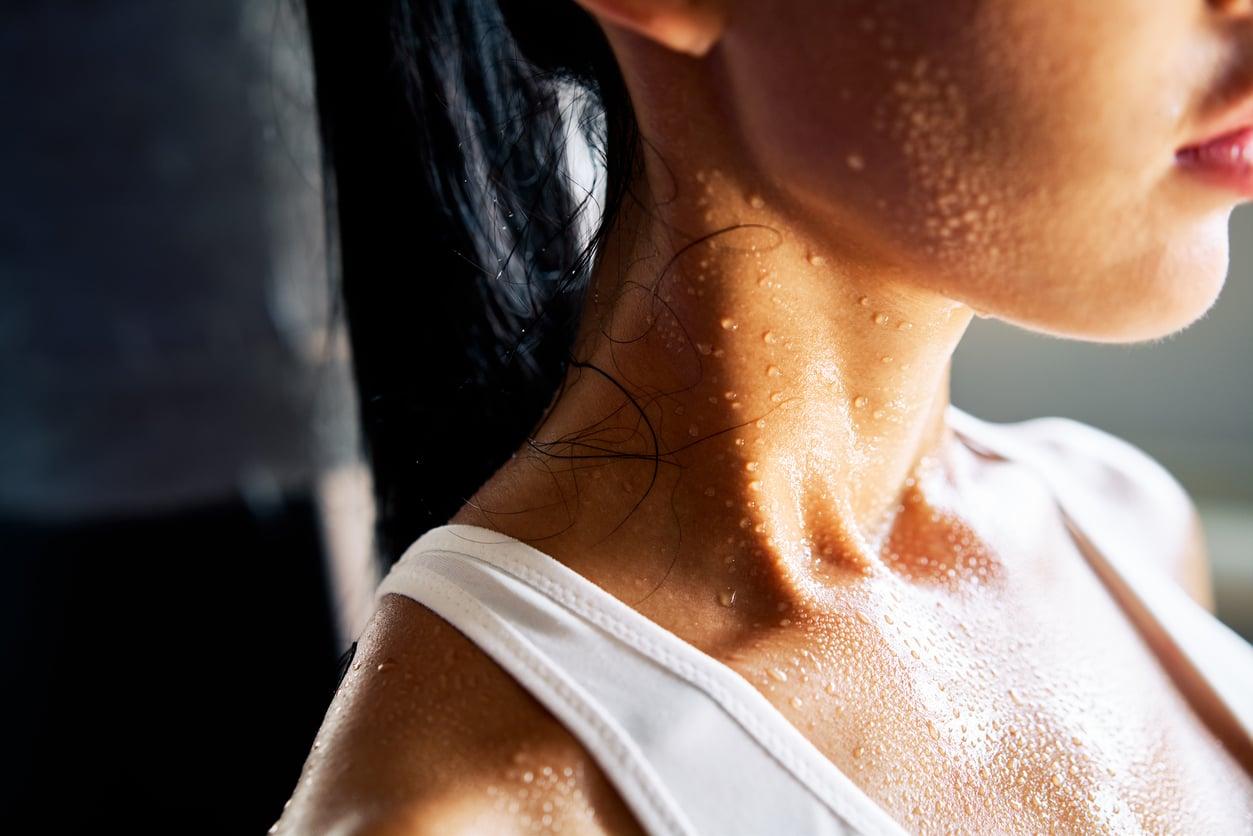
You know the moment. You're sitting in a job interview, about to walk into a packed room to give a presentation, or you've just opened an email from your boss with the subject line "We need to talk." And then you feel it. Not the gentle warmth of a summer afternoon, but that other sweat — the kind that leaves a damp patch under your arm, sends a cold shiver down your spine, and somehow smells different from anything you'd notice after a workout. That's stress sweat. Almost everyone experiences it, yet somehow it remains one of the last true body taboos.
Your body actually has two different kinds of sweat
Here's something that surprises most people: you don't just produce one type of sweat — you produce two. Two entirely separate gland systems are at work, and they serve very different purposes.
Eccrine glands are your body's cooling system. They cover almost your entire skin surface and produce a thin, largely odorless fluid made mostly of water and salt. This is the sweat you produce when you go for a run, wait for the bus in a heatwave, or eat something spicy. Its job is simple: regulate your temperature.
Apocrine glands are a different story. Concentrated mainly in the armpits, groin, and around the nipples, these glands don't cool you down. They activate in response to emotional stress — anxiety, fear, excitement, awkwardness. And what they produce is not watery at all. It's a thicker, protein- and lipid-rich fluid that is, on its own, almost odorless. The problem starts when the bacteria naturally living on your skin get involved. They break down those proteins and fats, and the result is that sharp, distinctive smell we associate with nerves. So when stress sweat seems to smell different — it genuinely does, because it is different.
Why the armpits? Blame evolution
The evolutionary explanation is equal parts fascinating and slightly embarrassing. Apocrine glands originally served as chemical messengers — signaling danger, attraction, and social hierarchy to others nearby. In modern humans, those functions have largely faded away, but the stress response they're wired into has not. That's why stress sweat can kick in within seconds of a frightening thought or an uncomfortable situation. No physical effort required.
Your brain decides "this is a threat," and your body is already reacting before you've had a chance to think.
The cruel feedback loop
The most frustrating thing about stress sweat is that it feeds on itself. You notice you're sweating in an important moment. You start worrying that others will notice. That worry creates more stress, which triggers more sweat, which creates more worry — until the damp patch under your arm looks like a small continent.
This is how many people develop a quiet, persistent social anxiety around public situations. It's not the presentation itself that feels terrifying — it's the mental image of someone spotting the sweat stains, or catching the smell. Dark shirts, layered clothing, arms held rigidly at the sides: these are the quiet coping strategies that millions of people use every day and never mention to anyone.
Why nobody talks about it
The answer is probably what you'd expect: shame. Western culture has long filed body odors and bodily fluids under "uncivilized," and sweat is perhaps the most visible offender. A tear can be romantic. A sweat stain never is.
Meanwhile, the deodorant industry has spent decades selling a convenient fiction — that the right product will stop you from sweating. The truth is that most standard deodorants and antiperspirants target eccrine sweat, the kind that is mostly water and salt anyway. Stress sweat is biochemically different, and it requires a different approach.
What actually helps
The good news is that there are several complementary tools for managing stress sweat — and using them together makes a real difference.
Clinical-strength antiperspirants are not the same as your everyday scented deodorant. These aluminum chloride-based formulas work best when applied at night to clean, dry skin. They physically block the ducts of both eccrine and apocrine glands, meaningfully reducing sweat output and — with it — a good deal of self-consciousness. Worth noting: the long-term use of aluminum chloride products is still debated in some medical circles, so it's worth discussing with a healthcare provider before making it a daily habit.
Fabric choice matters more than most people realize. Natural materials like cotton, linen, and merino wool breathe and absorb moisture, while most synthetic fabrics trap heat and create the perfect warm, damp environment for odor-causing bacteria. Color plays a role too. Light grey is notoriously unforgiving; black, dark navy, or boldly patterned fabrics are far more forgiving if a patch does appear.
But the most direct intervention goes straight to the source: your nervous system.
Because stress sweat is triggered by the nervous system, that's also where it can most effectively be stopped.
The 4-7-8 breathing technique — inhale for four seconds, hold for seven, exhale for eight — activates the parasympathetic nervous system within minutes, dialing down the stress response and, with it, the sweat. Two or three cycles before a high-stakes moment can genuinely change how you show up.
And if stress sweat has moved beyond occasional inconvenience into something that disrupts your daily life, medical help should never feel like a last resort. Hyperhidrosis — excessive sweating — is a well-documented condition with a range of effective treatments, from iontophoresis to Botox injections to surgical options. Seeking help for it is no different from seeing a specialist for any other health issue.
Maybe it's time we talked about it more honestly
Stress sweat is not a character flaw. It's not poor hygiene. It's not a personal failure. It's an ancient biological reflex shared by every human being on the planet. What makes it so hard to bear is the feeling that you're alone in it — when in reality, the opposite is true.
Next time you're blotting your underarms in the bathroom mirror before or after something that mattered, remember: thousands of other people are doing exactly the same thing right now. Maybe the receptionist who smiled at you on the way in. Maybe the speaker you admired on stage. Maybe the interviewer you were afraid of.
There are explanations, practical tools, and real solutions — they just haven't been talked about honestly enough. Until now.