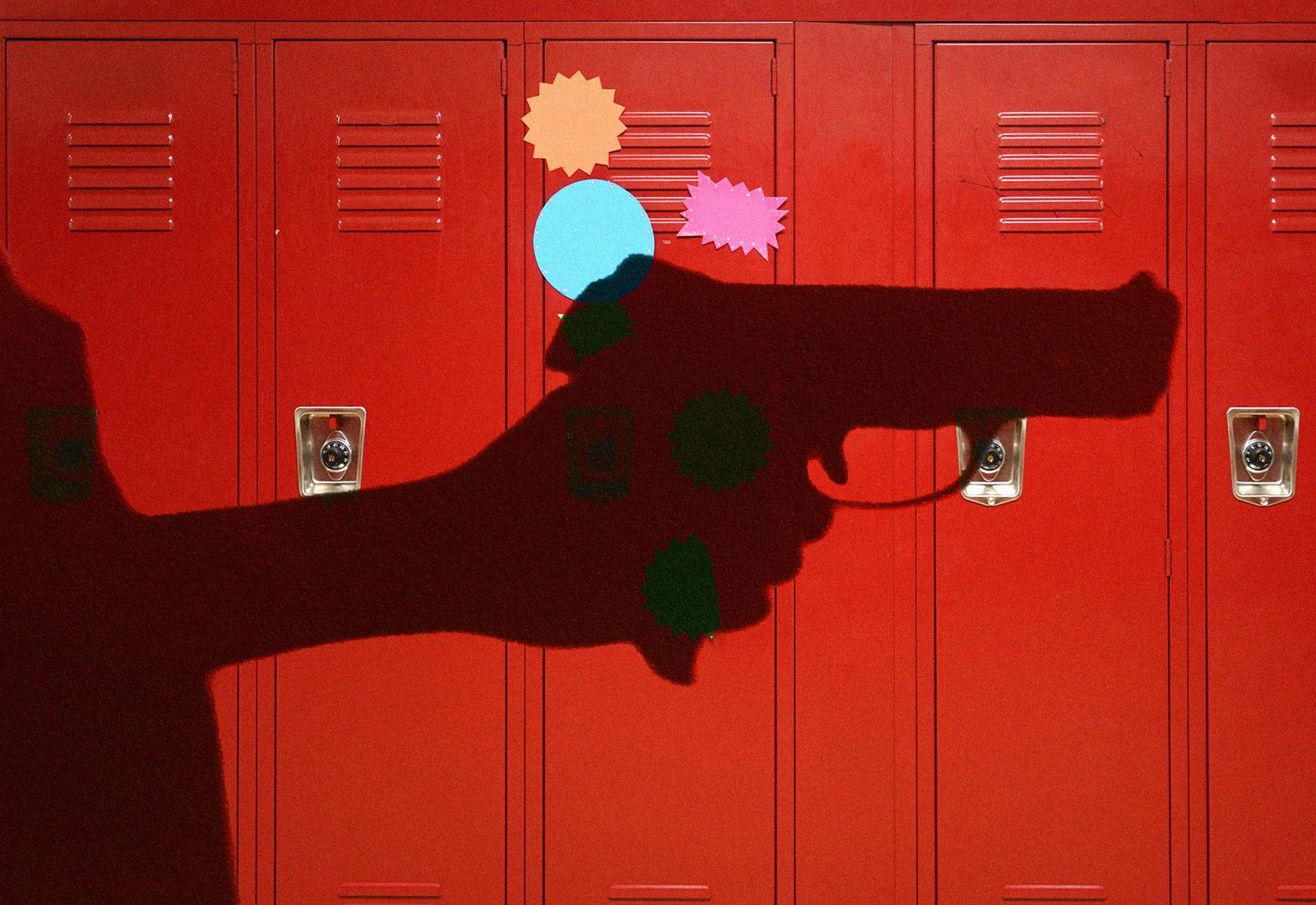
Now, put this story into context and imagine you live in the United States and hear the same from your child coming home… You would probably react differently!
No matter how terrible, news about school shootings is slowly becoming background noise, while we all know: something is very wrong. But what is the invisible yet powerful common thread that connects these tragedies?
The answer is painfully simple.
A comprehensive German study (Nassauer, A. (2025). A mixed-methods study of gun culture in school shootings), published in the scientific journal PLOS ONE, examined all American school shootings – from the 1800s to today. Experts reached a shocking conclusion: every single perpetrator was able to obtain a weapon without difficulty. From 11-year-old children to young adults in their twenties, everyone had access to firearms – from home, as gifts, or legally purchased.
However, it was not only the physical availability that was common, but also the psychological and emotional attachment. Guns were not just tools for the perpetrators, but "emotional companions." An 18-year-old boy wrote in his diary: "They are the only ones who understand me." Others called their guns "the love of their life" – a companion that meant safety, stability, and sometimes the only joy in a chaotic, alienating world.
The culture that romanticizes destruction
It’s chilling, but in many families, gifting a gun is as normal a gesture as giving a new bike is here. The study presented a case where a mother (who incidentally considered sugary foods unhealthy) allowed her mentally ill son to sleep with a loaded (!) pistol. Another boy’s mother planned to buy him a gun for Christmas – but he killed her a few days before the tragedy and then went on a shooting spree in the city.
American gun culture is not just a political issue, but according to many, a kind of identity-forming force. According to the study, perpetrators grew up from childhood in an environment where gun use was not only accepted but often celebrated.
In family photos, little children pose smiling with rifles, and some parents consider shared shooting and hunting quality time.
And here the picture becomes truly frightening: the gun became not just a tool – but a symbol, a sign of belonging, masculinity, power, and even lovability.

The numbers that won’t let you rest
In the United States, gun violence leads the list of causes of death among children and teenagers, surpassing accidents and diseases. The average age of perpetrators was 17 years, with 59% under 18.
According to 2022 statistics (Johns Hopkins Center for Gun Violence Solutions), more than 4,300 children and teenagers died in firearm-related incidents in the United States in a single year. That’s more than 11 young people every day!
Amazing as it is, 79.5% of perpetrators rated access to guns as "very easy," 18.1% as "easy," and importantly: no one faced "difficult access."
But how do shooters get guns? According to the study: 57% take them from home, 34% buy them legally, and the rest get them from friends or acquaintances.
Why is it important to talk about this – here in Europe too?
We may feel safe at home, but what American culture normalizes affects the world too – through movies, video games, or online content. The emotional identification with guns – the idea that an object can help "solve" our inner crises – does not stop at borders.
And if there is one thing we can learn from this study, it might be that a safety lock on the gun cabinet is not enough. Emotional connections, family dynamics, and culture must also be reconsidered – otherwise, the unthinkable will happen again and again.