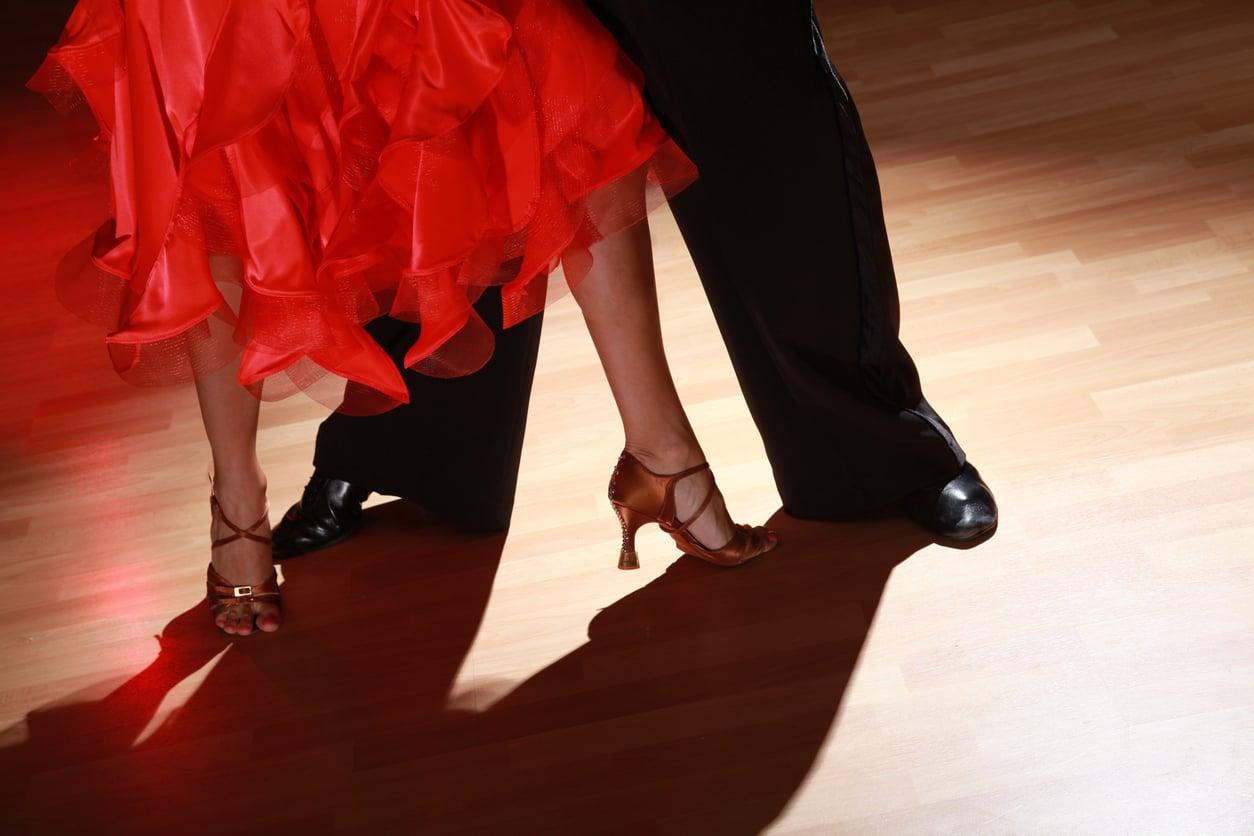
Dance has been part of my life in one form or another for as long as I can remember. Music and rhythm are the air I breathe. But until two years ago, I only knew one world: the world of choreography, where every step is planned and every move rehearsed. Then I walked into my very first salsa class, and everything I thought I knew about dancing came undone.
From the age of six, the stage was my everything. It wasn't really about performing. It was about the state of mind I slipped into during every rehearsal and show, a kind of magical place I wanted to return to as often as possible. Over time, the urge to express myself grew stronger, and I felt extraordinary energy unlock inside me during a performance. Every single time, I watched my singing and ballet teachers in awe, drinking in their artistry and every word they said.
To lead or to follow?
Life took a different turn, and for a long time this hasn't been my profession. But one day, after years of not singing or dancing, it hit me like a wave: I couldn't live this way. I tried to suppress it, to build a new identity around it, but the longing to at least go back to dancing rose up in me with unstoppable force.
I started learning salsa at a small studio. As long as we were only drilling the basic steps, no partner required, everything was fine. But the moment I had to rely on a leader, I was completely lost. I couldn't imagine how I would ever sense what he wanted to lead, how I would follow without confusing him, and without falling back on my own instinctive movements. Honestly, there was a point when I wanted to quit. I'm far too strong-willed to hand over control to that degree, I thought.
Patience, patience…
Things didn't get much easier at my first social night out, which I only dared attend after about six months of lessons. One of the guys from my dance school made sure I didn't sit down for a single second. He warned me in advance: he was going to tie me in knots.
My legs were shaking as I stepped onto the floor, and the trembling didn't stop after that either.
He really wasn't joking. He led figures so complex that I couldn't even tell which way I was facing. I wanted to go home, but luckily the others wouldn't let me. I had to accept that twenty years of dancing or not, social dance is an entirely different terrain, and I needed to be patient with myself. The more parties I went to, the more I started to loosen up. But dancing with strangers? I still didn't dare. That fear melted away only very, very slowly.
Bailando bachata
Months later, I found out you could also learn bachata at the school. I knew nothing about this style rooted in the Dominican Republic, but the moment I looked it up, I couldn't stop watching the videos. I wanted to start classes immediately.
Unfortunately, no beginner course was starting where I was training, so I arranged private lessons with our teacher to bring me up to the intermediate group's level as fast as possible. It was no small challenge, but I wanted it badly. I signed up for workshops too, determined to gain enough skill to at least dance with the guys I already knew.
At one of those workshops, I got closer to the sensual style, and it swept me off my feet entirely. Following it, though, felt even harder to me than following salsa. I asked the teacher whether he thought I could actually do this. All he said was: someone whose mentor was Gábor Bakó… That was a lifetime ago, but it felt good to hear.
If you've ever wondered whether it's too late to start something new, this might be worth reading: stepping into a new chapter after a long relationship.
I still tied myself in knots worrying about what I was doing wrong, convinced I must be difficult to dance with. But the community was astonishingly supportive and patient, just as I was with the beginners.
Feeling the connection
Eventually, I reached the point where I dared to dance with a stranger or two. To my surprise, there were partners with whom I effortlessly pulled off moves I had never even been taught.
That, I think, is when I truly began to understand and to feel what connection really means. It's the moment you let go and allow whatever the leader intends to simply happen. It was an uplifting feeling.
Some partners weren't dancing strict salsa or bachata anymore, just whatever came naturally, full of fusion elements. Needless to say, it felt like coming home. Because of it, a few months ago something broke open inside me, something that finally brought out the Alexa I truly am. From then on, I let go of the pressure and the fear, and today I interpret the dance completely freely within its framework.
I received one of the loveliest compliments just last week, when an experienced leader I've known for quite a while told me he could feel that I'd become free and easy, and that we were completely in sync.
More and more
Of course, I still have so much to learn and so far to grow, but perhaps I've stepped onto a path where I can live out my art. The next step is bachata influence. I can't wait to practice it under the guidance of professional teachers.
And what does this community give me? Right now, everything. I would not have survived the trials of the past eight months without dance, without my teachers and my partners beside me, without them pulling me off to an extra class, a workshop, or a party at my lowest points. I'm grateful to them, and to myself, for coming out of my shell and daring to bloom in a new world.
Do you need dance experience to start salsa or bachata?
No. As my own story shows, you can begin with the basic steps before ever partnering up. Even with years of choreographed dance behind me, social dance felt like starting fresh, so beginners are truly welcome.
What does "connection" mean in partner dancing?
It's the moment you let go and allow whatever the leader intends to simply happen. For me, it became an uplifting feeling that made me able to do moves I had never even been taught.
What's the difference between salsa and bachata?
They're distinct styles with different rhythms and roots, bachata coming from the Dominican Republic. But as I discovered, experienced dancers often blend them, weaving in fusion elements rather than sticking strictly to one.
How long does it take to feel comfortable dancing with strangers?
For me it took a long time, and the fear faded only very slowly. It started after about six months of lessons and my first social night, and grew as I attended more parties, workshops and classes.