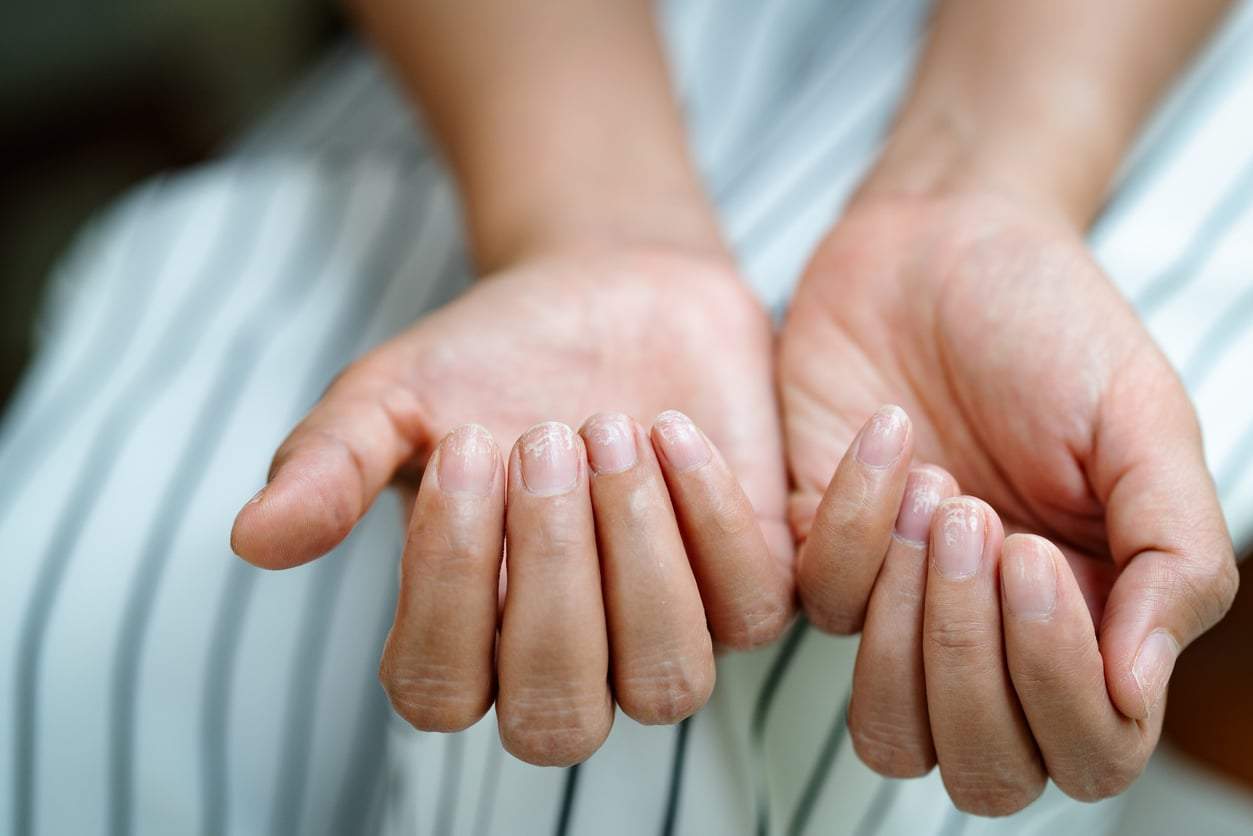
Your nails often reveal more about your overall health than you might think. You’ve probably noticed your nails sometimes seem to have a life of their own—changing, cracking, or discoloring in different ways. But these changes aren’t just about looks. Let’s explore what vitamin shortages these nail signs might be pointing to.
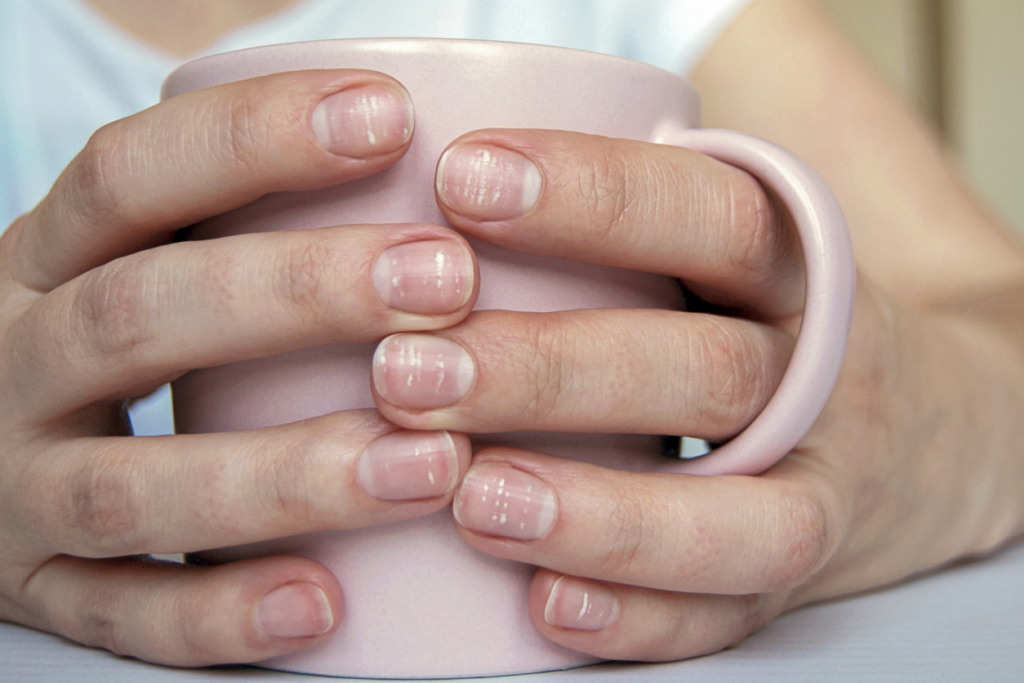
White Spots on Nails
White spots on nails are common and usually harmless, but they can also signal a calcium deficiency. Many people experience this, and sometimes local injuries cause these spots too. If you notice these spots appearing often and in large numbers, it’s worth boosting your zinc intake, which also supports healthy skin and hair.
Yellowish Discoloration
Yellowish nails often point to a vitamin A deficiency, though fungal infections or smoking can also cause this. Vitamin A is essential for healthy skin and vision and plays a key role in keeping your immune system strong. Without enough of it, your body’s basic functions can be affected.
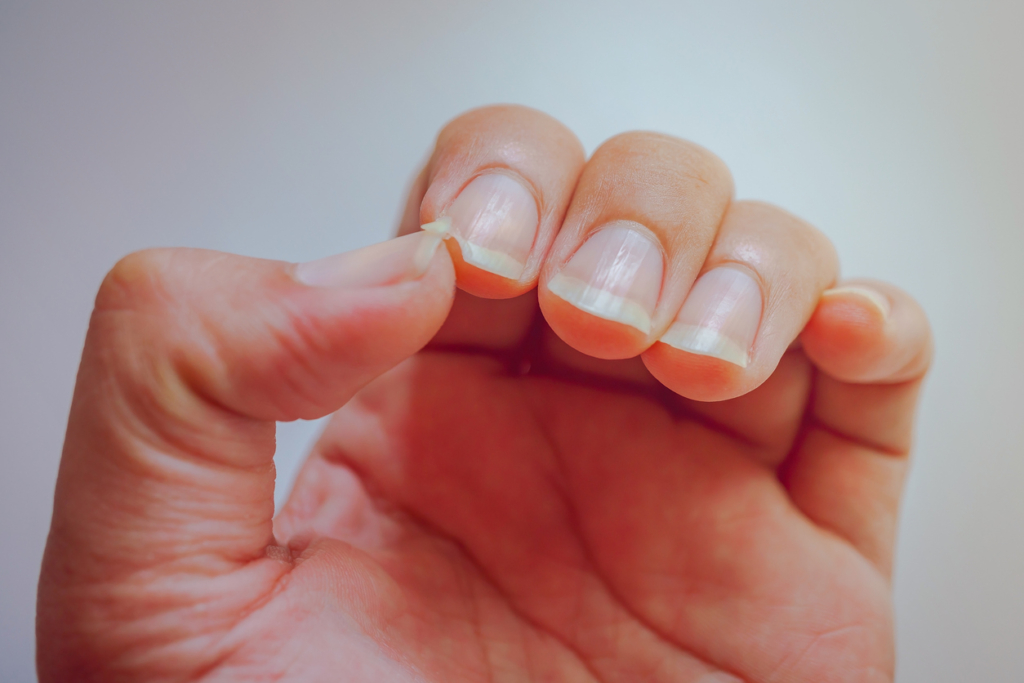
Brittle Nails
Brittle, splitting nails often indicate iron deficiency. Since iron transports oxygen in your blood, lacking it can slow metabolism and leave you feeling exhausted. Getting enough iron can help your nails—and your energy—bounce back.
Bluish-Purplish Tint
If your nails take on a bluish or purplish tint, it could signal oxygen circulation issues in your blood, often linked to vitamin B12 deficiency. B12 is crucial for making red blood cells, and without enough, you might experience dizziness, weakness, or shortness of breath.
Reddish Nail Beds
Reddish nail beds often point to a folate (vitamin B9) deficiency. This vitamin is vital for cell growth and reproduction, especially during pregnancy. A lack of folate can lead to anemia and feelings of fatigue.
Thinning Nails
Thin, soft nails may be a sign of vitamin D deficiency. Vitamin D supports strong bones and teeth, and not getting enough can weaken your bone strength. Plenty of sunlight and a balanced diet can help fill this gap.
Ridged Nails
Longitudinal or crosswise ridges on your nails might mean you’re low on biotin, also known as vitamin B7. Biotin helps your body make proteins, directly supporting healthy hair and nails. These changes often come with dry skin and hair loss.
Remember, your nails can reflect a wide range of health issues. If you notice persistent or severe changes, it’s a great idea to chat with a doctor or a qualified dietitian to pinpoint the cause and find the best way to support your health.