For scientists, evolution is a fact. We know life has evolved with the same certainty as we know the Earth is roughly round, gravity keeps us grounded, and ants can ruin a picnic. These are facts.
Interestingly, though, it’s precisely now—when science is more accessible than ever—that many people question even the most basic scientific facts, labeling them as questionable theories or outright falsehoods.
Yet, there’s an overwhelming amount of evidence showing that evolution is very real and actively happening today.
Let’s Quickly Clarify What We’re Talking About
Darwin’s theory of evolution says every new organism differs slightly from its parents. These differences can help or hinder offspring. Because living things compete for food and mates, those with helpful traits have more offspring, while those with less useful traits don’t. Over time, helpful traits become common, and unhelpful ones disappear.
Given enough time, these changes add up, leading to new species and types of organisms through tiny steps. Worms became fish, fish moved onto land and grew four legs, these tetrapods developed fur, and eventually, some began walking on two legs, calling themselves "humans" and discovering evolution.
Darwin first published On the Origin of Species in 1859, and surprisingly, many people—even in scientific circles—still rely on evolution today.
For example, animal breeders who want chickens that lay more eggs selectively breed those with the right traits.
“You might think breeding can only make a few changes, but it seems the possibilities are endless.”
Our oldest cultivated plants, like wheat, still produce new varieties, and our earliest domesticated animals continue to evolve quickly.
Darwin saw breeding as evolution guided by humans, showing how small changes over generations can lead to big differences.
Fossils
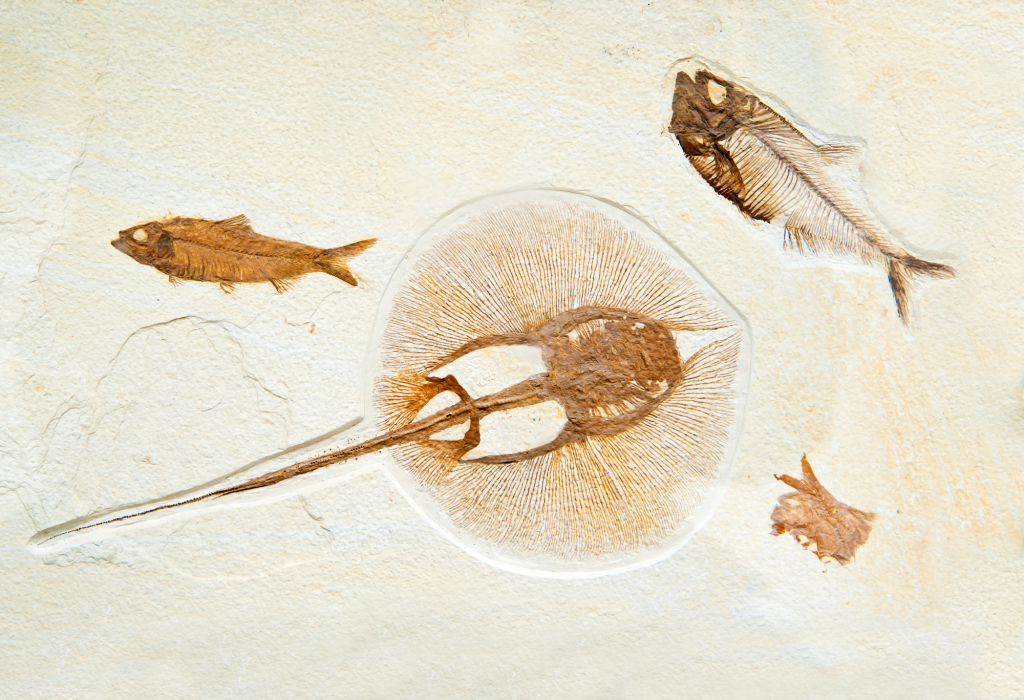
But there’s a big difference between a chicken laying more eggs and a new species appearing. Evolution takes a long time for big changes. Fossils and ancient remains give us proof.
Looking through fossil records makes it clear that life has changed over time.
The oldest fossils are single-celled organisms like bacteria, while more complex animals and plants appear much later. Fish fossils show up long before amphibians, birds, or mammals. Our closest relatives, monkeys, are found only in the youngest, shallowest rock layers.
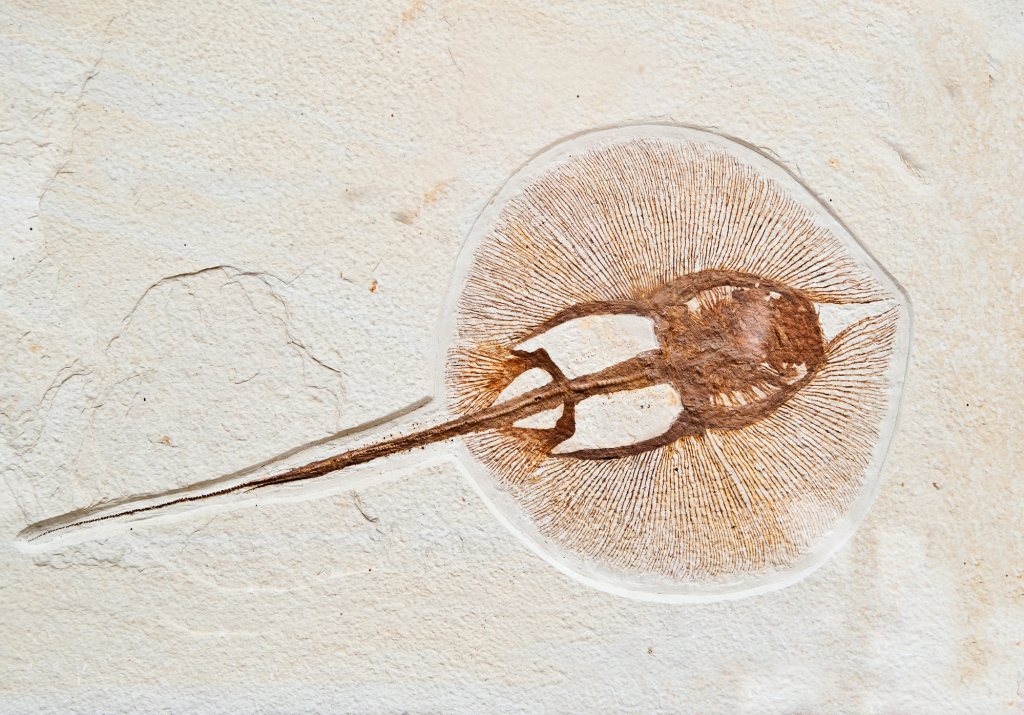
By studying fossils closely, scientists have linked many extinct species to living ones, sometimes showing direct ancestry. For example, in 2014, researchers studied fossils of Dormaalocyon, a 55-million-year-old predator that might be the common ancestor of today’s lions, tigers, and bears.
As we learn more, we find “transitional fossils” that could be the missing links between species.
For instance, we know chickens evolved from dinosaurs. In 2000, a team led by Xing Xu at the Chinese Academy of Sciences described Microraptor, a small dinosaur with feathers like modern birds and the ability to fly.
The Emergence of New Species
In 2009, Peter and Rosemary Grant from Princeton University described how a new finch species formed on one of the Galápagos Islands—where Darwin did his research. In 1981, a single unusually large finch arrived on Daphne Major island, singing a slightly different song than local birds.
It successfully bred, passing on its unique traits. After a few generations, these finches became reproductively isolated: they looked different and sang different songs, only mating among themselves. This small bird group formed a new species, called “speciated.” This new species differs subtly from its ancestors—different beaks and unusual songs—but some changes can be even more dramatic.
Richard Lenski at Michigan State University leads the world’s longest-running evolution experiment. Since 1988, his lab has tracked 12 populations of Escherichia coli bacteria. The bacteria live in containers with nutrients, and Lenski’s team regularly freezes small samples.
The E. coli today aren’t the same as in 1988. “All 12 populations evolved faster than their ancestors,” Lenski says. They adapted to the unique mix of chemicals provided.
“This is a very direct demonstration of Darwin’s natural selection idea. Now, 20 years in, the typical strain grows about 80% faster than the ancestor.”
In 2008, Lenski’s team reported a huge breakthrough. The nutrient mix contained citrate, a chemical E. coli can’t normally digest. But after 31,500 generations, one of the 12 populations evolved to feed on citrate. It’s like humans suddenly developing the ability to eat tree bark.
Citrate was always there, Lenski says, “so all populations had the chance to develop this ability... But only one found the way.”
Improvement
Which populations evolve and which don’t relates to our DNA and the idea of “improvement.” This concept goes back to Jean-Baptiste Lamarck, a scientist before Darwin who believed living things could intentionally change.
Unlike Darwin, Lamarck thought organisms responded purposefully to their environment, changing in ways most beneficial for them.
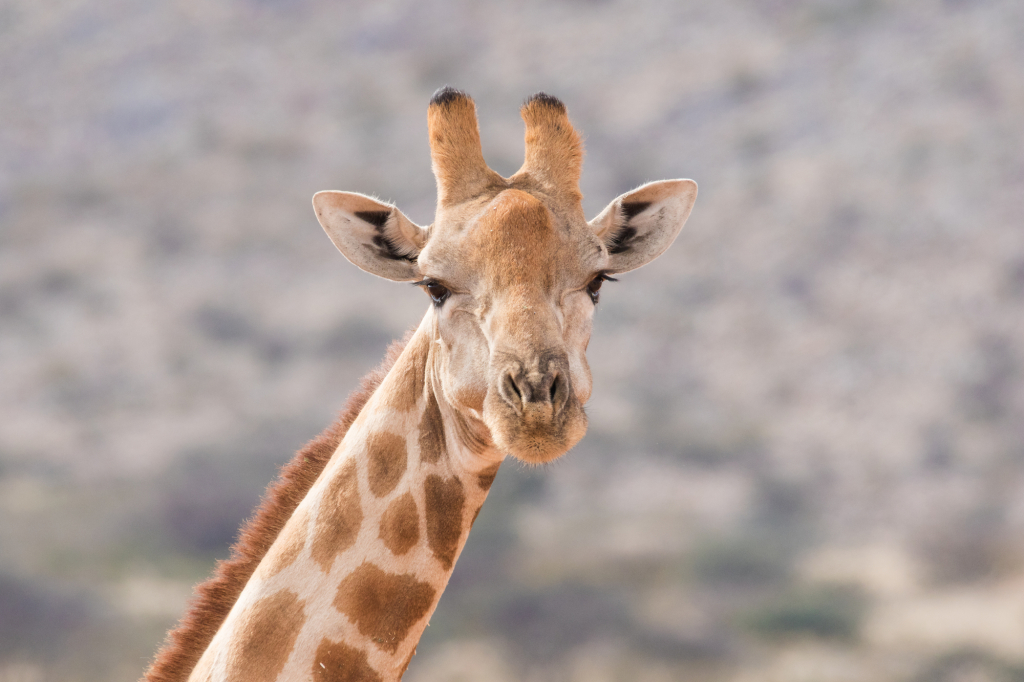
Lamarck’s theory said giraffes have long necks because their ancestors stretched to reach tall trees, then passed on their longer necks. Darwin wasn’t impressed—he called Lamarck’s idea silly and untestable.
Instead, Darwin proposed natural selection. This offers a different explanation for giraffes’ long necks: mutations happen randomly in some populations, and those with beneficial mutations survive and reproduce, while others don’t.
Evolution Is Easy to Prove, But What Does It Tell Us About Humans?
Human evolution has always been a tough idea for some to accept, but its existence is undeniable. Homo sapiens evolved in Africa before spreading worldwide. Fossil records show gradual changes from four-legged, ape-like creatures to two-legged beings with larger brains.
The first humans who left Africa met other hominin species like Neanderthals. As a result, people of European and Asian descent carry Neanderthal genes, while those of African descent do not.
This all happened thousands of years ago, but the story isn’t over. We’re still evolving.
For example, in the 1950s, British doctor Anthony Allison studied a genetic disorder called sickle cell anemia, common in some African populations. People with this condition have red blood cells that don’t carry oxygen well.
Allison found East African groups split into two: lowland residents prone to the disease and highland residents who weren’t.
It turned out that carrying the sickle cell trait gave unexpected protection against malaria, which was only a threat in the lowlands. So, carrying the mutation was an advantage—even if some children were anemic.
Meanwhile, highland populations faced no malaria risk, so the sickle cell trait offered no benefit and faded away due to its harmful effects.
Evolution still holds many questions waiting to be answered, and future generations aim to find the missing links in the development of Earth’s species.