You've had them your entire life, yet most people never stop to ask why. Those swirling ridges on your fingertips aren't just a quirk of biology — they're one of evolution's most elegant solutions to the challenges of being human. Here's what science actually says about why fingerprints exist.
More than just a pattern
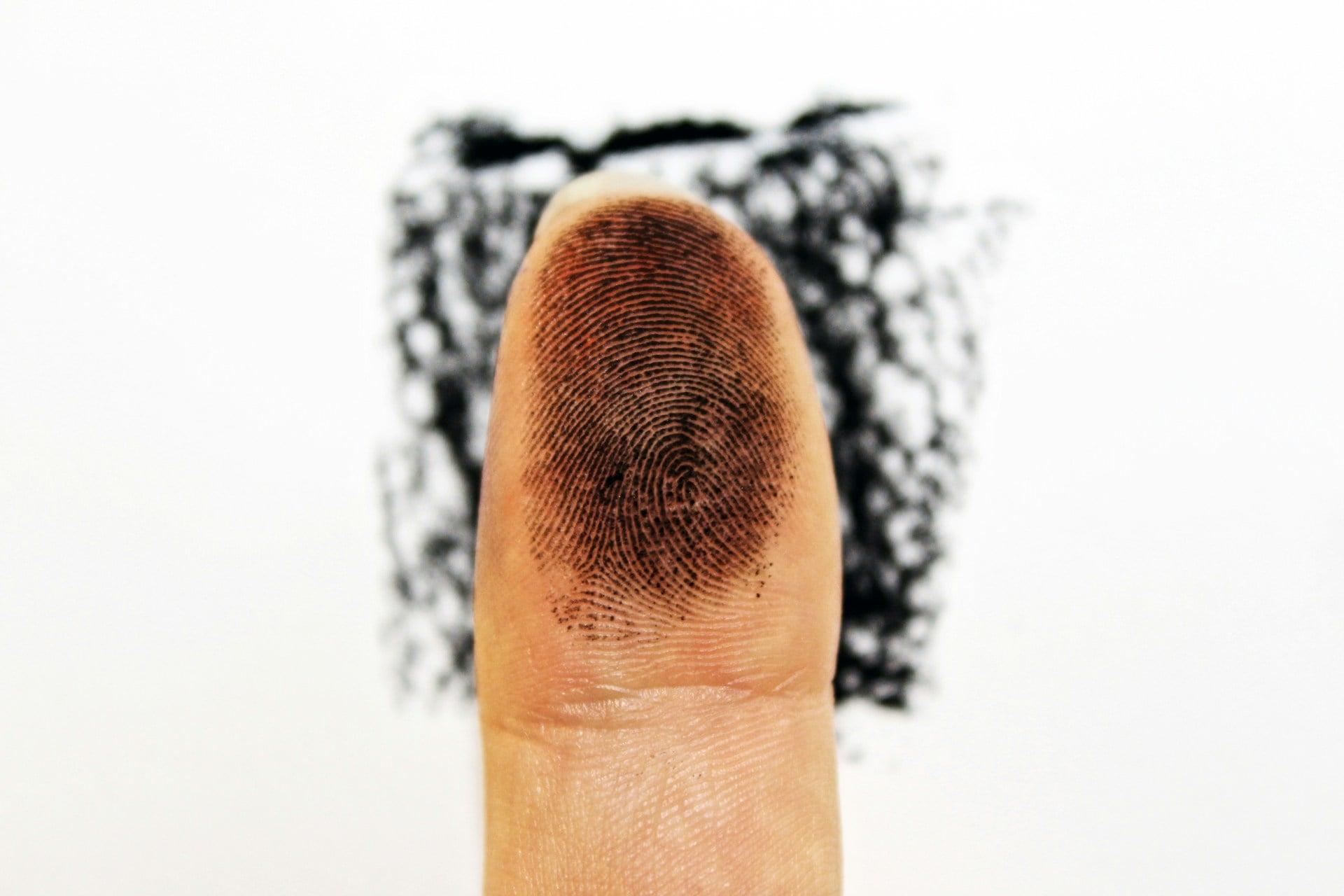
Fingerprints have been studied for centuries, but their true biological purpose goes far beyond identification. The tiny ridges covering your fingertips serve a deep evolutionary function — one that helped our ancestors survive long before forensic science was ever imagined.
To understand why these structures developed, it helps to look at them through the lens of evolution: not as something that happened to us, but as something that was gradually shaped for us.
The grip advantage that changed everything
One of the most significant evolutionary benefits of fingerprints is enhanced grip. Those ridges increase friction between your skin and any surface you touch — smooth, rough, wet, or dry.
For our early ancestors, a reliable grip wasn't a convenience. It was a matter of survival. Whether climbing, foraging for food, or navigating uneven terrain, the ability to hold on securely in any condition gave a critical edge. The ridges on fingertips essentially act like the tread on a tire — channeling moisture away and maintaining traction when it matters most.
A built-in sensory system
Fingerprints don't just help you hold things — they help you feel them with extraordinary precision. The ridged skin on your fingertips amplifies vibrations and tactile signals, sending richer information to the nerve endings beneath the surface.
This is why you can feel the difference between silk and sandpaper with a single touch, or detect the faintest texture on an otherwise smooth object. Over the course of human evolution, this fine-tuned sense of touch became essential — enabling the creation and use of complex tools, which is widely considered one of the key drivers of human civilization.
Writing, crafting, building — none of it would be possible with numb, smooth fingertips.
No two are alike — not even in identical twins
Every single person on Earth has a unique set of fingerprints — including identical twins, who share the same DNA but not the same ridge patterns.
This uniqueness has made fingerprints invaluable for modern identification systems, from criminal forensics to smartphone security. But from an evolutionary biology perspective, the individual-level uniqueness may matter less than the broader implication: nature has built a system so complex and variable that no two outputs are ever the same.
As human societies grew more complex, the ability to reliably distinguish individuals became increasingly important — and fingerprints, it turns out, were already up to the task.
What science is still uncovering
Research into fingerprints goes well beyond identification. Scientists are actively studying how these patterns form during embryonic development — a process that begins in the early weeks of life in the womb, shaped by a combination of genetic factors and environmental influences.
Researchers are also exploring the links between fingerprint patterns and certain genetic conditions and health indicators, suggesting that what's written on your fingertips may reveal more about your biology than anyone previously realized.
It's a reminder that even the smallest details of the human body carry a story — one that evolution has been writing for millions of years. However much we resemble one another, each of us is, quite literally, one of a kind.