Some plants stop you in your tracks. Not because they're pretty in the usual sense, but because they make you question what nature is actually capable of. These are the giants, the survivors, the living works of art that have been quietly thriving on this planet long before we arrived — and they deserve a proper look.
The tallest tree on Earth: the coast redwood
The coast redwood (Sequoia sempervirens) is in a category of its own. These towering giants, found in the national parks of northern California, can grow to over 100 metres tall — and the record-holder, a tree named Hyperion, reaches an almost unbelievable 115.5 metres. Standing next to one doesn't just make you feel small. It makes you feel like a different species entirely.
What makes redwoods possible is the fog. The coastal mist that rolls in off the Pacific provides the constant moisture these trees need to sustain their extraordinary size. The trails through redwood forests are carefully managed to protect the trees' root systems — because even a giant needs looking after.
The ancient survivor: Welwitschia of the Namib Desert
At first glance, Welwitschia mirabilis looks like something went wrong. Two long, leathery leaves twist and sprawl across the desert floor, tattered and strange. But don't be fooled — this plant is one of the toughest living things on the planet, capable of surviving for up to 2,000 years in one of the world's most hostile environments.
Found deep in the Namib Desert, Welwitschia grows just those two leaves its entire life, which slowly split and fray over centuries. Its deep root system and remarkable ability to absorb moisture from coastal fog allow it to endure conditions that would kill almost anything else. Botanists struggle to cultivate it outside its native habitat — it truly belongs to the desert, and nowhere else.
The tree that looks like a painting: the rainbow eucalyptus
If you've never seen a rainbow eucalyptus (Eucalyptus deglupta), you'd be forgiven for thinking the photos are edited. The bark peels away in strips throughout the year, revealing layers of vivid green, blue, purple, orange, and burgundy underneath. The result is a trunk that looks like it was painted by an abstract artist.
This species is native to the tropical rainforests of the Philippines and Indonesia, where it can grow between 50 and 75 metres tall. It's also one of the fastest-growing trees in the world, which makes it valuable not just for its beauty but as a sustainable timber source. Its true home, though, is the tropical rainforest — where heat, humidity, and rainfall give it everything it needs to thrive.
The world's largest flower — with a catch
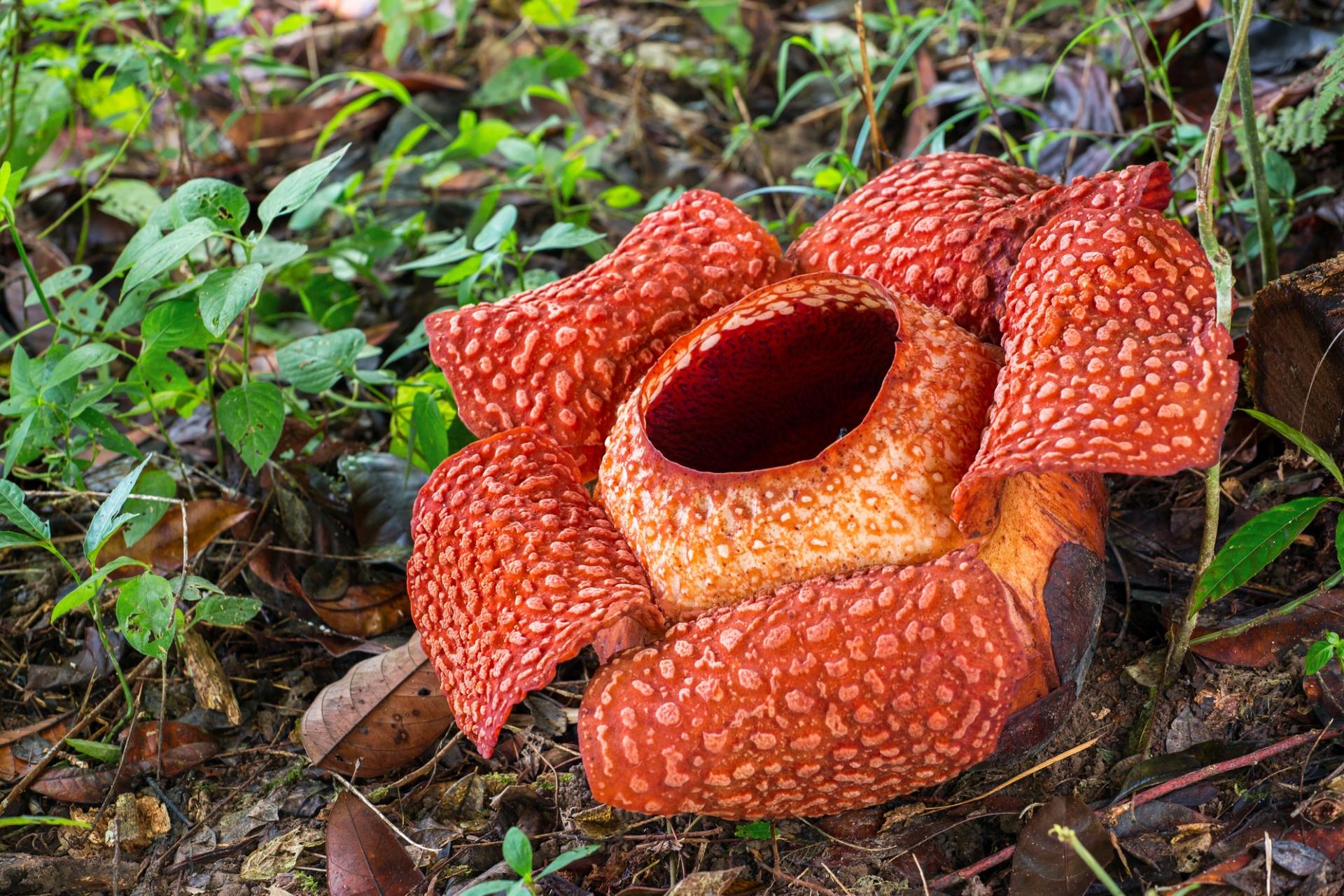
Rafflesia arnoldii holds the record for the largest individual flower on Earth, reaching up to one metre in diameter and weighing as much as 10 kilograms. It grows in the rainforests of Indonesia and is, in almost every way, extraordinary.
There is, however, one significant downside: it smells powerfully of rotting flesh. This is entirely intentional — the stench attracts the flies and insects that pollinate it. To make things even more dramatic, each bloom only lasts a few days, and individual plants may not flower again for years. Rafflesia has no stems, no leaves, and no roots of its own — it's entirely parasitic, living inside the tissue of jungle vines and emerging only to flower.
It is, without question, one of the strangest life forms on the planet.
The Arctic poppy: beauty in the harshest place on Earth
The Arctic poppy (Papaver nudicaule) shouldn't exist where it does. Delicate yellow and white blooms, swaying in icy winds across the tundra — it seems almost impossible. Yet this small plant has adapted to survive in permafrost conditions where almost nothing else can take hold.
Its secret lies in its cup-shaped flowers, which track the sun throughout the day to maximise warmth and attract the few pollinators brave enough to venture into the Arctic. It's a quiet, unassuming plant, but its resilience is extraordinary. In a landscape defined by cold and hardship, the Arctic poppy blooms anyway — and there's something genuinely moving about that.
Nature doesn't always announce itself with size or spectacle. Sometimes the most remarkable things are the ones that simply refuse to give up.