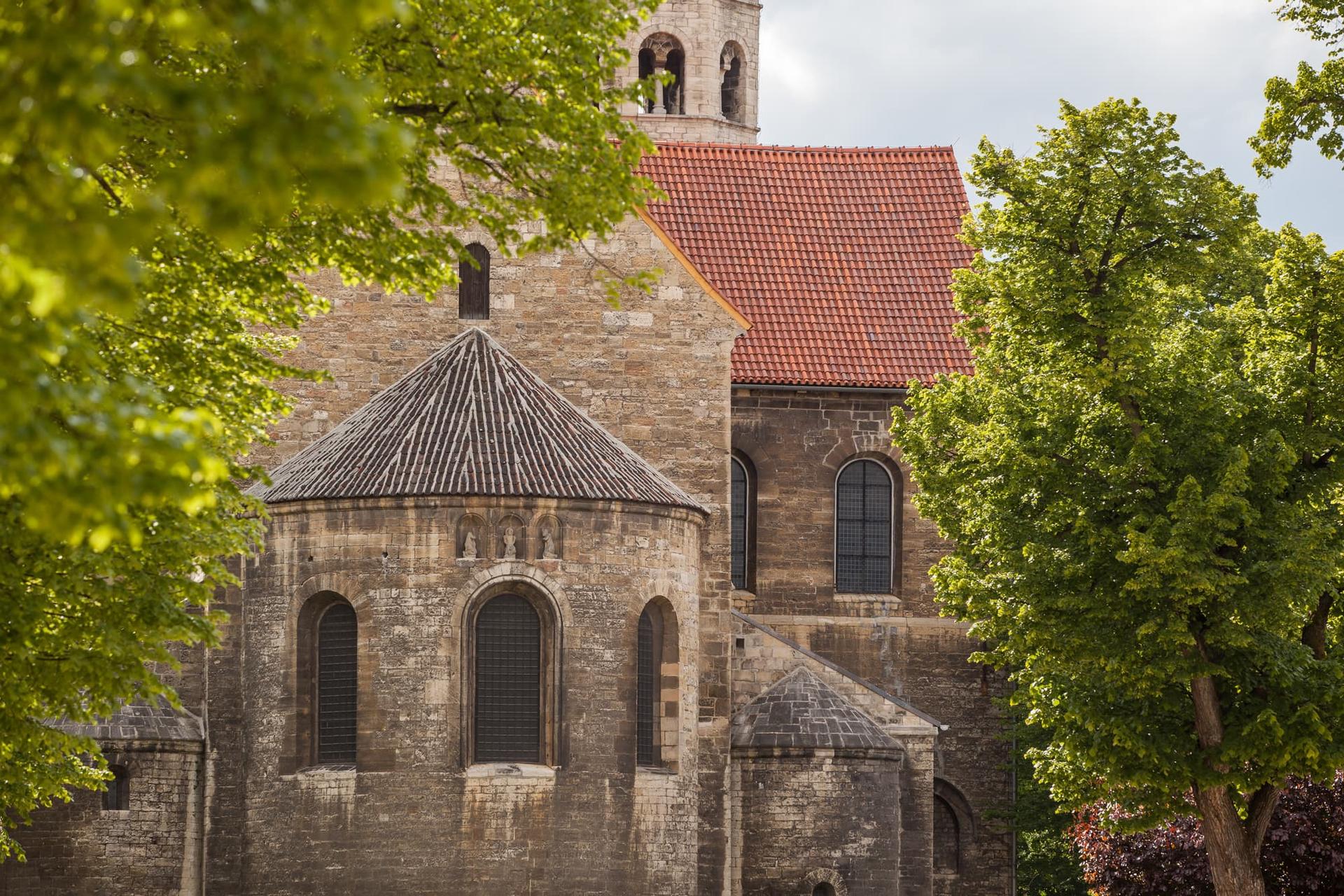
Imagine a piece of music that could fit on a few pages of sheet music — yet takes 639 years to perform. This isn't science fiction. Right now, in a small medieval church in Germany, an organ is playing a composition that will not end until the year 2640. And the story behind it is even more extraordinary than the idea itself.
John Cage: the man who redefined what music could be
To understand this project, you first need to know John Cage — one of the most radical and influential composers of the 20th century. His career was built on a single obsession: questioning everything we assume about music.
Cage believed that sound, silence, and time were all equally valid musical material. His most famous work, "4'33", consists of a performer sitting at a piano for four minutes and thirty-three seconds — playing nothing at all. The "music" is whatever sounds the audience and environment produce in that silence.
It was provocative, yes. But it was also deeply serious. Cage wanted listeners to pay attention differently — to slow down, to notice, to let go of the idea that music must entertain on demand.
As Slow As Possible — but how slow is that, exactly?
In 1987, Cage composed a piece for organ called "As Slow As Possible" — often abbreviated as ASLSP. The title is also the entire performance instruction. The piece should be played as slowly as possible. That's it. No further guidance.
For years, musicians performed it in versions lasting anywhere from 20 minutes to several hours. But in 1997, a group of international musicologists and philosophers asked a more radical question: what is the absolute limit of "as slow as possible"?
Their answer would become one of the boldest artistic experiments in history.
639 years — and counting
The scholars chose a very specific number: 639 years. The reasoning was rooted in history. The organ at the St. Burchardi Church in Halberstadt, Germany — one of the oldest surviving organs in the world — was first used in 1361. A 639-year performance, beginning in 2001, would bring the piece to its conclusion in 2640, marking exactly that anniversary.
The performance began on September 5, 2001 — John Cage's 89th birthday — and is not expected to end until the year 2640.
A custom-built organ was installed in the church specifically for this purpose. It plays continuously, day and night, at a tempo so slow that individual notes can sustain for months or even years at a time.
We are not even close to the halfway point.
What it actually sounds like
Visiting St. Burchardi Church is a genuinely strange experience. The space is dim and quiet, yet not silent — a low, sustained chord hangs in the air, barely perceptible at first. Weights hold down the organ keys, allowing notes to drone on indefinitely. The sound is more felt than heard.
Chord changes — when a new note is added or an old one released — are rare events. They are announced in advance, and visitors travel from across the world to witness a single sound shift. Some changes are separated by years. The last chord change drew a crowd of hundreds to a small German town to hear one note end and another begin.
It sounds absurd. But those who have been there describe it as unexpectedly moving.
A community built around slowness
What has grown around ASLSP is something nobody quite predicted: an international community of listeners who follow the piece the way others follow a long-running novel or a decades-long scientific project. There are dedicated websites tracking the current chord, forums discussing the philosophy of the piece, and pilgrims who plan trips around upcoming note changes.
In a world that rewards speed, instant gratification, and constant stimulation, ASLSP has become a quiet counterpoint — a reminder that our relationship with music doesn't have to be passive or rushed.
Why this matters beyond music
ASLSP forces a question that goes far beyond art: what does it mean to experience something that no single human lifetime can contain?
The people who started this performance in 2001 will never hear it end. Neither will their children, or their grandchildren. The piece belongs to no one generation — it belongs to time itself.
John Cage spent his life pushing at the edges of what music could be. With ASLSP, those edges have dissolved entirely. What remains is something closer to a meditation on patience, presence, and the strange beauty of a world that keeps moving long after we're gone.
The organ in Halberstadt is still playing. Right now, as you read this.