Look around your kitchen, your desk, even the phone in your pocket. Chances are, some part of what you're touching started as an idea in a Hungarian mind.
From the ballpoint pen to the hologram, from fizzy water to the physics behind nuclear reactors, the list is long — and honestly, it's no exaggeration. Here are 30 inventions and discoveries with a Hungarian name behind them, without which our everyday lives would look completely different.
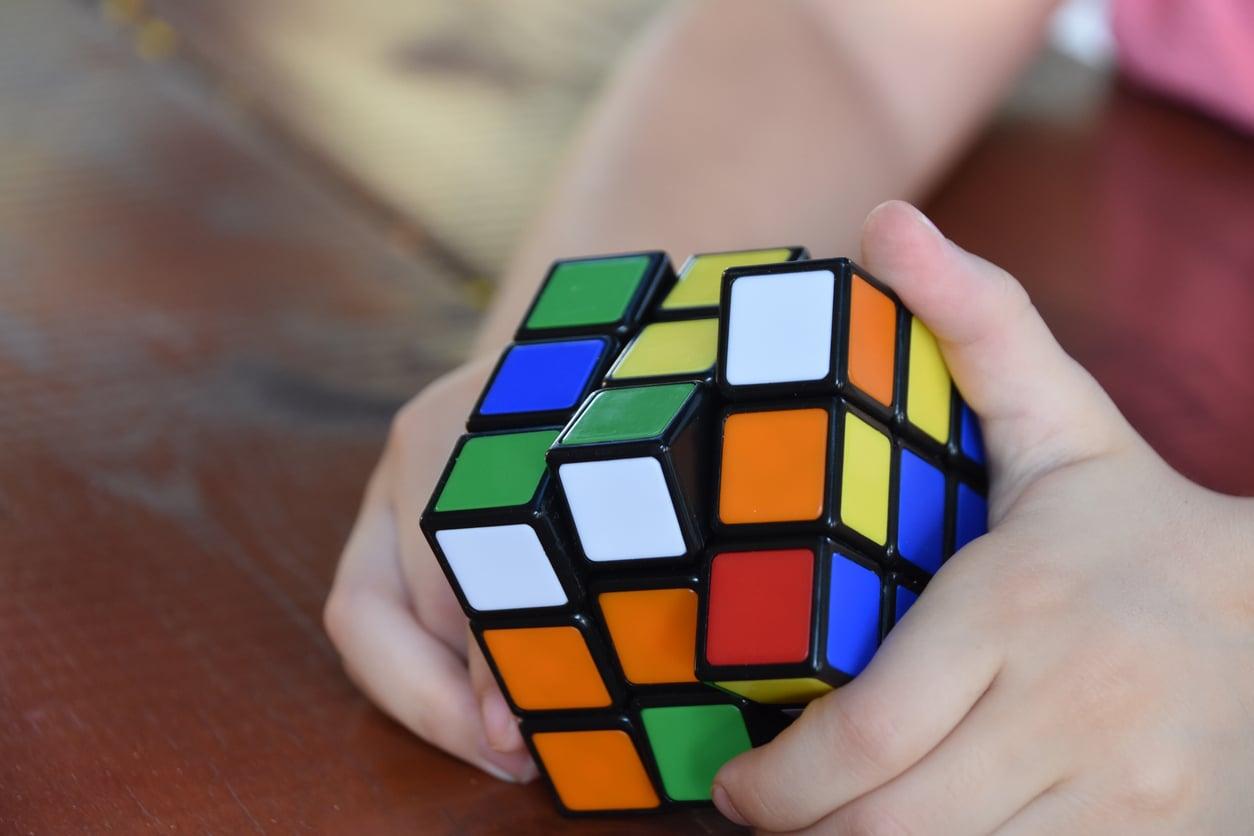
1. The Rubik's Cube
Architect and sculptor Ernő Rubik originally created the cube in the 1970s to demonstrate three-dimensional rotation. It went on to become the best-selling puzzle of all time, keeping generations around the world scratching their heads.
2. The ballpoint pen
Hungarian journalist László Bíró developed the pen that dispenses ink evenly through a rotating ball. It was such a success that, in several languages, the everyday word for a ballpoint pen still comes straight from his name.
3. Soda water
Ányos Jedlik, a Benedictine monk and physicist, worked out how to produce carbonated water, laying the foundations for a whole culture of soda siphons and fizzy refreshment.
4. The principle of the dynamo
Jedlik was also the mind behind the self-exciting electric generator — recognizing the working principle of the dynamo long before others earned international fame for similar breakthroughs.
5. The transformer
Ottó Bláthy, Miksa Déri and Károly Zipernowsky, engineers at the Ganz Works, created the closed-core transformer still in use today — which became the cornerstone of electrical power distribution.
6. The electricity meter
Ottó Bláthy is also credited with inventing the consumption meter, the electricity meter that finally allowed power companies to measure exactly how much electricity was being used.
If you love discovering the surprising origins of everyday objects, you'll find plenty more where this came from in our science and innovation stories.
7. The "telephone newspaper"
Tivadar Puskás launched the telephone newspaper in Budapest, piping news, concerts and live theater broadcasts straight into subscribers' homes — long before radio became widespread.
8. The hologram
Physicist Dennis Gabor developed the theoretical foundations of holography, which later earned him a Nobel Prize. Without his work, we'd have no security holograms and no modern optical research as we know it.
9. Isolating vitamin C
During his research in Szeged, Albert Szent-Györgyi isolated and identified vitamin C — one of the most important discoveries in human nutrition science, and a Nobel-worthy one at that.
10. The helicopter
In the 1920s and 1930s, engineer Oszkár Asbóth built and flew helicopters that were early forerunners of today's vertical take-off aircraft.
11. The safety match
Chemist János Irinyi developed the quiet, safe-to-strike match that quickly pushed aside the older, far more dangerous versions.
12. The stored-program computer
Mathematician John von Neumann worked out the architecture in which a computer stores both its program and its data in memory. That principle is still the basis of every modern computer.
13. Recognizing the nuclear chain reaction
Physicist Leó Szilárd was the first to grasp the possibility of a self-sustaining nuclear chain reaction — which later became the foundation of nuclear energy and reactors.
14. The Einstein–Szilárd refrigerator
Leó Szilárd and Albert Einstein jointly patented a refrigerator with no moving parts and no compressor — an engineering idea that remains fascinating in principle to this day.
15. The Moon radar experiment
Physicist Zoltán Bay and his team were among the first to bounce a radar signal off the Moon, essentially founding the science of radar astronomy.
These breakthroughs weren't lucky accidents — many of them came from the same restless, problem-solving mindset. If you're curious about the people and stories behind great discoveries, the second half of this list gets even more remarkable.
16. The carburetor
Engineers Donát Bánki and János Csonka developed the carburetor, which became a fundamental part of how petrol engines are fed with fuel.
17. Phase-converter railway electrification
Kálmán Kandó developed the system that let locomotives run directly from the alternating-current grid — the key that made electrifying large railway networks possible.
18. The BASIC programming language
Hungarian-born mathematician John Kemeny co-created the BASIC programming language, which introduced entire generations to the world of coding.
19. Radioactive tracing
Chemist George de Hevesy developed the use of radioactive isotopes as tracers — earning a Nobel Prize and giving medicine a diagnostic tool that's still essential today.
20. The theory of supersonic flight
Modern aircraft and space technology would be unthinkable without the work of engineer Theodore von Kármán, whose theories laid the groundwork for understanding flight beyond the speed of sound.
21. The krypton light bulb
Hungarian physicist Sándor Just developed the krypton-filled light bulb, which lasted longer and used energy more efficiently than earlier bulbs.
22. Coining the word "vitamin"
Polish-Hungarian biochemist Casimir Funk coined the term "vitamin" after recognizing that certain nutrients play an indispensable role in the body.
23. The Bánki turbine
Donát Bánki is also credited with developing a simple, efficient type of water turbine — one still used at smaller hydroelectric plants in many parts of the world today.
24. The stress theory
Canadian-Hungarian physician Hans Selye created the concept of stress and the theory of general adaptation syndrome — a cornerstone idea in both medicine and everyday language ever since.
25. Understanding how we hear
Physicist Georg von Békésy won a Nobel Prize for his research into how the inner ear works — fundamentally shaping the development of hearing aids and hearing diagnostics.
26. Pioneering colloid chemistry
Austrian-Hungarian Richard Zsigmondy won a Nobel Prize for his work in colloid chemistry, making him one of the early forerunners of today's nanotechnology.
27. The foundations of reactor physics
Without the work of physicist Eugene Wigner, the theoretical basis for today's nuclear reactors wouldn't exist — his research, too, was recognized with a Nobel Prize.
28. The chemistry of superacids
Chemist George Olah received a Nobel Prize for his results in hydrocarbon chemistry involving so-called superacids, which turned out to be important for both fuel production and the chemical industry.
29. Pioneering low-temperature physics
British-Hungarian physicist Nicholas Kurti studied how materials behave when cooled close to absolute zero, and over his lifetime he repeatedly set new records for reaching the lowest possible temperatures.
30. Modernizing railway wheel production
Ábrahám Ganz's iron foundry revolutionized the manufacture of railway wheels. The process he developed turned the Ganz Works into one of the continent's most important industrial hubs.
Run your eyes down this list and it's hard not to marvel at how many small, everyday things — from the soda bottle on the kitchen table to the internal architecture of the smartphone in your pocket — carry a little bit of Hungarian engineering and scientific stubbornness inside them.
Why are there so many Hungarian inventors on this list?
Hungary produced an extraordinary number of gifted scientists and engineers, many of whom made discoveries that shaped everyday life worldwide — from the ballpoint pen to the theory behind modern computers.
Which Hungarian inventions do we still use every day?
Plenty of them, often without realizing it: the ballpoint pen, soda water, the electricity meter, the transformer and even the stored-program architecture inside every modern computer.
How many of these inventors won a Nobel Prize?
Several names on this list are Nobel laureates, including Dennis Gabor, Albert Szent-Györgyi, George de Hevesy, Georg von Békésy, Richard Zsigmondy, Eugene Wigner and George Olah.
Who invented the Rubik's Cube?
Architect and sculptor Ernő Rubik created it in the 1970s to demonstrate three-dimensional rotation. It later became the best-selling puzzle of all time.