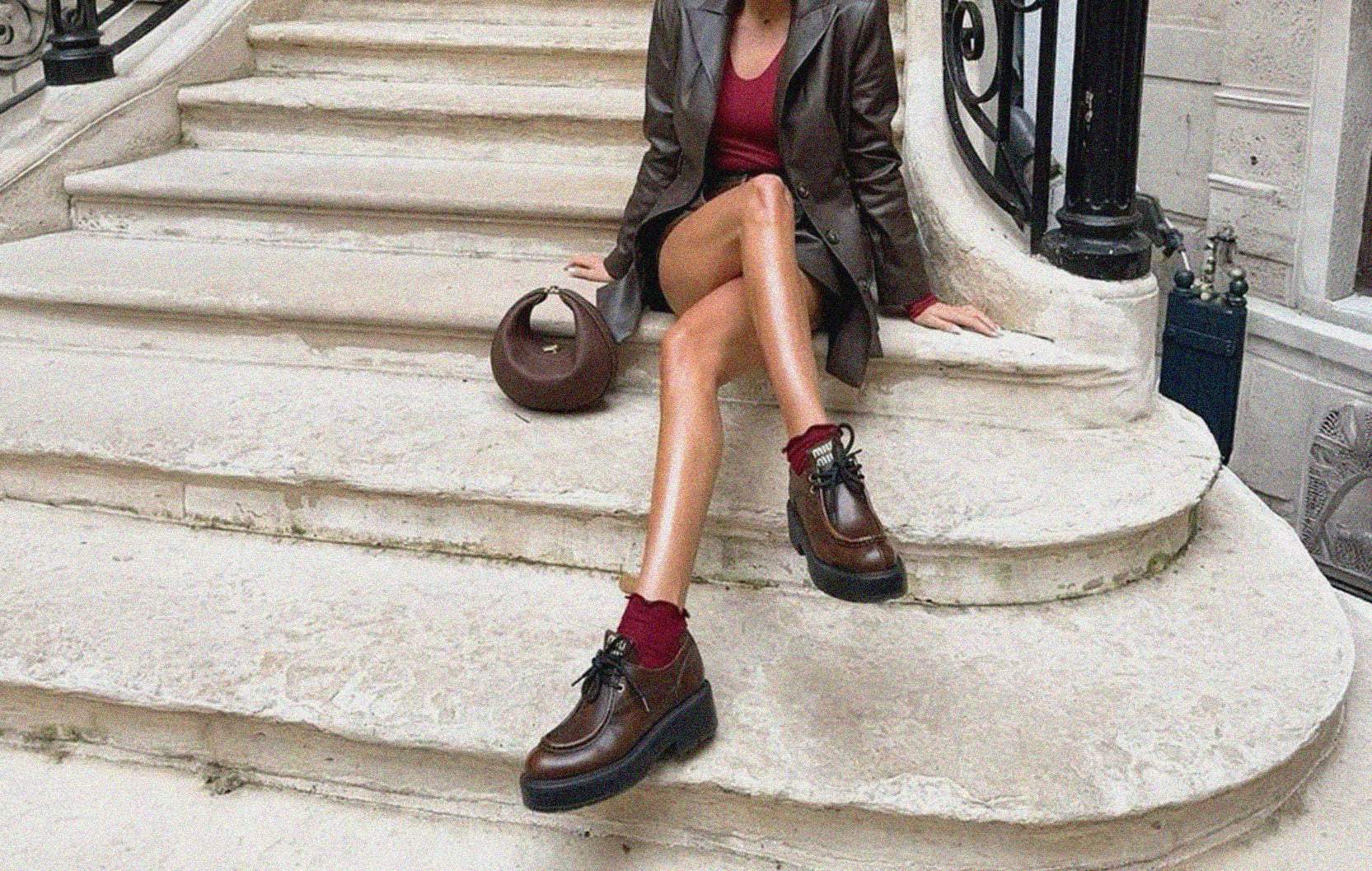
Every year the same thing happens: the temperature drops a few degrees, someone photogenic steps out of a car in a pair of tall boots, and suddenly we all remember we own a pair too — somewhere at the back, slumped over like a sleeping animal. Knee-high boots are one of the most flattering things in an autumn wardrobe and one of the easiest to get slightly wrong, and the wrongness is nearly always structural rather than a matter of taste.
Start with where the boot ends
The single detail that decides whether a boot looks elegant or awkward is where the top edge sits. Ideally it lands just below the kneecap, in the narrower part of the leg, with enough clearance that sitting down doesn't drive the shaft into the back of your knee. A boot that finishes exactly at the widest part of the calf will make the leg read shorter and heavier, no matter how beautiful the leather is.
Height is personal, not universal. If you are shorter in the leg, look for a slightly lower shaft and a lower heel so the boot doesn't swallow the space between hem and foot. If you are long-limbed, you can carry a taller shaft that comes right up under the knee. Try boots on late in the day, standing and then seated, and pay attention to what happens when you walk upstairs — that is where a badly cut shaft announces itself.
The calf problem nobody talks about honestly
Standard boot shafts are cut to an average that fits very few real legs. If yours gape at the top or refuse to zip, that is a manufacturing decision, not a personal failing. Look specifically for wide- or slim-calf ranges, elasticated back panels, stretch suede, or an adjustable buckle at the top. A good cobbler can also take in a leather shaft or insert a stretch gusset, which costs far less than replacing the boots and is worth it for a pair you love.
Gaping at the top can sometimes be solved by wearing them over a slightly thicker tight or a fine knit legging, which fills the volume. Slouching at the ankle, on the other hand, is usually about the leather softening with wear, and it is fixable with structure rather than styling.
Three combinations that never argue with themselves
The first is the midi skirt. The rule of thumb is to keep the gap between hem and boot top small and deliberate — a few inches of leg, or none at all if you prefer a continuous line. If you want the gap to disappear, wear opaque tights in the same tone as the boot; if you want the gap, choose a hem that falls at mid-calf or just below and let a slim strip of leg show. The one length to avoid is a hem that ends within an inch of the boot, which creates a horizontal muddle.
The second is the knitted dress. Anything from a fine merino column to a chunky ribbed jumper dress works, because the softness on top balances the hardness of a tall boot. Add a belt if the dress is loose enough to lose your waist, and keep the outer layer long — a coat that ends above the dress hem chops the whole outfit into thirds.
The third is trousers tucked in, which only works with a genuinely slim leg: straight-cut denim, a narrow wool trouser, a leather legging. If your trousers are wide, do not fight it. Wear them over the boot and let the hem skim the shaft; you get the warmth and the height without the bulge at the calf.
Colour, care and the way you store them
Black is the workhorse, but a warm chocolate brown or a deep burgundy does more interesting things with camel, olive, grey and denim, and it reads softer in daylight. Suede needs a protector spray before the first wear and a rubber brush afterwards; leather needs conditioning once a season and drying away from radiators when it gets wet. And store them upright — boot shapers, a rolled magazine, even a length of pool noodle will stop the permanent crease across the ankle that ages a pair faster than mileage does.
What skirt length works best with knee-high boots?
Mid-calf and just-below-the-knee lengths are the most reliable, because they leave a clean, intentional amount of leg between hem and boot. A full-length maxi can work if it is fluid and the boot is barely visible, and a short skirt works if you keep the top half covered and structured. The tricky zone is anything that finishes a whisker above the boot line, which reads as an accident rather than a choice.
How do I stop my boots slouching at the ankle?
Slouching happens when soft leather folds in the same place every day and no longer springs back. Use boot shapers or inserts whenever they are off your feet, never store them lying down in a pile, and keep them away from direct heat, which dries out the leather and makes the creases permanent. A conditioning cream at the start and end of the season helps the leather stay supple enough to recover its shape.