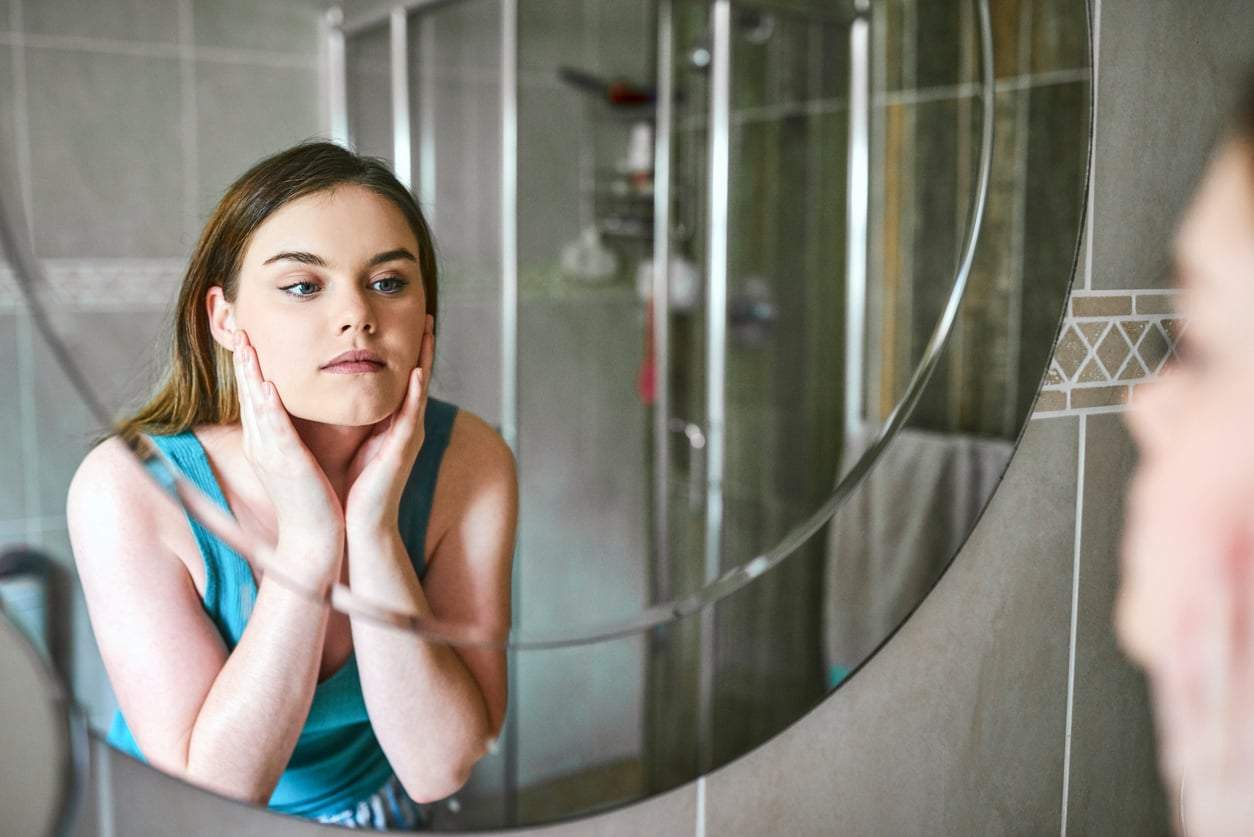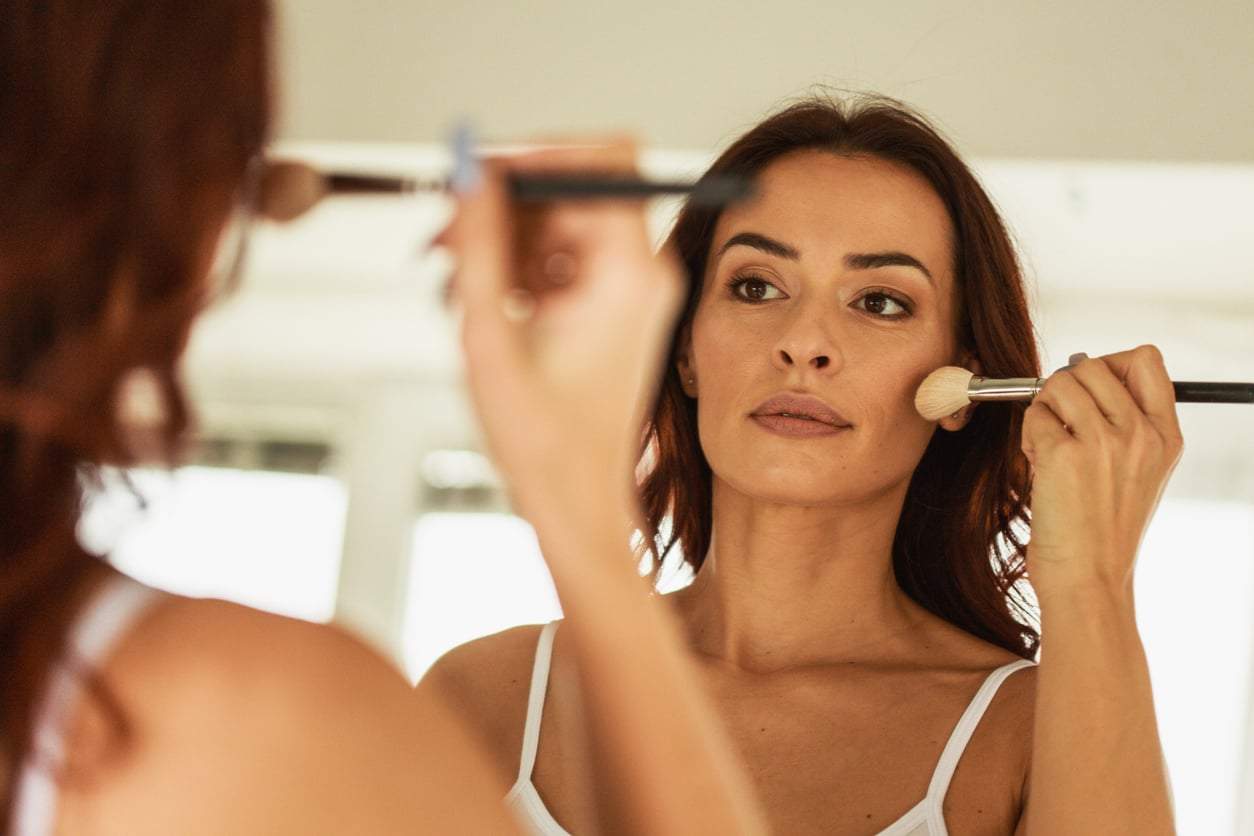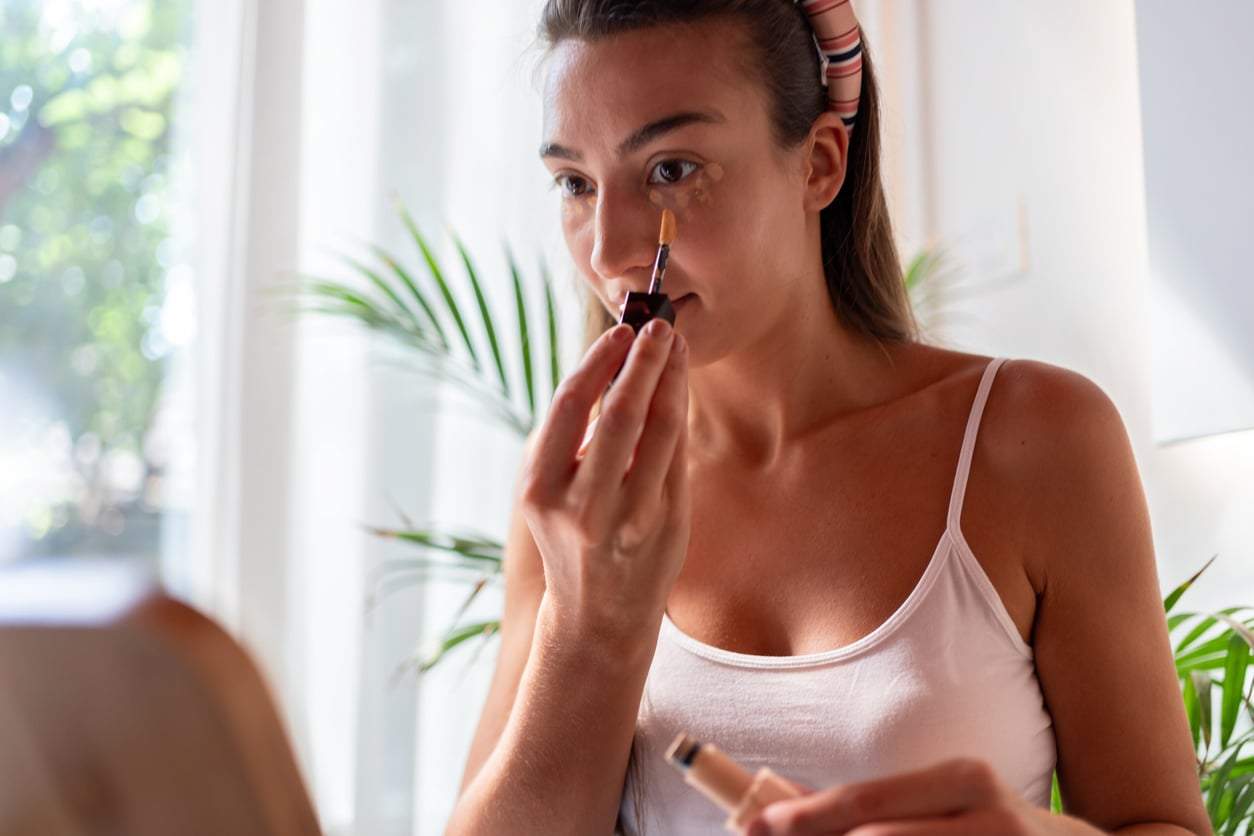
Most of the makeup problems women bring to me are not product problems. The foundation is fine. The concealer is fine. What is not fine is the corner of the bathroom where the whole thing gets applied: a single downward light, a mirror twelve centimetres from your face, and no way to see how any of it reads from a normal conversational distance. Change the conditions and you often need less product, not more.
Overhead light lies, and so does magnification
A light directly above you carves shadows under the eyes, in the nasolabial folds and along the jaw. Your brain reads those shadows as darkness that needs correcting, so you keep building concealer in places that were never actually dark. Step into daylight afterwards and the coverage sits there like a pale patch, because you were treating a lighting effect rather than your skin.
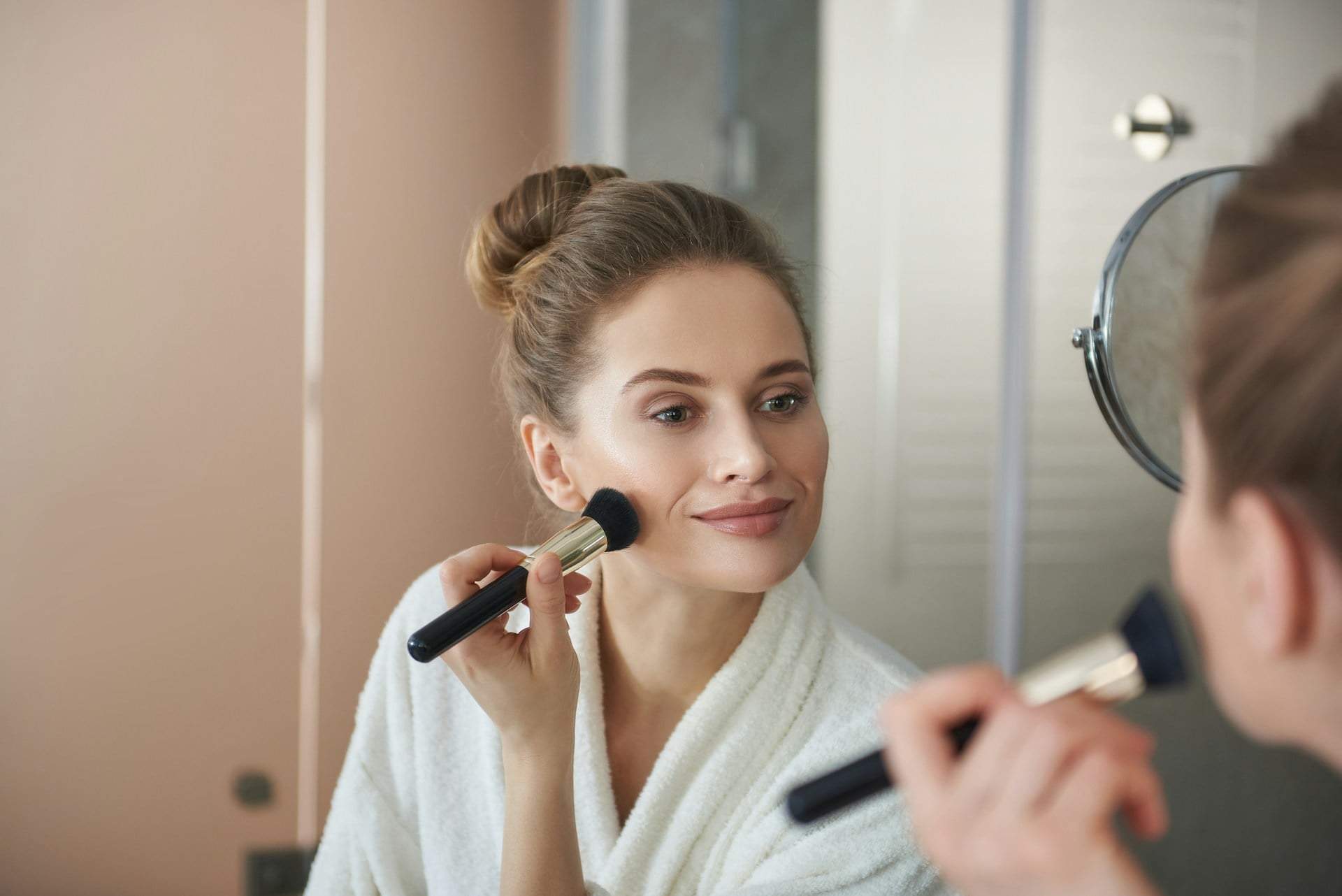
A magnifying mirror does the same thing to texture. At five times magnification, every pore is a crater and every fine line a canyon, and the instinct is to fill and blur. Use magnification for the jobs that genuinely need it — tweezing, lash line liner, lip liner — and then finish and assess in a normal, unmagnified mirror. This one swap alone tends to take a layer off most people's faces.
Set yourself up beside a window, facing the light
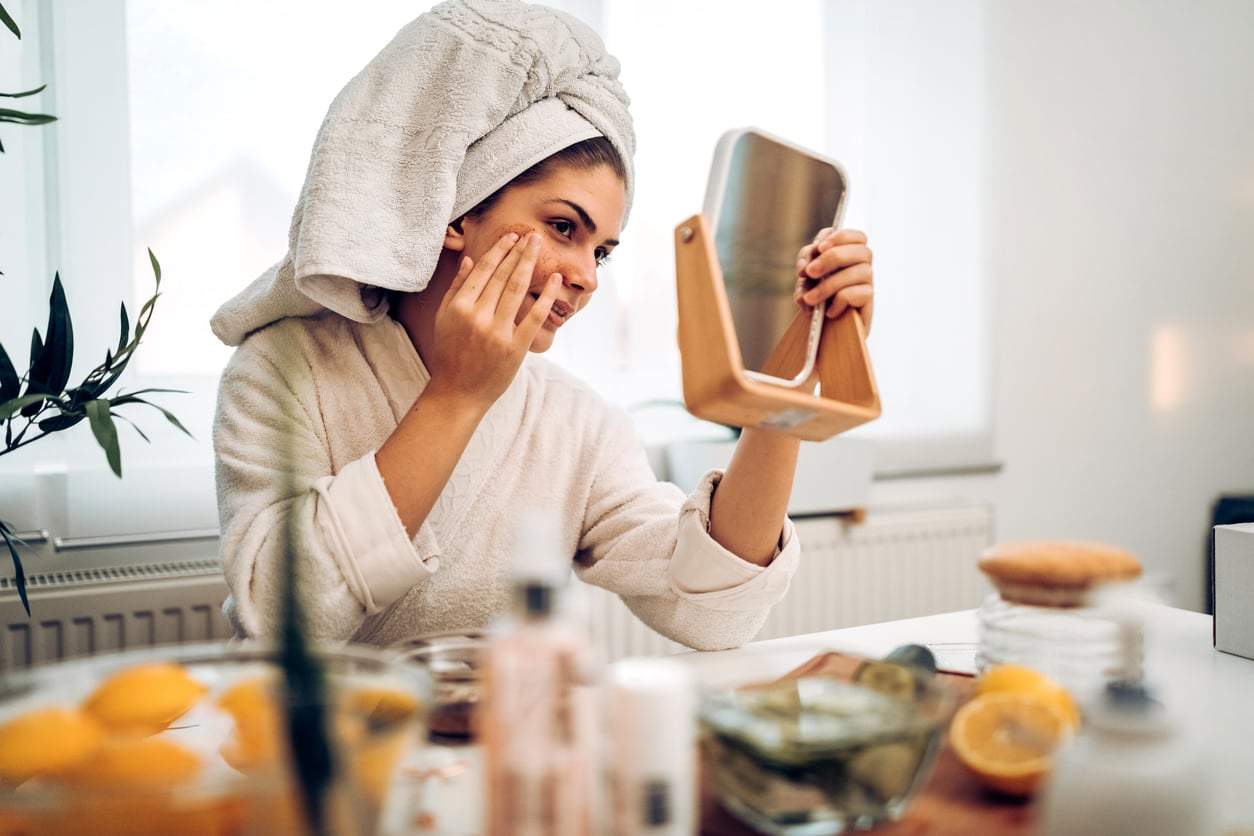
The most useful makeup spot in your home is almost never the bathroom. It is a chair by a window, with a mirror you can hold or prop so that the daylight falls onto your face rather than behind you. Backlighting makes everything look softer and more even than it is, which is why bathroom-mirror selfies flatter and shop mirrors do not. Facing the light shows you exactly where the base stops and your neck begins.
If you get ready before dawn for work, the next best thing is two light sources at roughly face height rather than one from above — a lamp on either side of a mirror, or a lamp pulled forward onto a dressing table. Warm bulbs will nudge you towards over-blushing and warmer foundation, so it helps to keep one honest mid-tone bulb in the room and to do a final daylight check at the door with a small hand mirror.
Build a two-step check into your routine
Step one is distance. When you think you are finished, stand back at arm's length or further and look for two things only: does the colour match at the jaw, and is there a visible edge anywhere. That is where the eye actually goes in real life. Close-up perfection is invisible to everyone but you.
Step two is a change of room. Carry a hand mirror to a window, or to the hallway, or outside the front door if you can. Different light instantly reveals the greyness of an under-eye that has been over-corrected, or the stripe of a bronzer that looked convincing at the sink. If you are matching a new foundation, test it on your jaw and neck, then walk outdoors and look before you buy — no in-store lighting will tell you the truth.
What is the best light to put on makeup in?
Even, front-facing daylight is the gold standard, because it shows your actual skin tone and any hard edges without exaggerating shadow. If daylight is not available, aim for two soft light sources at eye level on either side of the mirror rather than a single fixture above you, and always give yourself a quick check in a different light before you leave the house.
Why does my makeup look so different in photos?
Cameras compress and flatten, phone screens shift colour, and flash strips out shadow while lighting up anything reflective — which is why powder can read chalky and highlighter can look like a shine. For photographs, keep powder to the places you genuinely get shiny, choose a base without a high-shine finish if flash will be involved, and blend the jawline more carefully than usual, because that is the join a lens will find first.
None of this requires new products or a mirror with a ring light. It requires noticing that you have been getting ready in the least informative light in your home, and moving a chair. My own routine now happens on a stool by the living-room window with a propped mirror and a mug within reach, and the difference is that I use less, blend more, and rarely get that small jolt of surprise when I catch my reflection at midday.