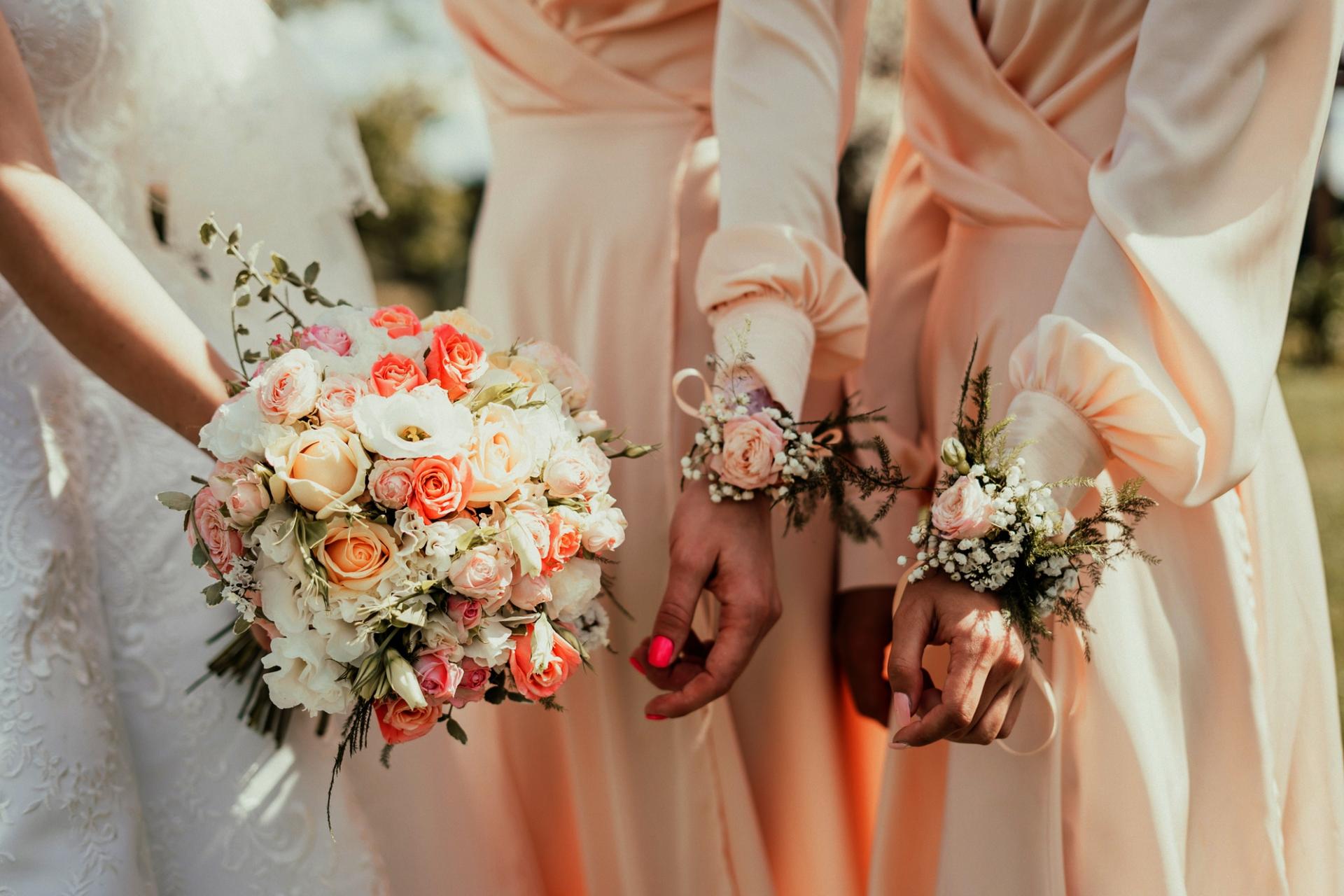
In the world of weddings, many traditions surround us, one of the most intriguing being the custom where the bride's closest friends and relatives appear in identical dresses as bridesmaids. This tradition not only serves aesthetic purposes but also carries a historical significance with a long past, which few probably know in detail. Now we reveal why bridesmaids wear the same dress and what beliefs and cultural roots led to the formation of today's customs.
Tracing an Ancient Ritual
The unification of bridesmaids' attire dates back to ancient Rome, when identical dresses served a very different function than today. At that time, weddings attracted many evil spirits, and the bride often became a target for malevolent forces. The bridesmaids' task was therefore to confuse these spirits by dressing exactly like the bride, thus providing protection to the wedding's main figure. The spirits could not decide who the bride really was, and therefore could not harm her.
However, this tradition was not only developed to avoid otherworldly dangers but also had a social role. For example, in the Middle Ages, the bridesmaids' line ensured that no one interfered with the wedding procession, which was a common problem at the time. Thus, bridesmaids formed a symbolic and practical protective barrier around the marrying couple.
Together, Yet Separate
As centuries passed, the bridesmaids' identical attire gradually moved away from spiritual roots and reflected more or less aesthetic and social considerations. By the 19th century, the tradition had taken on a completely new form, becoming an expression of fashion, wealth, and harmony at weddings. The uniform appearance also conveyed a kind of status symbol, as wearing similar outfits required significant financial investment, so the uniform style also served as a sign of economic prosperity.
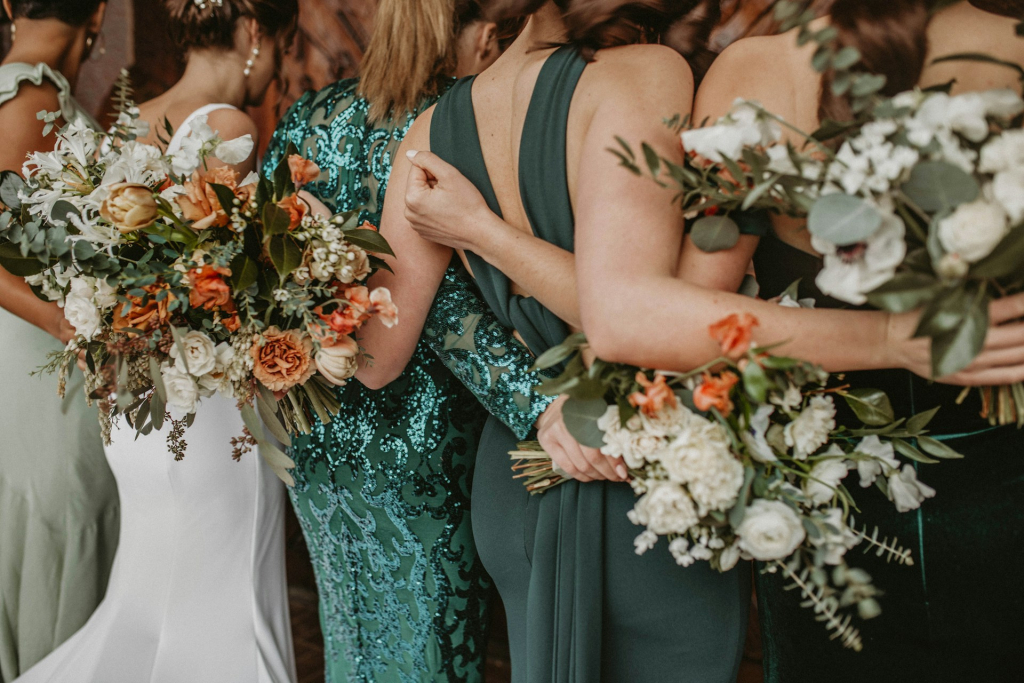
Over time, the appearance and colors of bridesmaids' dresses have changed significantly. At modern weddings, we often encounter a fresh approach to uniforms reflected in the harmony of various styles. The tradition that bridesmaids wear identical or at least stylistically matching dresses nowadays often aims to emphasize the bride's individual taste and the overall theme of the event.
The Contemporary Meaning of the Tradition
Today, the traditional bridesmaid attire is no longer mandatory, although many brides still insist on it. At modern weddings, more and more leading designers offer unique looks that allow bridesmaids' personalities to be reflected through their dresses. This personalization paves the way for creativity, although the fundamental motif of harmony remains decisive to this day.
While the more fashionable may choose unique styles, the aspect remains that the collective appearance can strengthen the sense of community and family bonds among the wedding participants. Ultimately, weddings are not only about the union of two people but also about the coming together of friends and family, which this tradition supports to some extent.
Although the circumstances of weddings have changed significantly over the past centuries, the custom of bridesmaids wearing identical attire is still part of the festive preparations. Whether in different colors, styles, or cuts, the basic idea remains unchanged: to emphasize community unity and the magic of the celebration. While in the past the goal was to drive away spirits and protect against mortal harm, today it is more about the beautiful overall picture and the harmony of the event that the unity of bridesmaids expresses.