What if the most transformative thing you could do on your next hike cost you nothing — and required you to take something off rather than put something on? Barefoot hiking is gaining serious momentum around the world, and the people who practice it say it changes not just how you walk, but how you see.
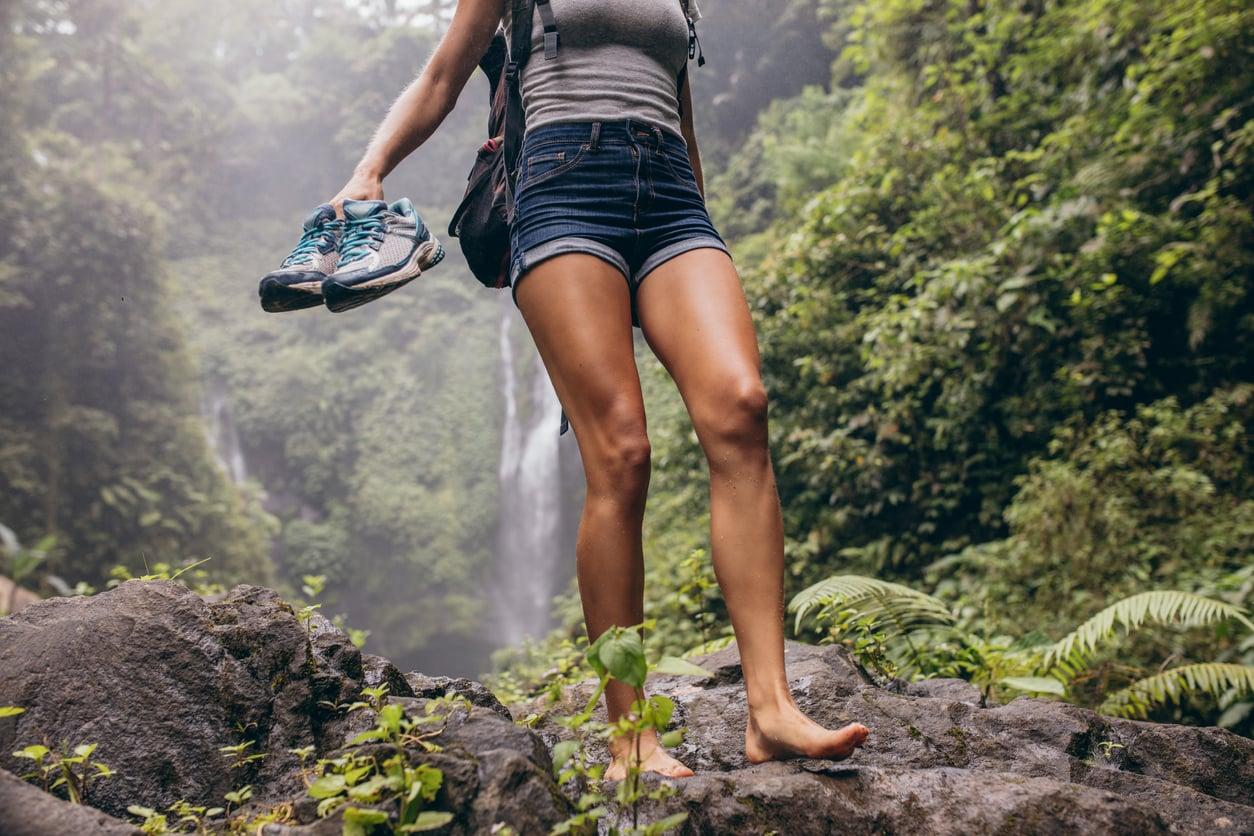
From carefully designed clay trails in South Korea to wild coastal stretches in Australia, more and more hikers are slipping off their boots and stepping directly onto the earth. This isn't an extreme sport. It's a shift in perspective — a return to more natural movement, where your feet actually feel the world beneath them.
South Korea's barefoot trails: where the ground becomes the experience
One of the most striking examples of organized barefoot hiking comes from South Korea. Gen Blades, an outdoor education researcher based in Castlemaine, Australia, first encountered dedicated barefoot trail sections on the Namsan Dulle-gil route in Seoul — and the experience stayed with her.
These paths are surfaced with hwangto clay — a soft, moist, naturally textured material that feels nothing like any trail you've walked before. Your feet sink slightly with each step. The ground is warm, yielding, alive. Movement becomes both playful and unexpectedly intense.
Blades describes how the experience completely shifts your attention downward. The texture, temperature, and subtle give of the ground become the entire focus of the hike. Everything else quiets down.
This is far from a niche curiosity in South Korea. Seoul and other cities have installed barefoot walking paths in more than a hundred parks, giving locals an accessible way to reconnect with nature — even after a long day at the office.
Closer to nature's rhythm: one man's seven-year barefoot journey
In Australia, barefoot hiking has grown more organically, driven by individual passion rather than infrastructure. Dale Noppers, a workplace safety specialist from Perth, has been hiking without shoes for around seven years — and he says it has fundamentally changed his relationship with the outdoors.
Walking barefoot in nature, he explains, brings back something honest and instinctive. You slow down. You pay attention. You feel genuinely connected to the landscape around you in a way that boots simply don't allow.
Over time, the soles of your feet strengthen and adapt — but they never lose their sensitivity. That's the point. Walking becomes more natural, and more conscious, at the same time.
Noppers now completes multi-hour hikes on demanding terrain, including the rocky, rooted, muddy trails of Kitty's Gorge in Serpentine National Park. He also organizes community barefoot hikes around Perth, drawing participants of all ages — sometimes including children discovering the joy of mud between their toes for the first time.
What a podiatrist actually thinks about barefoot hiking
The health angle is worth taking seriously. Dr. George Murley, a podiatrist who has studied the effects of barefoot movement, is careful not to make sweeping claims — because the reality is genuinely individual.
What he does note is that modern footwear, with its heavy cushioning, can gradually dull the foot's natural sensory feedback. Barefoot movement can help restore some of that sensitivity. As a result, balance and coordination may improve over time.
His key message, though, is about patience. Barefoot hiking isn't something you jump into overnight. Think of it as a training process — your feet need time to adapt, and pushing too hard too soon is where problems begin.
If you're curious about other mindful movement practices that support a more active lifestyle, our guide to getting started with hiking is a great place to begin.
The foot as a sensing organ: hundreds of kilometres without shoes
Uralla Luscombe-Pedro, an environmental researcher, grew up on the southern coast of Western Australia where going barefoot was simply part of daily life. As an adult, she made a conscious choice to carry that habit into the wild.
She has since completed hundreds of kilometres of coastal hiking without shoes — including stretches between Batemans Bay and Mallacoota, and along the rugged southern shores of Western Australia.
Her perspective is striking: the foot, she argues, is not just a tool for locomotion. It's a sensory system — constantly reading the fine variations in sand, rock, and vegetation, feeding information about the environment directly to the body and mind.
Slowing down, paying deeper attention
Gen Blades' research has focused on the lived experience of walking — particularly how conscious movement affects the body and perception. Her finding is simple but profound: walking already slows us down relative to modern life's pace. Barefoot walking slows us down even further.
On a barefoot walk through nature, you start noticing things you'd normally stride past — the plants at the edge of the path, the movement of insects, the way the ground shifts from one texture to another.
That quality of presence, Blades believes, can help us feel genuinely connected to the living world around us — something that matters more than ever as natural environments face growing pressure.
The real risks: not every trail is barefoot-friendly
It would be dishonest not to mention the challenges. Barefoot hiking carries real risks. Sharp stones, thorny plants, insects, broken glass, and hidden debris are all genuine hazards on natural trails.
Dale Noppers speaks from experience: he once cut his foot on broken glass while stepping into a river after a hike. Most injuries, he says, are avoidable with careful attention and a gradual approach — but they aren't impossible, and beginners should start on forgiving, well-maintained terrain.
Knowing your trail matters. If you're planning to explore new routes, these tips on mindful nature walks can help you choose the right environment to start safely.
A return to the ground — and to yourself
Barefoot hiking isn't for everyone. But for those who try it, it tends to be far more than a physical challenge. The stories of Gen Blades, Dale Noppers, and Uralla Luscombe-Pedro all point to the same thing: taking off your shoes can be an act of reconnection — with the earth, with your own body, and with a slower, more attentive way of moving through the world.
Removing your footwear in this context isn't a sacrifice. It's a deliberate choice — to feel every step, to notice what's usually filtered out, and to let the ground remind you that you're part of something much larger than the trail ahead.
Would you give barefoot hiking a try?