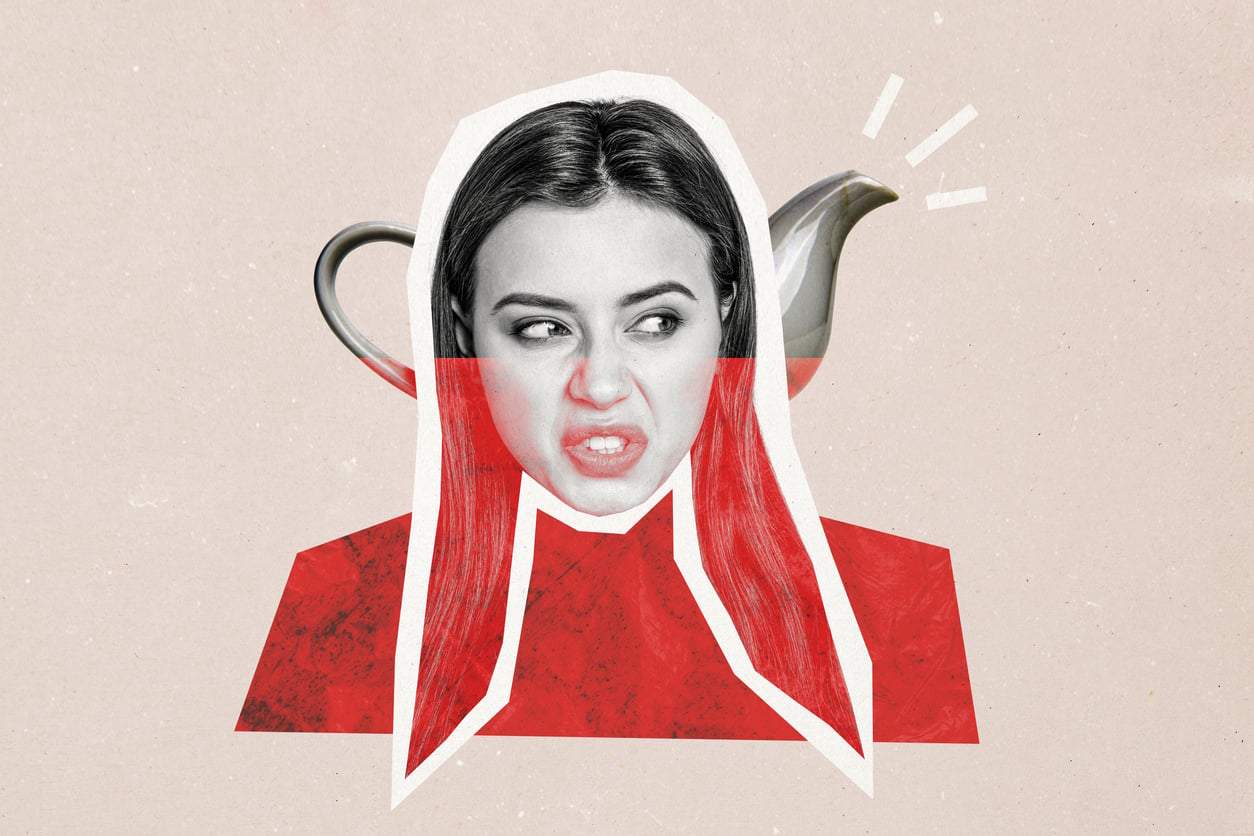
It’s not always the big, dramatic fights that throw you off. Often, the tiniest conflicts set off an endless spiral of thoughts. A friend mentions you can be unreliable sometimes, and suddenly you’re wondering: are they mad at me? Maybe they’ve been upset all along.
You argue with your partner over the dirty dishes, and hours later you’re still analyzing their tone, worried this might be a sign of a breakup.
Experts say this overreaction—called catastrophizing—is less about the argument itself and more about how your nervous system interprets conflict. Imagining the worst-case scenarios is often your brain’s subconscious way of preparing you, so disappointment doesn’t catch you off guard.
It’s also natural to feel more shaken by conflicts with people who matter to you—whether that’s a friend, family member, or a growing romantic relationship.
“Connection means safety to us, so even a small crack can feel like our security is at risk,” says Chloe Bean, a somatic trauma therapist. “In those moments, our mind jumps straight from current stress to the worst possible future outcome.”
What starts as “we just argued” can quickly turn into “I might lose this relationship.” A minor disagreement can feel like the end of a friendship in your mind.

To some extent, this is a natural reaction. The problem starts when negative thoughts about small situations cause real-time anxiety over a future that might never happen. This drains your energy and focus. To break free from these spirals, it helps to understand what’s really going on.
1. Old Attachment Wounds
If you start feeling anxious right after a small argument, it’s often linked to early attachment experiences. Therapist Natalie Moore explains that attachment wounds form when basic needs for safety and comfort weren’t fully met in childhood.
Maybe you were shamed as a kid for sharing what hurt you, or your parents’ fights often turned into loud yelling.
People who handle conflicts more easily often grew up in families where disagreements were seen as normal. It was clear that love didn’t require agreeing on everything—conflict was just part of close relationships.

2. Fear of Abandonment
Often, catastrophic thoughts aren’t about the present moment but bring up past experiences.
“A small argument can easily trigger old memories of rejection or being misunderstood,” Bean explains.
Maybe a past relationship ended after just one fight. Or a friend suddenly cut ties after you brought up something.
People who’ve experienced sudden breakups or distancing often link any tension immediately to abandonment.

3. The Desire for Control
Arguments always bring some uncertainty. Even if the other person says everything’s fine, your thoughts can spiral: “Are they really mad?”, “Do they see me differently now?”, “Is this a sign they’re pulling away?”
When your mood feels shaky, your mind often tries to regain control by imagining the worst-case scenarios. The logic is that if you foresee the worst, you can prepare for it.
The problem is, these thoughts often aren’t based in reality—yet they cause unnecessary anxiety. Bean suggests the first step to breaking the spiral is noticing extreme words. Words like “always,” “never,” “I ruined everything,” or “it’s over” often signal your thinking has drifted from reality.
Pause for a moment and ask yourself: Is there real proof they’re still upset? Could there be another reason they haven’t replied yet?

Conflict Doesn’t Mean the End of a Relationship
Moore says it helps a lot not to stay alone with your thoughts.
When someone fears they’re “too much,” they often stew in silence. But this only amplifies anxiety.
Instead, it’s much healthier to simply say: “I’m still feeling a bit anxious about our conversation yesterday. Can we talk about it again?”
These honest moments not only bring comfort but also strengthen your connection. Over time, they teach you that a little discomfort or disagreement doesn’t have to be a disaster. Often, these moments deepen relationships in meaningful ways.