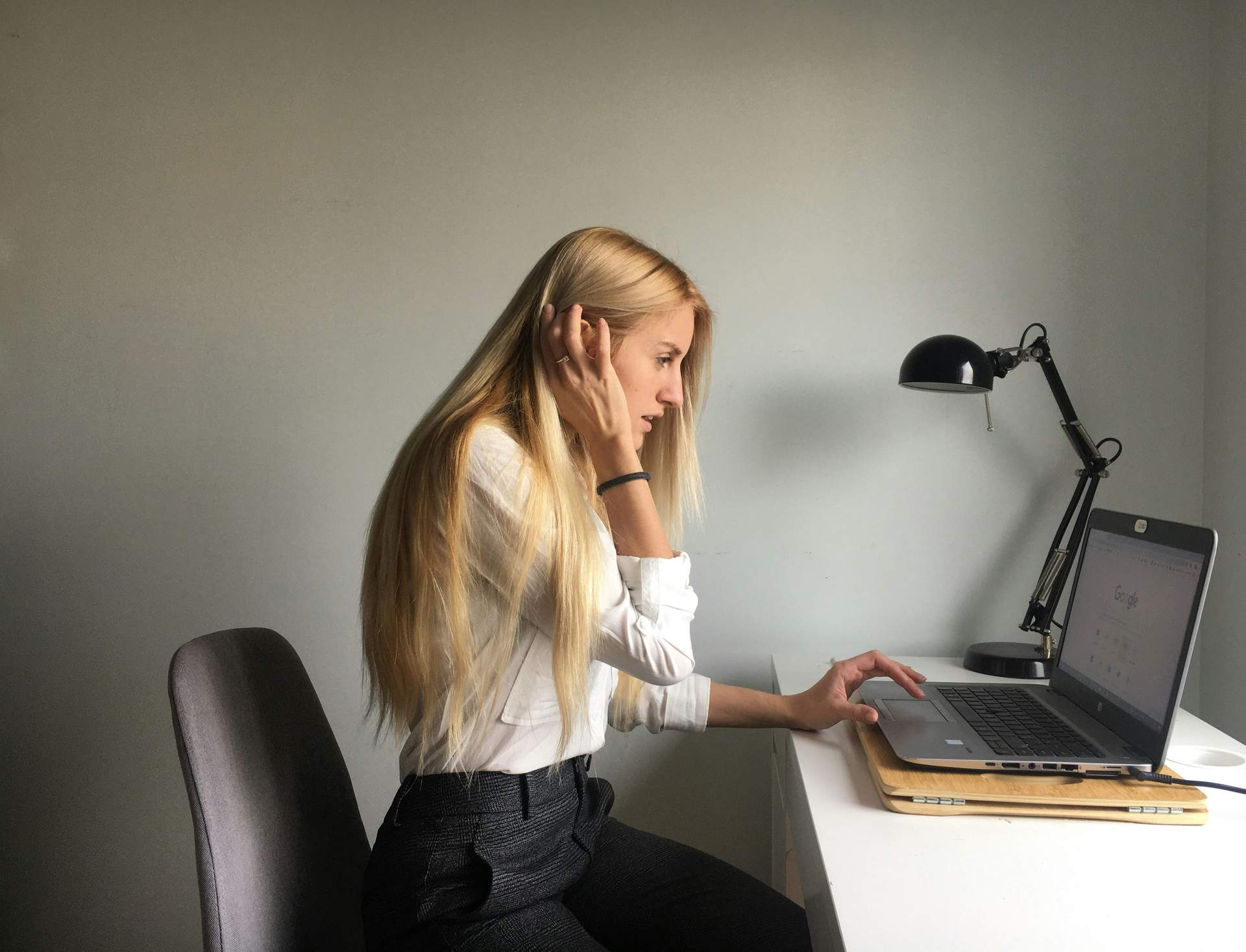
After eight hours at a desk, your hip flexors shorten, your glutes switch off, and your lower back picks up the slack for everything else. This isn't just how your body feels — it's basic biomechanics. When your hips stay in a bent position for hours on end, the muscles and connective tissue adapt to that shortened state. By the time you finally stand up, your pelvis can't return to its neutral position. The result? Tension, stiffness, and often real pain. Physical therapists who specialize in the spine and hip joint tend to recommend the same three movements to anyone spending most of their day in an office chair — and for good reason.
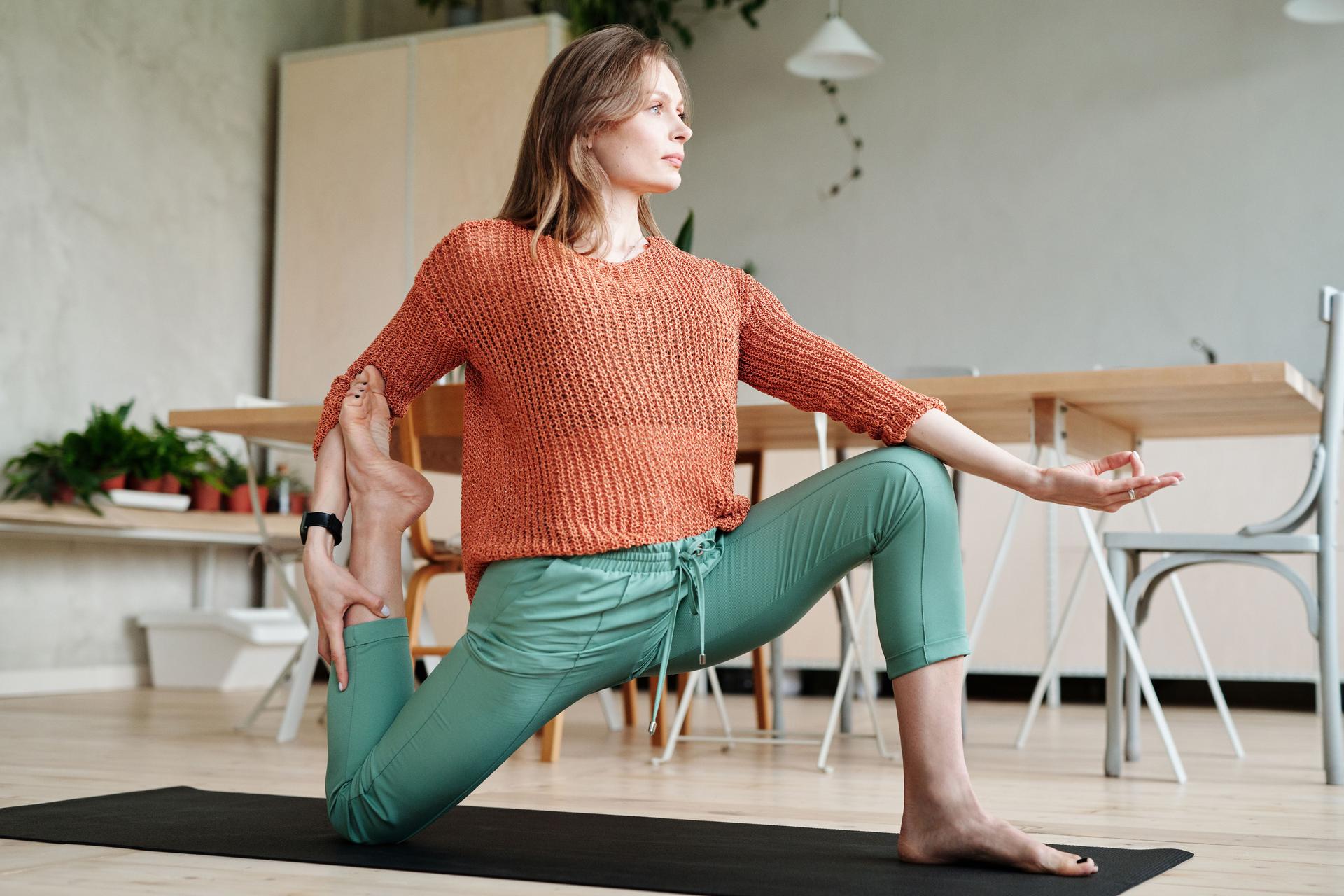
1. Kneeling hip flexor stretch
This is the move that directly targets the muscle group that suffers most from prolonged sitting: the hip flexors — specifically the chain of muscles running along the front of your hip and upper thigh that tends to shorten whenever it isn't being extended for hours at a time.
Get into a kneeling lunge position: one knee on the floor (place a folded towel or cushion underneath if needed), the other leg in front with the knee bent at roughly 90 degrees. Gently push your hips forward while keeping your torso tall — and here's the key step: actively squeeze the glute of your back leg. Without that, the stretch migrates into your lower back instead of your hip. You should feel the tension at the front of the back hip. Hold for 30 seconds, then switch sides. If you need extra balance, rest one hand on a chair or wall.
2. Lying piriformis and glute stretch
The glutes are the other big loser of all-day sitting — and deep within them sits the piriformis, a small but powerful muscle tucked behind the hip joint. When it tightens or gets compressed, it's often responsible for the nagging ache along the side of your hip and lower back.
Lie on your back and bend both knees with your feet flat on the floor. Cross one ankle over the opposite thigh to form a figure-four shape with your legs. Then reach through and hold the back of your thigh or shin, and gently draw your legs toward your chest. You should feel the stretch in the hip of the crossed leg — not in the knee. If you feel it in the knee, ease off slightly. Hold for 20 to 30 seconds, then switch sides.
This position is especially helpful for anyone who experiences deep hip pressure or numbness after long periods of sitting.
3. Wide-knee child's pose
The third stretch decompresses the lumbar spine while also passively opening the hip joints. It's a modified version of the yoga child's pose, adapted specifically to counteract the effects of prolonged sitting — and it's a staple in many physical therapy clinics for exactly that reason.
Sit back on your heels and let your knees spread wider than hip-width apart. Hinge forward from your hips, extend your arms along the floor in front of you, and gently lower your forehead to the ground or a cushion. The goal is to keep your spine long — stretching all the way from your hips to the crown of your head, not curling into a hunch. Breathe slowly here for 40 to 60 seconds, and with each exhale, let your hips sink a little deeper toward your heels. This position gently separates the small joints between the lumbar vertebrae — a key source of that end-of-day tightness so many desk workers know too well.
The best approach is to do all three stretches back to back, as one short routine — ideally daily, whether during a longer break at work or in the evening before bed. What matters isn't how deep you can go, but that your breathing stays calm and you feel the stretch exactly where it's meant to be — not somewhere else.
How long does it take to feel a difference?
Most people notice some relief within a few days of doing these stretches consistently. Lasting changes in flexibility and reduced tension typically develop over two to four weeks of daily practice.
Can I do these stretches at the office?
Yes — the kneeling hip flexor stretch and the lying piriformis stretch can both be done on a yoga mat or even a carpeted floor in a quiet corner. The child's pose only requires enough floor space to stretch your arms forward.
Do I need to feel pain during the stretch?
No. You should feel a gentle pulling sensation in the targeted muscle, but never sharp or joint pain. If something hurts beyond mild tension, ease off the position immediately.
Is it better to stretch in the morning or evening?
Both work, but many people find these stretches especially effective in the evening when muscles are warmer after a full day of activity. Doing them before bed can also help you wind down and sleep more comfortably.
What if I can't kneel comfortably for the first stretch?
Place a folded blanket, cushion, or folded yoga mat under your knee to reduce pressure. If kneeling is still uncomfortable, a standing hip flexor stretch using a wall for balance is a good alternative.