Food is one of the best parts of traveling — but it can also be one of the most expensive mistakes. Some restaurants exist almost entirely to overcharge visitors who don't know any better. The good news? They're usually easy to spot if you know what to look for.
Here are three warning signs that a restaurant is more interested in your wallet than your experience.
1. The menu comes in five different languages
A restaurant that relies on local regulars rarely needs to translate its menu into English, German, French, and Spanish. When you walk into a place and find a glossy menu available in half a dozen languages, it's worth pausing to ask who this place is really designed for.
That's not to say every multilingual menu signals bad food — some genuinely great restaurants cater to international crowds. But in heavily touristed areas, a menu that reads like a United Nations document is often a sign that the clientele turns over fast, tips are expected to be high, and authenticity is secondary. Check the prices and look around at who else is eating there — that will tell you a lot.
2. Someone is trying to pull you inside off the street
If a staff member is standing outside actively trying to convince passing strangers to come in, treat it as a red flag. This kind of aggressive street recruiting is a classic tourist trap tactic — and for good reason.
A truly good restaurant doesn't need to chase customers. Quality and reputation fill seats on their own. When a place has to work that hard just to get people through the door, it usually means the food — or the value — isn't doing the job.
Local favorites are often tucked away on side streets, with no signage out front and a queue of regulars who found it by word of mouth. That's the place you want.
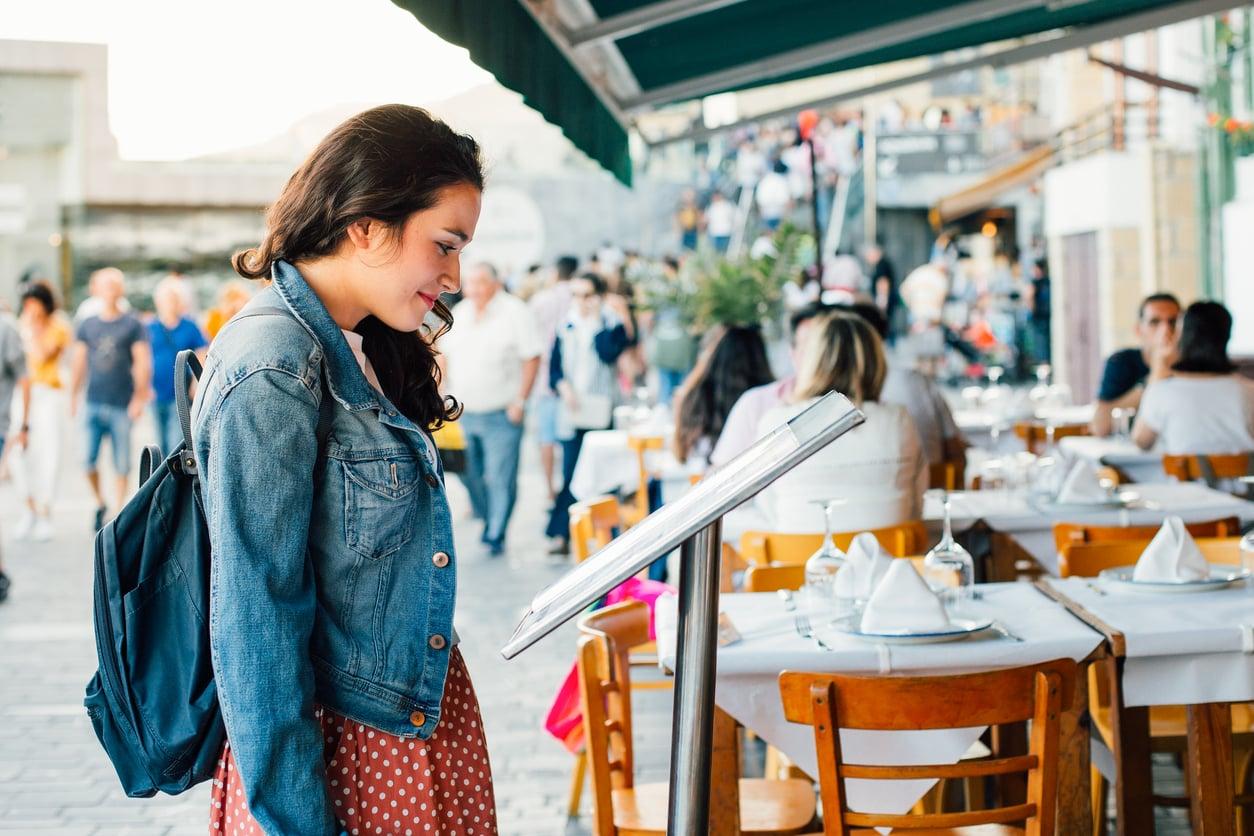
3. The menu is full of large, glossy food photos
A menu that looks more like a magazine spread than a list of dishes is another warning sign. Oversized food photography is designed to do one thing: persuade people who are unfamiliar with the cuisine to order without asking questions.
Restaurants loved by locals tend to keep things simple — a clean list of dishes, maybe handwritten, where the name of the dish speaks for itself. When you know the local food culture, you don't need pictures to know what you're getting. The photo-heavy menu is aimed at someone who doesn't — and who probably won't come back to complain.
How to find the real thing
The best meals on any trip rarely happen at the restaurants closest to the main square. Walk a few streets away from the tourist center, look for places where the menu is only in the local language, where no one is trying to wave you inside, and where the crowd is mostly locals.
Keeping an eye out for multilingual menus, pushy staff, and picture-heavy menus takes only a few seconds — but it can be the difference between a forgettable, overpriced meal and one of the best things you eat all trip.
Great food is out there. You just have to know where not to look first.