Surprises Onboard the Plane
For many, flying can be stressful and tense, especially if you’re already uneasy about spending time high in the sky. But for flight attendants, it’s just another day, and they use their expertise to keep every passenger safe and comfortable. Their job demands attention to tiny details, from grueling schedules to unexpected emergencies.
“It was a routine Frankfurt–Lisbon flight. During service, a passenger quietly called me over. I thought he wanted extra water, but he whispered, ‘I want to propose to my girlfriend. Can you help?’
Within minutes, we had a plan: over the PA, we announced something lost under seat 14B. While everyone looked around, he got down on one knee. She was shocked at first, then nodded through tears. The whole plane applauded. I’ll never forget the genuine joy in the air that day.”
Human Factors and Unexpected Turns
Beyond the unexpected events that can happen on the ground or in the air, the human element always plays a key role. Calm communication helps ease tensions. When flights get delayed due to weather, the crew’s clear updates and warm smiles often melt away stress. But what happens when a medical emergency arises?
“An elderly couple sat by the window. The man seemed a bit off, but his wife stayed close. Midway to London, he suddenly felt unwell—not dramatically, just pale and quietly said, ‘Something’s wrong.’ I alerted the captain, and we activated medical protocols. Luckily, a cardiologist was onboard and stabilized him until landing. Afterward, his wife took my hand and said, ‘You saved my husband today. Thank you.’ Our work isn’t always visible, but sometimes it’s life-saving.”
Handling Special Situations 33,000 Feet Up
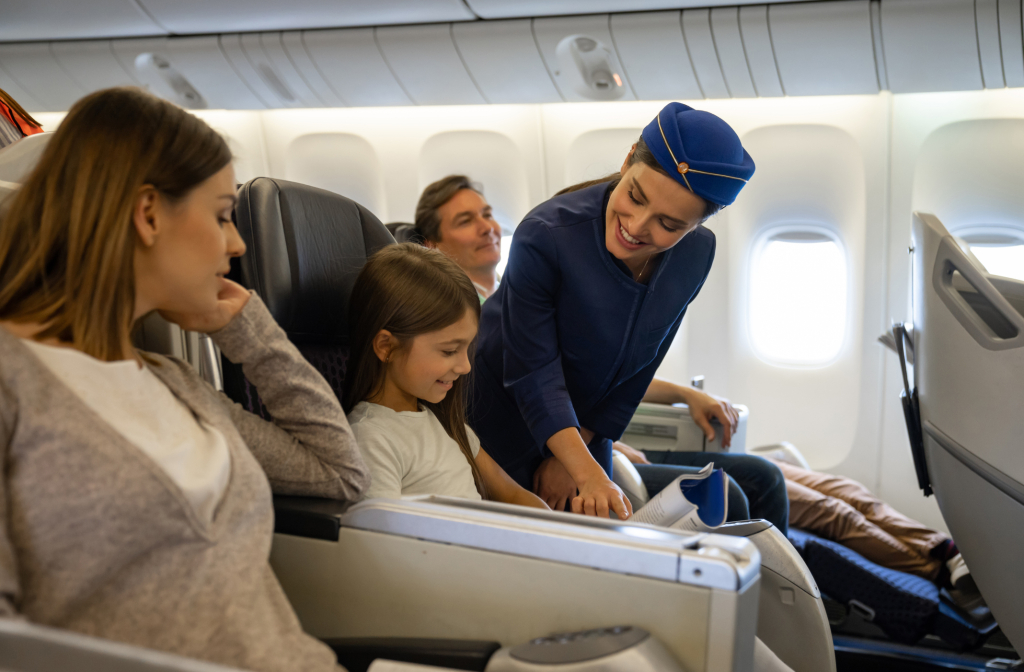
Sometimes passengers arrive with special needs or health issues that require immediate attention. For example, one traveler needed a specific diet that wasn’t pre-arranged, which caused some tension. These moments are challenging because onboard food supplies are limited and can’t always meet every request right away.
There are also times when calming down arguments, family dramas, or loud, aggressive behavior is necessary.
“On a night flight, a sudden argument broke out between two passengers. One had had too much to drink, and the other couldn’t tolerate the noise any longer. Things were escalating fast, so I knew I had to step in professionally.
I calmly and firmly asked them to stop for the safety of everyone onboard. We escorted the intoxicated passenger to the back and offered water, while seating the other in a different row. By landing, both had calmed down. You have to know when to be kind—and when to be firm.”
The Power of Humor and Professionalism
Many forget that humor is a vital tool for flight attendants to handle tough situations. Imagine how a well-timed joke can break tension and bring smiles to passengers’ faces. For instance, when a child cries out of excitement during a flight, a kind word paired with a playful gesture can work wonders.
“On one of the most stressful morning flights, everyone was tense—delays, lines, crying kids. Once airborne, I switched to my ‘survival mode’: after the usual greeting over the PA, I said, ‘Don’t worry, I’m no better with coffee, but we’ll do our best!’
Some passengers laughed, others nodded, and the mood instantly lifted. Humor doesn’t solve everything, but it helps a lot. A smile, a kind word, or a funny comment can sometimes mean more than an extra blanket.”