Every year around now a conversation starts circulating about Halloween decorations and the small creatures that share our gardens, and every year it makes me look at my own front porch with slightly guilty eyes. The decorations we put up are designed to look like traps. Some of them, unfortunately, work like traps too. The good news is that almost nothing has to be sacrificed: the ghosts, the pumpkins, the overdone lighting can all stay. It's the fine, stretchy, tangly materials that need rethinking, and once you know what to look for, swapping them takes ten minutes.
The fake cobweb problem, explained simply
Those bags of white polyester webbing are sold with instructions to stretch them as thinly as possible, which is exactly what makes them dangerous. Stretched over a hedge, a railing or a window box, they become a fine net at precisely the height small birds fly through and insects land on. Wings and feet get caught in synthetic fibres that don't break the way a real spider's web does, and a bird that struggles only winds itself in tighter. Hedgehogs, mice and even cats can get tangled in the strands that sag down to ground level. The same logic applies to decorative netting draped over shrubs, loose lengths of fishing line used to hang bats and ghosts, and anything with long fringing that sits outdoors for a week in the wind.
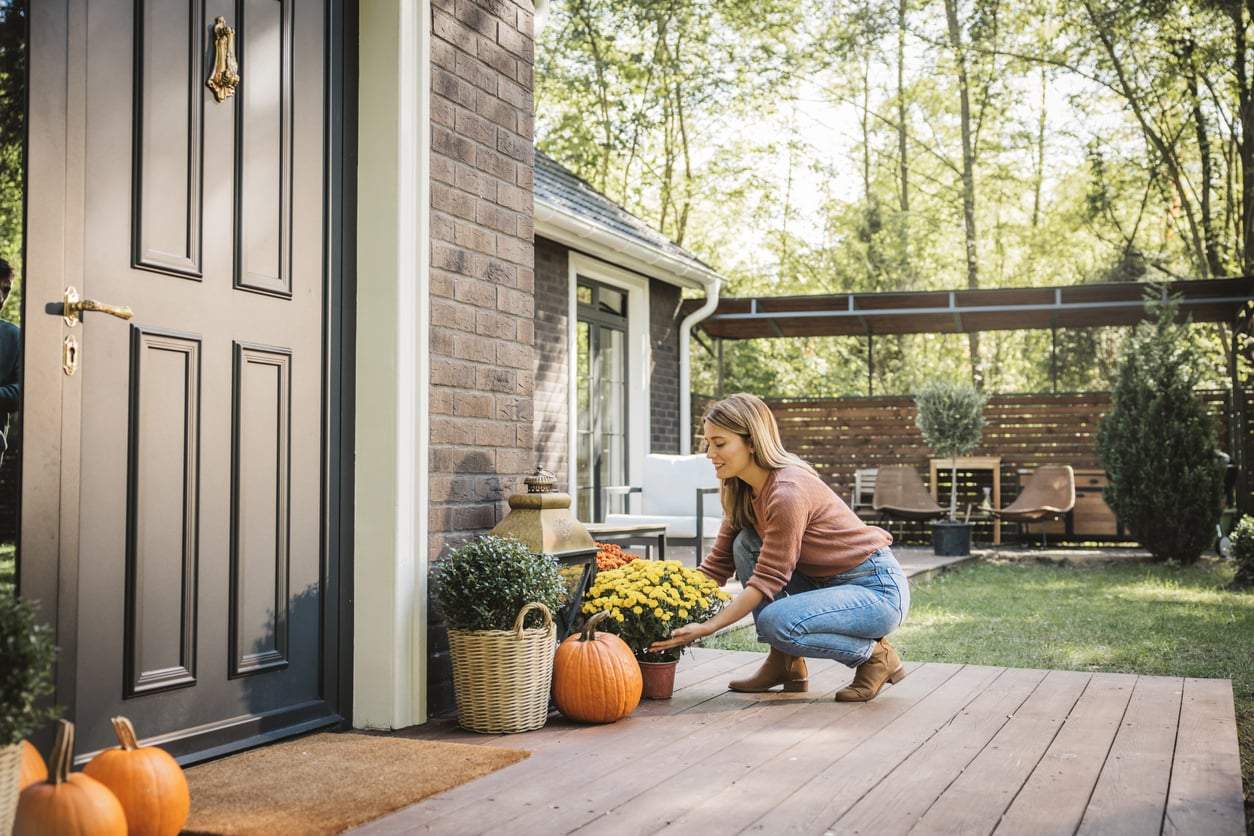
If you love the cobweb look, keep it inside, where there's no wildlife to catch, and make the outdoor display out of solid shapes instead. Paper or cardboard bats taped to the inside of a window read beautifully from the street. Silhouettes cut from black card and propped behind glass, lit from inside, do more atmospheric work than any amount of webbing. Outdoors, go for things with weight and edges: pumpkins, lanterns, bundled corn stalks, a scarecrow made from an old coat.