Every year, within about a fortnight of the radiators coming on, I get the same message from at least three friends: little flies around the plants, what do I do. And every year the answer is the same irritating question back — what do they look like, and where exactly are they? Because the three things most likely to be happening in your living room in October look superficially identical and need completely different responses. Treating fungus gnats like whitefly is a month of your life you won't get back.
So before you buy anything or start spraying anything, spend five minutes identifying the problem. It genuinely is the whole job.
The three usual suspects, and how to tell them apart
Fungus gnats are dark, mosquito-ish, tiny, and they fly badly — a drifting, drunken wander rather than a dart. Crucially, they come up out of the compost when you water, and you'll see them walking across the soil surface. They are a damp-compost problem, not a leaf problem. The adults are a nuisance; the larvae live in the top few centimetres of soil and feed on organic matter and, when populations get big, fine roots.
Whitefly are genuinely white, more triangular, and they live on the undersides of leaves. Tap the plant and a little cloud lifts off and resettles. You'll also find sticky honeydew on the leaves below, and sometimes a sooty black mould growing on that stickiness. These are sap-feeders and they do real damage, particularly to anything soft-leaved you've brought in from a balcony — fuchsias, pelargoniums, herbs, tomato plants rescued at the end of the season.
Then there are the ones that aren't flies at all: mealybugs, which look like tiny scraps of white cotton wool tucked into leaf joints and don't fly anywhere. People describe them as white flies on the phone all the time. They are slower-moving and in some ways more stubborn.
If it's fungus gnats: change the watering, not the plant
Fungus gnats are the easiest of the three and the one people overtreat. The larvae need consistently moist organic matter near the surface. Take that away and the cycle breaks.
Water from below where the plant tolerates it, and let the top two to three centimetres of compost dry properly between waterings. Most of our houseplants are overwatered in winter anyway, when light is low and growth slows, so this is a correction worth making regardless. Topping pots with a centimetre of horticultural grit or fine gravel makes the surface an unappealing place to lay eggs and looks tidier too.
Yellow sticky traps pushed into the pot will catch the adults and, more usefully, show you whether numbers are rising or falling. Clear away fallen leaves sitting on the compost — that's a nursery. Expect a couple of weeks for the current generation to die off.
If it's whitefly or mealybug: physical removal first
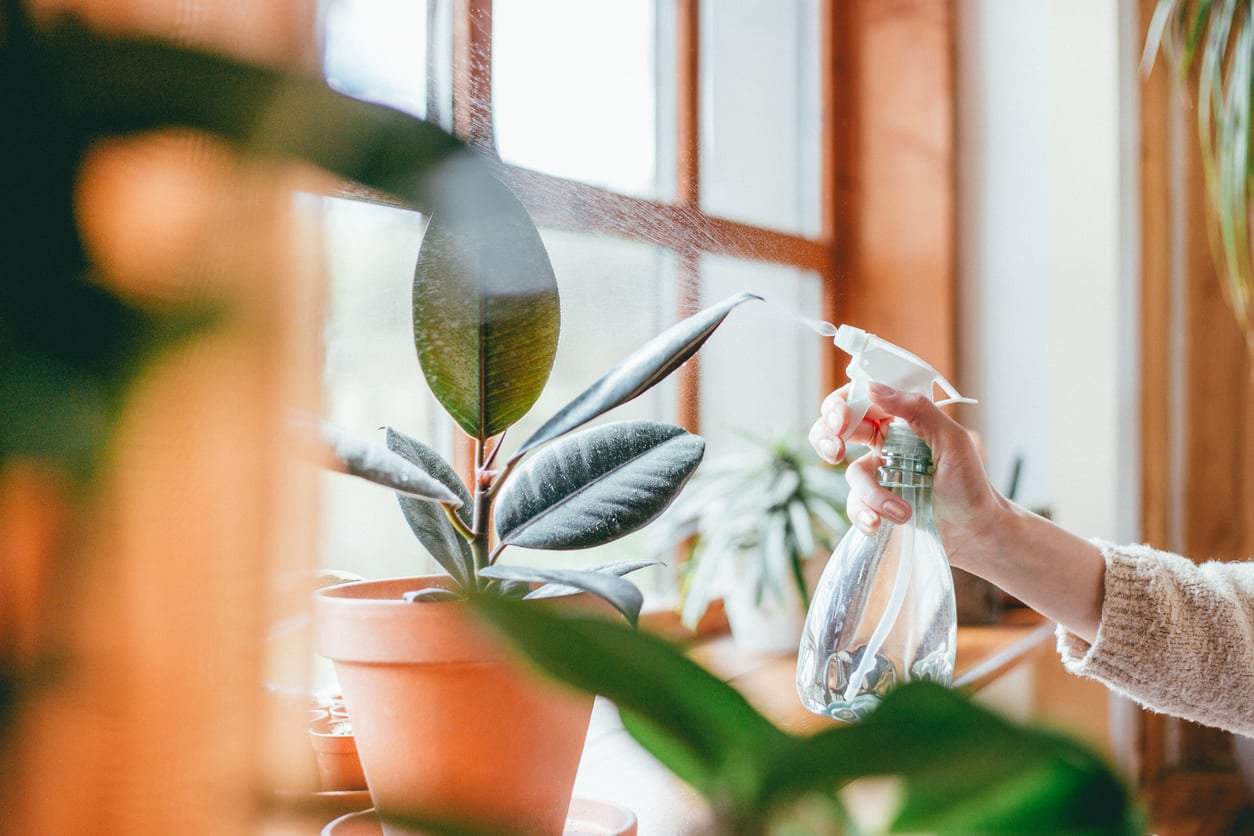
Whitefly need you to actually look at leaf undersides, every plant, including the ones you've assumed are fine. Isolate anything infested — move it away from the rest, ideally into another room. Then wash the undersides with a soft cloth and soapy water, or take smaller plants to the shower and rinse them firmly. Repeat every few days, because eggs hatch in waves and one treatment never finishes the job.
Insecticidal soap sprays help if you apply them properly, meaning the undersides get soaked, not the top of the leaf. Yellow traps catch adults here too. For mealybugs, a cotton bud dipped in surgical spirit touched directly onto each cluster is tedious but extremely effective, and you check again weekly for a month.
Be honest about the plants that came in from outside. A tired pelargonium carrying a heavy infestation can be the source that reinfects everything else, and sometimes the kindest thing for the rest of your windowsill is to let it go.
Why do they suddenly appear in autumn?
Two things happen at once. We bring plants indoors from balconies and gardens, and whatever was living on them comes too — often invisible at the egg stage. At the same time, the heating goes on, which raises temperatures, speeds up insect life cycles, and dries the air while we compensate by watering more often. Warm rooms plus damp compost plus new arrivals is exactly the combination these pests want, which is why October and November are the classic flashpoint months.
Will repotting get rid of fungus gnats for good?
It helps, but only if you do it thoroughly and change the habits that caused the problem. Removing as much of the old compost as you can from the roots and replanting in fresh, well-drained mix physically removes most of the larvae. If you then water the same way as before, keeping the surface permanently damp, you'll have a new population within a few weeks. Repotting plus bottom-watering plus a grit topping is a genuine fix; repotting alone is a reset button.